


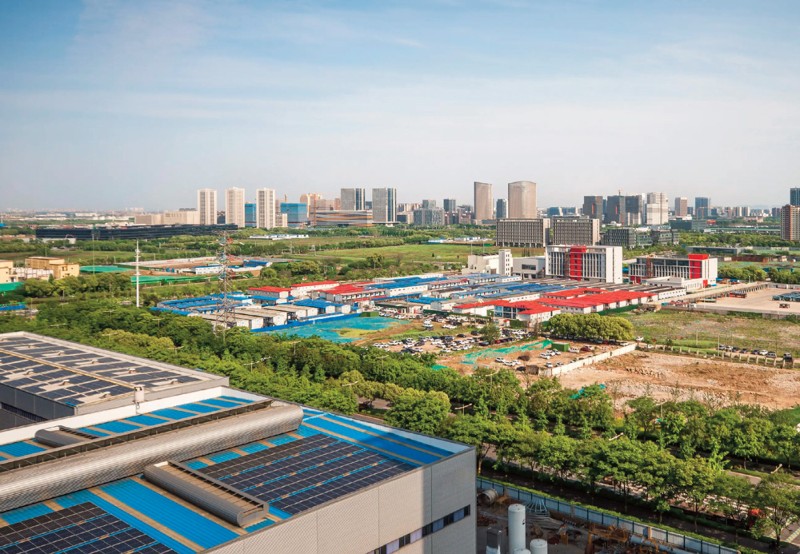
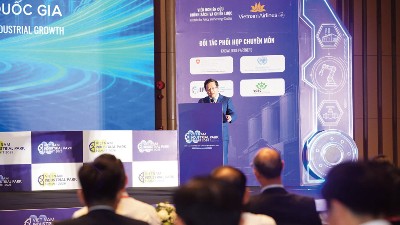
Global green standards, digital transformation, and intensifying competition for high-quality FDI are forcing Vietnam’s industrial parks (IPs) to rethink their development models. Experts told the recent Vietnam Industrial Park Summit 2026 that next-generation IPs are no longer a future trend but a modern-day prerequisite for strengthening competitiveness and securing a deeper role in global supply chains.
Shifting global supply chains, carbon reduction requirements, and environmental, social, and governance (ESG) standards are placing increasing pressure on Vietnam’s IPs to transform. These challenges formed the central theme of Conference Session 2 at the Summit, with the theme “Shaping New-Generation Industrial Parks - Operating Optimization And Smart Governance,” which focused on planning IPs around sustainable infrastructure, integrated logistics, information and communication technology (ICT) infrastructure, the circular economy, and digital governance.
Raising the bar
Speaking at the Summit, Ms. Nguyen Thi Dung, Vice Chairwoman of the Industrial Real Estate Sub-Association at the Vietnam National Real Estate Association (VNREA), said Vietnam currently has 475 IPs, with the 324 in operation posting an average occupancy rate of 79 per cent. However, the country’s IP network is under mounting pressure to transform as the EU’s Carbon Border Adjustment Mechanism (CBAM) came into effect on January 1, 2026, alongside Vietnam’s target of 75 per cent of FDI during 2026-2030 coming from developed, high-tech economies and its commitment to achieving net zero emissions by 2050.
However, only around 1-2 per cent of IPs have begun transitioning toward eco-industrial park (eco-IP) models, and as of mid-2025, none had received official certification under Decree No. 35/2022/ND-CP. According to Ms. Dung, next-generation IPs should be built on three pillars: cleaner production and industrial symbiosis; renewable energy supported by measurement, reporting, and verification (MRV) systems; and digital infrastructure with smart governance.
Pilot projects have already demonstrated measurable results. Under the UN’s Global Eco-Industrial Parks Programme (GEIPP), 329 of 889 Resource Efficient and Cleaner Production (RECP) solutions were implemented across six IPs in Vietnam during 2020-2024: Amata, DEEP C, Nam Cau Kien, VSIP, Hiep Phuoc, and Tan Do. These initiatives generated $2.6 million in annual operational savings while mobilizing $3.3 million in private investment.
The country’s total industrial real estate area was projected in the Vietnam Industrial Real Estate Yearbook 2025 to reach 2,070,215 ha by 2030. However, accelerating the transition to next-generation IPs will require addressing three key bottlenecks: establishing mechanisms for wastewater and waste reuse; expanding renewable energy development through mechanisms such as Direct Power Purchase Agreements (DPPAs); and strengthening green finance and eco-IP certification systems. These are considered essential to improving the quality of FDI attraction and enhancing the competitiveness of Vietnamese exports as global environmental standards become increasingly stringent.
Smarter by design
Mr. Tran Van Thanh, Digital Transformation Project Director at VNPT Hai Phong, said the company has worked with the Hai Phong Economic Zone Authority since 2021 to assess digital transformation needs, provide consultancy services, design and deploy digital systems, deliver training, and support operations. As a result, an integrated management platform officially entered service on September 13, 2021, creating a direct communication channel between the Authority and businesses operating within economic zones and IPs.
The platform enables businesses to update information, access data, submit reports, and communicate online with regulators while standardizing administrative processes and integrating internal management, enterprise services, centralized databases, operational dashboards, and environmental monitoring. According to VNPT, once data is digitized, standardized, and interconnected, the platform will gradually integrate geographic information systems (GIS), expand data connectivity, and incorporate AI, laying the foundation for smart management of economic zones and IPs.
Mr. Nguyen Hoang Minh, Founder and CEO of energy efficiency firm IoTeamVN, said energy management has become one of the starting points for IP transformation. Manufacturers are facing rising production costs, new two-part electricity pricing mechanisms, and manual operating processes while simultaneously meeting energy efficiency requirements, greenhouse gas reporting obligations, and Net Zero commitments demanded by international customers.
To address these challenges, IoTeamVN has introduced an Energy Management System (EnMS) for commercial and industrial users. The platform provides real-time monitoring of energy consumption and costs, identifies inefficiencies, optimizes electricity use, issues abnormal usage alerts, supports 24/7 monitoring, and facilitates greenhouse gas inventory reporting.
The system has already delivered measurable results. The Huong Hoa Tapioca Starch Factory in central Quang Tri province and Viglacera Thang Long in Vietnam’s northern region have reduced energy consumption by around 3 per cent annually. The nearby Phu Tho Textile Company has cut cooling system electricity use by 30 per cent, equivalent to annual savings of VND1.8 billion ($69,200), while the Tu Phuong Plastic Packaging Factory, which boasts a range of facilities around the country, has reduced cooling energy consumption by 40 per cent. According to Mr. Minh, effective energy management not only lowers operating costs but also helps companies meet sustainability requirements and strengthen their competitiveness within global supply chains.
Mr. Han Anh Vu, Chief Technology Officer at VietnamIZ, said IPs are evolving from multi-sector, labor-intensive models to specialized industrial clusters, integrated industrial-urban-service developments, and ultimately smart eco-IPs operating on digital platforms that support net zero targets and industrial symbiosis.
Traditional management models, he continued, are constrained by fragmented data, reporting delays, and limited analytical capabilities. Next-generation IPs, by contrast, require data that is accurate, complete, standardized, and updated in real time. Smart governance represents a shift from experience-based management to data-driven decision-making through digitized, standardized, and interconnected information systems. These systems integrate Internet of Things (IoT) sensors, digital records, GIS mapping, and supervisory control and data acquisition (SCADA) platforms to serve regulators, businesses, and local communities alike.
Though speakers approached the issue from different perspectives, they shared a common conclusion: next-generation IPs must be built on three foundations: green development, digital transformation, and smart governance. These are becoming essential not only for meeting increasingly demanding international environmental, emissions, and governance standards but also for attracting higher-quality investment.
As competition for high-quality FDI intensifies, the transition to next-generation IPs will increasingly determine the competitiveness of both individual localities and Vietnam’s industrial sector as a whole. From infrastructure planning and renewable energy deployment to industrial symbiosis, data-driven management, and AI-enabled operations, this transformation is creating new opportunities for IPs to improve efficiency, attract higher-value investment, and integrate more deeply into global value chains.





 Google translate