


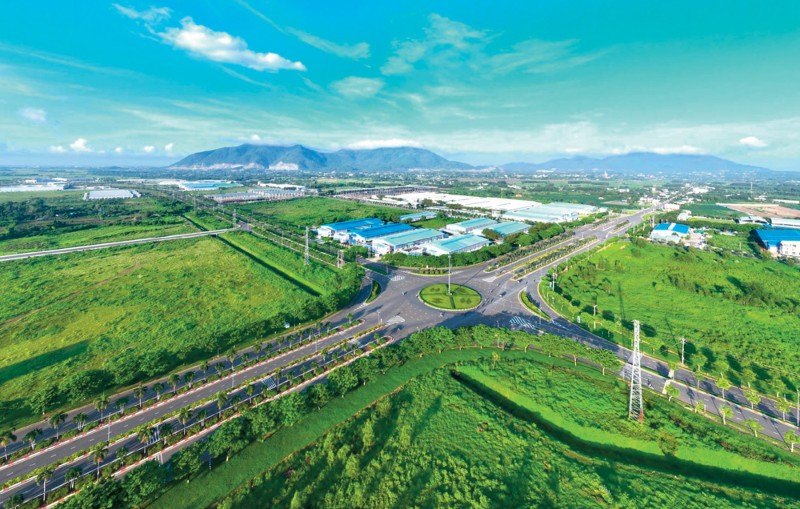

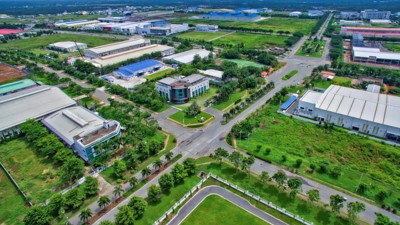
Industrial parks (IPs) and economic zones have long been among the key drivers of Vietnam’s industrialization and modernization process. Today, around 70-80 per cent of newly-registered FDI in manufacturing is concentrated in IPs and economic zones.
According to Politburo Resolution No. 10-NQ/TW on the development of the foreign-invested sector, FDI enterprises currently contribute around 20 per cent of Vietnam’s GDP and more than 70 per cent of exports, and directly employ nearly 3.83 million workers. These figures underscore the continued importance of IPs as a major driver of industrial growth and national competitiveness.
The current development landscape is also creating new opportunities. In 2025, Vietnam attracted more than $38 billion in registered FDI, while disbursed FDI exceeded $27.6 billion; the highest level in five years. Manufacturing remained the largest recipient of investment, accounting for more than 56 per cent of newly-registered capital.
At the same time, the restructuring of global supply chains is positioning Vietnam as a destination for high-tech investments in sectors such as semiconductors, data centers, AI, and renewable energy. To date, the semiconductor industry has attracted total investment of more than $14 billion across more than 240 projects, while investors from South Korea, Japan, Singapore, China, the US, and Europe continue to view Vietnam as an increasingly important link in regional and global supply chains.
These investment trends are also creating new demand for IP development. According to the Ministry of Finance, Vietnam has nearly 500 established IPs covering almost 150,000 ha, with more than 300 already in operation. The country is expected to develop more than 200 additional parks in the years to come, adding over 70,000 ha and generating substantial demand for infrastructure investment.
However, the priority is no longer simply expanding capacity. The next phase requires higher-quality development through eco-IPs, smart IPs, and IPs tailored to investors’ specific requirements. This will require integrated planning and coordinated investment in infrastructure, logistics, energy, and other supporting resources from the outset.
Vietnam is entering a new stage of development, with the goal of maintaining average annual GDP growth of at least 10 per cent during 2026-2030, while manufacturing will continue to serve as the principal engine of growth. Achieving this objective will require IPs to evolve through more integrated planning and infrastructure, while accelerating green and digital transformation and strengthening their capacity to accommodate high-tech, semiconductor, and innovation-driven projects. At the same time, the investment climate and administrative procedures must continue to improve to reinforce the confidence of both domestic and international businesses.
IPs are not simply locations for investment and manufacturing. They are strategic platforms that enable Vietnam to integrate more deeply into global value chains, improve the quality of economic growth, and achieve its long-term development objectives. Realizing this vision will require that IP development be guided by a long-term strategy that closely integrates planning, infrastructure, innovation, green transformation, and a high-quality investment environment, laying the foundation for the sustainable development of Vietnam’s industrial sector.
* * *

The criteria for industrial park (IP) development are undergoing a clear shift. As Vietnam implements Politburo Resolution No. 57-NQ/TW, science and technology, innovation, and digital transformation are becoming increasingly important determinants of IP competitiveness.
Alongside these changing competitive criteria, Vietnam’s legal framework is also evolving in a positive direction. In recent years, a series of Party resolutions, National Assembly resolutions, laws, including the Law on Environmental Protection, and regulations governing science and technology, innovation, data, and technology transfer have been revised and updated to create a more coherent framework for economic development and IP growth.
Even so, as institutional bottlenecks are gradually being addressed, I believe the greater challenge now lies in human resources and implementation capacity. The competitive landscape for IPs has changed, meaning that local governments, IP authorities, and infrastructure developers must proactively adapt to investors’ evolving expectations. Without early preparation in areas such as infrastructure, talent, energy, and supply chains, it will be difficult for Vietnam’s IPs to strengthen their competitiveness amid intensifying regional competition.
Another area that deserves greater attention is the development of IPs tailored to strategic industries. Vietnam is pursuing major national initiatives in areas such as high-speed rail, nuclear power, advanced materials, and high-tech manufacturing. Each sector has distinct infrastructure, supply chain, and ecosystem requirements. This calls for the development of more specialized IPs rather than continuing to accommodate a wide range of industries within a single park.
As IPs adapt to these new competitive requirements, Vietnam will be better positioned to attract high-tech and clean industry projects while strengthening links between FDI enterprises and domestic companies, in line with the country’s broader agenda for science and technology, innovation, and digital transformation.
* * *
As Vietnam’s political system moves decisively to accelerate industrialization and modernization, with science and technology, innovation, and digital transformation serving as new engines of growth, the country’s approach to industrial park (IP) infrastructure must also evolve. This transformation should go hand-in-hand with the implementation of national strategies on green transition, energy transition, digital transformation, economic restructuring, and human capital development.
IP infrastructure can no longer be viewed simply as the physical foundation for manufacturing. It must instead be recognized as a key determinant of the competitiveness of the broader economy. In this context, infrastructure should be understood in its broadest sense, encompassing transport networks, energy systems, water supply and drainage, wastewater and solid waste treatment, digital infrastructure, logistics, warehousing, distribution centers, production support services, and urban and social services for workers.
More importantly, the entire system must be planned, developed, and operated according to the principles of green, circular, sustainable, smart, and integrated development.
International experience shows that green IPs, eco-IPs, low-carbon IPs, and smart IPs are becoming the dominant direction of development. Many countries have established green IP standards and certification systems, promoted industrial symbiosis, where the waste generated by one enterprise becomes the input for another, expanded the use of renewable energy, and adopted digital technologies, big data, and smart monitoring systems to manage infrastructure and environmental performance.
These experiences provide valuable lessons for Vietnam as it develops an IP model suited to its own development priorities and conditions.
* * *

When Vietnam first began actively attracting FDI, securing an investor was considered a success in itself. At the time, localities had limited capacity to be selective, while investors were largely responsible for developing the infrastructure needed to support their own operations. Few investors asked about industrial ecosystems or value-added services, because they expected to provide most of what their projects required.
Today, the landscape has changed. Vietnam has adopted a more sustainable industrial development strategy that prioritizes high-value investment projects capable of delivering long-term benefits for both the country and local communities. In my view, this shift is changing not only the criteria for selecting investors but also the way industrial parks (IPs) are developed.
The goal is no longer simply to fill IPs with tenants. The focus has shifted to attracting higher-quality investment. As a result, sectors such as high technology, semiconductors, green technologies, and other strategic industries are becoming priorities. These sectors require coordinated preparation in terms of policy, infrastructure, talent, and supporting business ecosystems.
Meeting these demands requires a coordinated effort. No single locality or IP developer can create a competitive advantage on its own. The key is to translate the central government’s development strategy into clear local priorities, enabling each locality to build industrial ecosystems with distinct strengths and competitive advantages.
One encouraging development is the rapid improvement in Vietnam’s investment environment over recent years. Local governments, economic zone authorities, and State agencies have become more proactive in streamlining administrative procedures, supporting businesses, and improving investment services. In some localities, FDI-related procedures are now processed remarkably quickly, enabling investors to launch projects and begin operations much sooner.
Planning is also becoming more strategic. At both the provincial and local levels, development strategies are increasingly being built around each area’s comparative advantages. Rather than pursuing broad-based industrial expansion, localities are identifying priority industries linked to their seaports, logistics networks, industrial clusters, and supply chains.
As each locality defines its own development identity, investor selection will become more effective. Companies will be able to match their investment needs with local development priorities to identify the most suitable destination. This represents an important shift in investment promotion, from actively courting investors to attracting them through clear development strategies and a stronger alignment between investor needs and local competitive advantages.
* * *

If I had to use one word to describe what international investors look for when choosing an investment location, it would be “trust.”
Companies still evaluate traditional factors such as labor availability, tax incentives, land supply, and infrastructure. Today, however, investors are asking more than whether an industrial park (IP) has adequate infrastructure. They want to know whether it can help them meet the increasingly-stringent environmental, social, and governance (ESG) requirements imposed by global technology companies, covering everything from manufacturing environments and carbon emissions to sustainable governance standards.
A recent example is DEEP C’s successful attraction of a major South Korean manufacturer producing critical components for the AI semiconductor industry. The company told us that trust was the deciding factor in choosing Hai Phong and DEEP C over other locations in the region. That trust was built on the IP developer’s ability to support the investor throughout the project’s lifecycle, particularly in helping the company achieve its sustainability objectives.
Another example is a leading electronics manufacturer from Taiwan (China) that supplies companies such as Apple, Sony, and Microsoft. Similarly, its primary concern was whether DEEP C could help it comply with the increasingly-demanding ESG requirements of global technology companies, from production standards and carbon emissions to broader sustainability and governance expectations.
These examples illustrate how the competitive advantage of IPs has shifted. Today, it is no longer defined by land lease rates or investment incentives, but by the ability to become a long-term sustainability partner for investors. As multinational corporations continue to tighten ESG requirements across their supply chains, an IP’s capacity to support emissions reduction, renewable energy adoption, environmental management, and transparent governance will increasingly determine its ability to attract high-quality FDI.
* * *

We need to redefine what “connectivity” means in industrial park (IP) development. In the past, connectivity was largely understood as transport infrastructure - a road leading into an IP or the movement of goods. Today, however, it must be viewed more broadly as an integrated, sustainable infrastructure system that forms a complete ecosystem for investment and manufacturing.
From the perspective of physical infrastructure, connectivity is no longer limited to roads. It also encompasses links to economic corridors, seaports, airports, and logistics networks that enable businesses to participate more deeply in global supply chains. Vietnam already benefits from an extensive network of free trade agreements (FTAs), which is one of the key reasons international investors continue to choose the country. But to turn that advantage into lasting competitiveness, IPs must be seamlessly connected to logistics systems, import-export infrastructure, and transport hubs.
Even traditional infrastructure requirements are evolving rapidly. In the past, businesses simply needed a reliable electricity supply. Today, they also expect access to clean, renewable energy and a sustainable power system. This marks a significant shift in how investors evaluate potential locations.
In my view, however, connectivity is about more than physical infrastructure; it also includes soft infrastructure. IP development is no longer just about building infrastructure to lease land. It is about creating a complete industrial ecosystem with business support services, modern amenities, and social infrastructure.
Overall, IP developers should focus on three priorities to meet the expectations of global investors.
First, infrastructure must be delivered quickly and be sustainable. Investors today require reliable utilities, technical infrastructure, legal advisory services, and support from the moment they begin exploring investment opportunities in Vietnam.
Second, IP products and services must become more flexible. Whereas developers once focused almost exclusively on land leasing, investors now seek a broader range of options, including ready-built factories, ready-built warehouses, and more flexible investment models that enable faster market entry, lower upfront costs, and room to scale over time.
Third, IPs must build ecosystems that place people and social well-being at the center of development.





 Google translate