


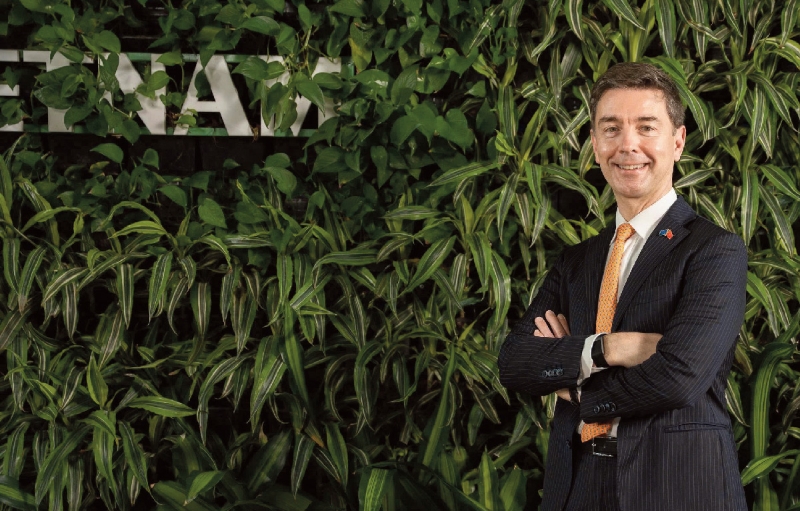
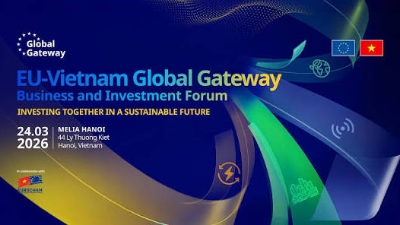
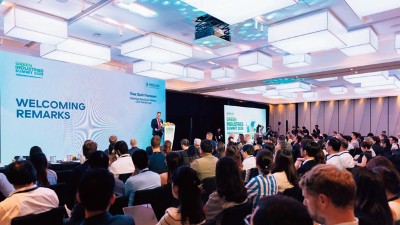
The EU-Vietnam Global Gateway Business and Investment Forum is being held following the upgrade of bilateral relations to a Comprehensive Strategic Partnership. How do you assess the significance of this Forum for the Vietnam-EU relationship, particularly in promoting cooperative projects on green transition and digital transformation?
The Forum is being held at a meaningful moment in Vietnam-EU relations, following the upgrade of our partnership. Strategically, the Forum matters because it helps translate shared priorities into concrete cooperation by highlighting real, bankable investment opportunities under the Global Gateway framework and bringing the right actors into the same room.
For Vietnamese businesses, this is a practical opportunity on several levels. It allows companies to engage directly with European partners to exchange know-how and technology in priority sectors such as energy, sustainable transport, digital transformation, and environmental, social, and governance (ESG)-related solutions.
Organized in close collaboration with the Foreign Investment Agency (FIA) at the Ministry of Finance and EuroCham Vietnam, the Forum will enable companies to build partnerships, form consortiums, and shape future business opportunities that can scale beyond a single project.
Importantly, the Forum also provides a platform to finance projects, as development banks, commercial banks, and investors will be present to discuss what it takes to make projects financeable and investment-ready.
It also creates space for an open conversation on the policy, legislative, and market barriers that can hold back investment, and on practical options to address those barriers so opportunities can be realized more quickly and sustainably.
In short, the Forum is designed to move from dialogue to delivery: connecting partners, aligning standards, unlocking finance, and helping remove obstacles so that Vietnam-EU cooperation on the green and digital transitions produces tangible results for businesses and people.
- Within the framework of the Global Gateway strategy and the new Comprehensive Strategic Partnership, how does the EU define Vietnam’s strategic role in the region? What are the key priority sectors where both sides expect to achieve breakthrough cooperation and tangible results?
The EU sees Vietnam as a key partner in ASEAN, not only because of its economic dynamism and market potential but also due to its growing role in regional and global value chains and its strong commitment to the dual transition: green and digital.
Within the Global Gateway strategy, the EU sees Vietnam as a place where both sides can jointly deliver high-quality, sustainable, and impactful investments in a win-win model.
As the partnership deepens, we expect breakthrough cooperation in several areas.
First is the energy transition, including renewable energy deployment, grid modernization, storage, and energy efficiency. Second is sustainable transport and greener logistics, particularly solutions that reduce emissions while strengthening connectivity. Third is trusted digital transformation, covering digital infrastructure, cybersecurity, and practical applications that help businesses improve productivity and integrate into global supply chains. Fourth is ESG, strengthening sustainability standards, transparency, and responsible business practices that make projects more bankable, resilient, and attractive for long-term investment.
Together, these four areas can help translate the upgraded relationship into tangible outcomes that generate long-term value, growth, and jobs for both Vietnam and Europe.
- Green transition and digital transformation are the two cross-cutting pillars of this year’s Forum. In your view, what are the greatest opportunities for Vietnam in this dual transition, and what specific support plans does the EU have to help Vietnamese businesses meet these standards?
For Vietnam, the dual transition is not only a global requirement but also a major opportunity to upgrade growth and competitiveness. In my view, the greatest opportunity lies in moving up the value chain: producing in a more efficient, cleaner, and more transparent way, with stronger traceability and better compliance with international standards. This will help Vietnamese companies access the EU market while strengthening their global competitiveness.
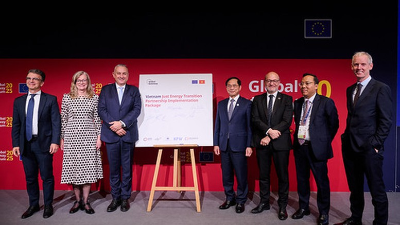
In terms of support, the EU’s approach combines finance, technology, and capacity building. On financing, we are mobilizing investments through the Global Gateway and European financial institutions. The EU, the European Investment Bank, and member states’ development banks have put in place dedicated support packages for Vietnam’s Just Energy Transition, while new facilities are being prepared to promote more sustainable transport. Together, these efforts help create enabling conditions for clean investment and decarbonization.
At the same time, we support the sharing of technology, know-how, and standards, for example in emissions measurement, energy efficiency, supply chain transparency, and responsible business practices.
Critically, we also focus on skills and training, especially for small and medium-sized enterprises (SMEs), so they can build practical capabilities, from carbon footprint calculation and sustainability reporting to responsible sourcing, quality management, and basic cybersecurity readiness. SMEs are not expected to become perfect overnight. What matters is a clear and credible upgrading roadmap, gradual but in the right direction, so that more Vietnamese businesses can participate effectively in Europe’s greener value chains, promote sustainable production and consumption, and contribute to Vietnam’s net-zero pathway.
- Can you tell us about the EU’s core ESG requirements, as well as the support mechanisms available to help Vietnamese enterprises - especially SMEs - adapt and enhance their competitiveness?
For the EU, ESG is a framework for ensuring that growth is anchored in good governance, social responsibility, and environmental sustainability. At its core, the EU places emphasis on three elements: transparency and measurable performance; responsible business conduct across supply chains; and credible pathways for emission reductions linked to real operational improvements.
In practical terms, this increasingly means stronger data and systems: on emissions, traceability, labor and safety standards, and governance and compliance. For SMEs, this can feel demanding, but it is also an opportunity to strengthen competitiveness and become eligible suppliers for larger buyers and international partners.
In terms of support, the EU focuses on capacity building, guidance, and practical tools - often tailored by sector - to help companies take gradual action. We also work to connect businesses with European partners, networks, and, where relevant, financing channels. The most effective approach is to help SMEs prioritize: start with the most material requirements, build internal capability, and then progressively raise the level of compliance as the business grows.
- Though the EU-Vietnam Free Trade Agreement (EVFTA) has delivered positive trade outcomes, EU FDI inflows into Vietnam remain below their potential, accounting for only about 2-5 per cent of total EU outward FDI globally. In your view, what are the main barriers constraining this investment flow?
The EVFTA delivers, as we see in our growing trade and investment figures. Trade in goods reached €76 billion ($87.19 billion) in 2025. Full and effective implementation will ensure mutual benefit, unlock the Agreement’s full potential, and make it a solid basis for our future ambitions.
Looking at our main areas of cooperation today - transport and renewable energy - several constraints stand out.
First, the scale and quality of EU investment in Vietnam are still below potential: many projects remain relatively small, and the share of high-tech, R&D-driven investment is not yet as important as it could be given Europe’s strengths.
Second, investment is concentrated in a few regions and traditional sectors, while areas where we would like to see more momentum, such as renewable energy, sustainable transport infrastructure, and advanced technologies, have not yet attracted enough large-scale projects.
Third, absorption capacity: skilled talent, innovation ecosystems, and the ability to move from operating technology to developing and adapting higher-value technologies.
- What specific improvements does the EU expect from Vietnam in order to attract high-quality investment, particularly in renewable energy and sustainable transport?
To unlock more high-quality investment, I would highlight three priorities.
First, a stable, transparent, and consistently-enforced regulatory framework, particularly for renewables and infrastructure. Second, faster and clearer administrative procedures, including digitalized processes and an effective “one-stop” mechanism so that investors can track progress and reduce uncertainty. Third, greater investment in talent, R&D, and innovation ecosystems, so that Vietnam can not only attract capital but also absorb technology and create sustained added value.
If these areas move forward, I am confident Vietnam can capture the opportunity created by supply chain restructuring and attract more large-scale, green, and resilient EU investment, especially in renewable energy and sustainable transport. The joint statement upgrading our relations is setting the right ambition and targets.
- The Vietnam-EU relationship is regarded as one of the most dynamic and wide-ranging partnerships between the EU and ASEAN. How do view the potential for both sides to jointly explore and create sustainable added value for Vietnam and Europe?
I agree that Vietnam-EU relations are among the most dynamic partnerships between the EU and ASEAN, and as our cooperation deepens, there is significant potential to expand into emerging, higher value added areas.
Transport cooperation is gaining momentum as a priority under the EU Global Gateway in Vietnam, with growing interest from European industry in supporting Vietnam’s ambitious investment plans, particularly in railways. The EU, together with Team Europe, is eager to share EU experience, know-how, and technology for Vietnam’s high-speed rail projects.
We are establishing a new €40 million ($45.9 million) transport facility to promote scale and impact in the development of public infrastructure projects on the ground.
In terms of emerging areas of cooperation that hold strong potential to create sustainable added value for both Vietnam and Europe, I would highlight four.
First is the high-tech ecosystem. The EU tech business offer brings strengths in advanced technologies, standards, equipment, and research, while Vietnam is rapidly developing its manufacturing base and workforce. With the right cooperation on skills, standards, and industry links, this is already becoming a high-priority area for both sides.
Second is AI and trusted digital innovation, where the EU places strong emphasis on trust, meaning that innovation should go hand-in-hand with safety, ethics, cybersecurity, and data protection.
Third is the circular economy, from sustainable product design and materials to recycling, waste reduction, and resource efficiency, which can strengthen competitiveness while reducing long-term costs and environmental impact.
Fourth is cybersecurity and trusted digital infrastructure, because as digitalization accelerates, cyber resilience becomes a foundational condition for trade and investment.
For our ambitions to succeed, the joint statement on the upgrade of our relations also reminded us that our initiatives need to be interesting for business and create opportunities that help us capitalize on the strengths of each side for the benefit of Vietnam and the EU. This includes an open, transparent, and predictable regulatory and procurement environment. The EU, as a trusted and secure partner, will have a lot to bring if the conditions are right.
We are working to develop a number of new flagship, implementation-ready projects in these areas. I believe the EU and Vietnam can create sustainable added value economically, technologically, and in terms of the quality and resilience of growth.
 Google translate