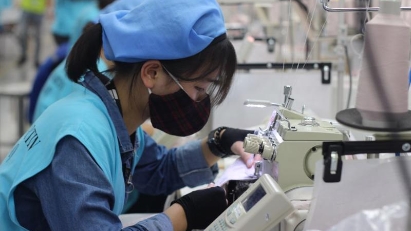
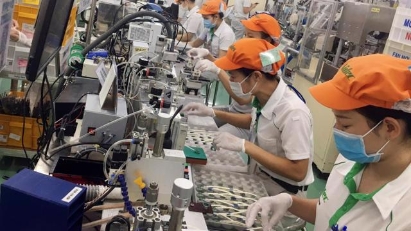
Vietnam grapples with the prospect of reducing standard working hours as a means to enhance worker well-being and productivity. Amidst fervent debates between labor unions, business entities, and policymakers, striking a delicate balance between socio-economic imperatives and global labor standards emerges as a paramount challenge.
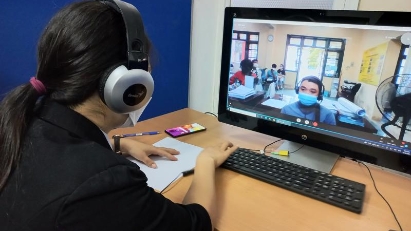
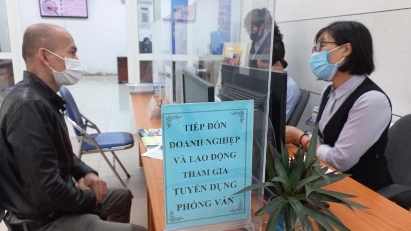
The Ministry of Labor, Invalids and Social Affairs (MoLISA) has said that Vietnam’s labor market is recovering quite quickly. There is a shortage of workers in some industries, while recruitment demand for many occupations continues to increase. To resolve labor shortages, MoLISA has adopted a policy promoting training and created more favorable conditions for workers to find jobs through the internet.
According to the Hanoi Department of Labor, Invalids and Social Affairs, Hanoi created over 168,000 jobs in the first nine months of 2022. The Department also approved more than 8,400 positions for foreigners working in the capital, issuing more than 7,110 new work permits for foreigners and reissuing more than 600.
The Ministry of Labor, Invalids and Social Affairs (MoLISA) has said that Vietnam’s labor market is experiencing uneven development and an imbalance in supply and demand between localities and sectors. Many localities boast industrial parks and export processing zones but only have a small population and workforce. Other localities are focusing on attracting investment but are not capable of handling larger numbers of workers.
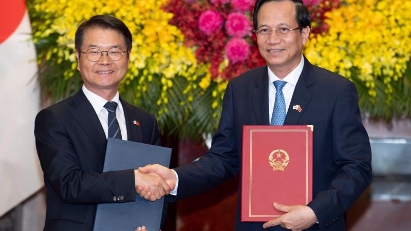
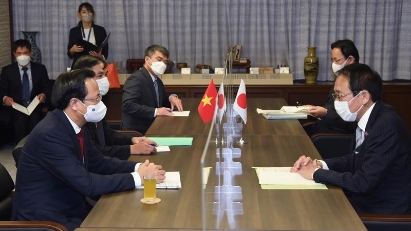
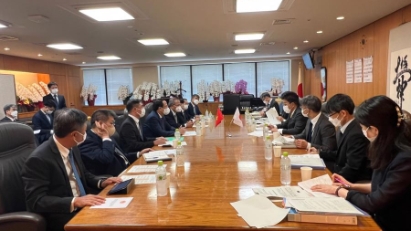
During talks on September 6 with visiting Minister of Labor, Invalids and Social Affairs Dao Ngoc Dung, Japan’s Minister of Justice Yasuhito Hanashi said the country will be hiring people in a number of professions in the immediate future, with the priority on elderly care. The Ministry of Justice will propose expanding the acceptance of trainees as drivers.
Minister of Labor, Invalids and Social Affairs Dao Ngoc Dung is visiting Japan to strengthen labor cooperation between the two countries. The two have agreed to expand the number of Vietnamese workers going to Japan.
Some 153,523 jobs were created in Hanoi in the first eight months of 2022, representing 96 per cent of the annual plan and 38,728, or 33.7 per cent, more jobs than were created in the first eight months of 2021. The Hanoi Department of Labor, Invalids and Social Affairs has forecast that the recruitment needs of businesses will be focused on office, sales, and production staff, electronic component assembly, and other fields.
Many new policies on labor and wages come into effect in September, such as a regulation on a two-day holiday for National Day, regulations on working time and rest periods for employees who operate, maintain, or repair gas distribution pipelines and gas works, and a pilot on work and vocational guidance and training for inmates outside of prison.
A representative from ManpowerGroup Vietnam presented survey data on Vietnam’s labor market at the “Development of a flexible, modern, sustainable and integrated labor market” conference. Low skills and low English use partly contribute to salaries for Vietnamese workers being far behind those in the region.
Speaking at the “Development of a flexible, modern, sustainable and integrated labor market” conference on August 20, Prime Minister Pham Minh Chinh emphasized the importance of workers within the economy. Breakthroughs are needed to attract high-quality human resources, he went on, such as reforming wages, creating a good working environment, and comprehensively renovating the training and vocational education system.
Vietnam currently has over 500 enterprises in the field of labor exports, which send more than 100,000 workers each year to 40 countries and territories, helping bring in remittances of more than $3 billion per year.
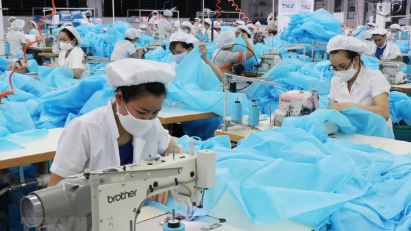
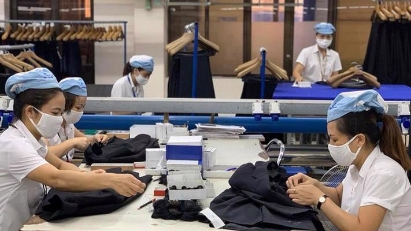
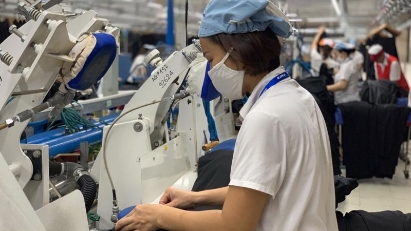
Labor shortages have become quite common in certain areas and industries. Even with attractive salaries of VND10-20 million ($450-$900) a month for experienced and technically-proficient candidates, recruiting is still problematic. Industries in Hanoi that employ a lot of workers include tourism, services, electronics, and apparel.
The 2021 Economic and Administrative Census, released by the General Statistics Office on June 29, found that the average workforce at enterprises in general declined in the 2016-2020 period, but the number of workers in the non-State sector increased. The economic structure continued to shift positively, towards reducing the proportion of agriculture, forestry, and fishery and increasing the proportion of industry, construction, and services.
According to the Vietnam General Confederation of Labor, since the 2022 Lunar New Year (Tet) holiday, there have been 28 labor disputes and strikes in Vietnam, mainly revolving around requirements to increase salaries and benefits. Labor unions will coordinate with the management boards of industrial parks, export processing zones, and economic zones to review businesses at risk of bankruptcy or dissolution, to identify plans for support and to minimize disputes.
The labor market became unstable and unemployment increased during the two years of the Covid-19 outbreak. This year, however, with flexible adaptation in pandemic prevention and control measures, many industries will need to recruit large numbers of workers, especially trained workers.
Adjustments will be made from February to policies that directly affect workers’ rights, including adjustments to salary and monthly income for which social insurance has been paid, changes in the ceiling fee for labor export services, and increases to the maximum overtime for seasonal workers.
Vietnam is currently enjoying what is called a “golden” population structure, with about 55 million people in the workforce. Only 24.5 per cent are trained, however, and this is one factor behind Vietnam’s workplace productivity remaining quite low. Developing skilled human resources has become an important foundation for the economy to grow sustainably and in-depth.