


The Thu Dau Mot - Ho Chi Minh City Metro Line 2 has been approved by the municipal People's Committee with a route length of approximately 33.2 km, featuring 11 elevated stations and 13 underground stations.
The projected metro line will connect Thu Dau Mot in the former province of Binh Duong (now part of Ho Chi Minh City) with the city center.
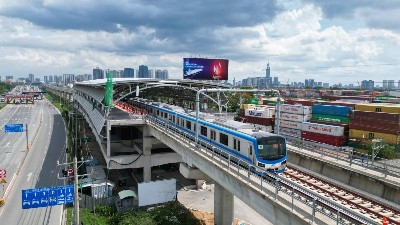
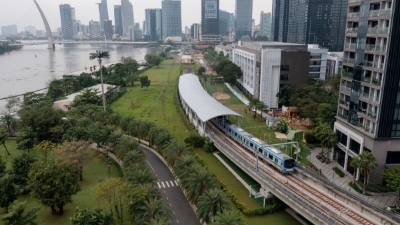
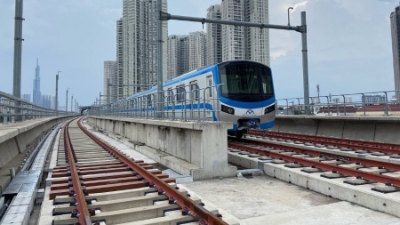
According to the approved plan, the entire route spans about 33.2 km, with approximately 17.7 km elevated and the remainder underground.
The line begins at Station S5 of the urban railway project Line 1 (New Binh Duong City - Suoi Tien) in Binh Duong Ward and ends at Tao Dan Station of Metro Line 2, Ben Thanh - Tham Luong segment, in Ben Thanh Ward in the center of Ho Chi Minh City.
The design of the line aims to integrate with other urban railway lines which are under construction, as well as connect with the national North-South railway and future planned railway lines.
The route passes through 16 wards, including Binh Duong, Phu Loi, Thu Dau Mot, Thuan An, Thuan Giao, Lai Thieu, Binh Hoa, Tam Binh, Hiep Binh, Binh Thanh, Gia Dinh, Thanh My Tay, Saigon, Xuan Hoa, Ben Thanh, and Ban Co.
The project includes 24 stations, with 11 elevated (from C0 to C10) and 13 underground (from C11 to C23). A depot is planned at Hiep Binh Phuoc in Tam Binh and Hiep Binh Wards for maintenance and overnight parking.
After the route and construction locations were determined, the Ho Chi Minh City People's Committee assigned the Management Authority for Urban Railways (MAUR) to implement the project according to the approved content and relevant legal regulations.
MAUR is responsible for reviewing and assessing the impact between the project and structures along the route, completing the route plan and construction location documents, and submitting them to the Department of Planning and Architecture of the city for appraisal, stamping, and archiving as per regulations.
During implementation, if there are changes to some route directions and station locations, MAUR must compile and report to the Department of Planning and Architecture to advise the Ho Chi Minh City People's Committee on considering and approving adjustments to the route plan and construction locations as per regulations, along with other tasks.
The People's Committee requires MAUR to finalize the determination of the center of gravity for stations and depots in the project documents, serving as a basis for defining the boundaries of urban development model planning areas oriented towards public transport development (TOD).
The Thu Dau Mot - Ho Chi Minh City Metro Line 2 is one of three metro lines expected to be submitted for approval in December, with construction starting at the end of the year and completion by 2030.
The project is currently undergoing appraisal for technology plans, key technical standards, and feasibility study reports for compensation, support, resettlement, route direction, and construction locations.
The Ho Chi Minh City Urban Railway Management Board has submitted for appraisal the technology plan, standard list, technical standards, and feasibility study reports for compensation, support, and resettlement.
To implement the project, Ho Chi Minh City plans to reclaim approximately 81.2 hectares of land, affecting about 2,681 cases, with around 398 cases requiring complete clearance. The total compensation, support, and resettlement cost is estimated at nearly VND34.4 trillion (more than $1.32 billion), sourced from the city's budget.





 Google translate