



Mr. Le Duy Binh, Managing Director of Economica Vietnam
The current conflict is not only a geopolitical issue but is also directly exerting heavy financial pressure on all parts of the economy, from businesses to individuals.
Specifically, the conflict is significantly accelerating the pace of interest rate increases. According to estimates, with total outstanding credit in the entire Vietnamese economy of around VND18,000 trillion ($683.77 billion), just a 1 per cent annual increase in interest rates would mean borrowers (especially businesses and real estate investors) would have to pay an additional VND30-35 trillion ($1.15-1.35 billion) in interest payments each month. If high interest rates persist throughout 2026, total additional interest payments could reach VND300-400 trillion ($11.5-15.4 billion) by year-end. This is considered a “huge” figure, eroding corporate profits and reinvestment resources.
Next is the cost related to exchange rates. In just the first three months of 2026, the USD exchange rate increased by 2.1 per cent, of which 1.4 per cent was due to the impact of the Middle East conflict. With export turnover reaching $122 billion in the first quarter of 2026, the exchange rate increase helped exporters gain about $2.5 billion. However, importers had to pay an additional $2.6 billion.
Vietnam’s economy imports a large volume of raw materials and machinery to serve production and exports. Therefore, the gains from exchange rate movements cannot offset rising input costs, turning this into another burden on the economy.
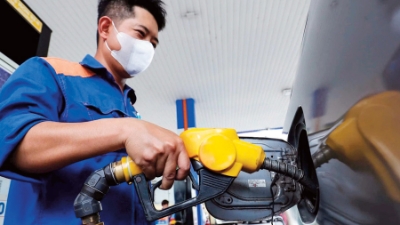
Another cost is Vietnam’s petroleum consumption. Across the entire economy, this figure is also significant. In 2025, Vietnam imported about 26-28 million cu m / tons of petroleum products, equivalent to roughly 2.2 million cu m / tons a month. Based on Petrolimex’s average cost, importing this volume cost around VND50 trillion ($1.9 billion) a month before the conflict.
Thus, if petroleum prices increase by just 10 per cent, the economy would incur an additional VND5 trillion ($192 million) in costs a month. Similarly, with increases of 20 per cent and 30 per cent, additional costs would rise to VND10 trillion ($385 million) and VND15 trillion ($577 million), respectively. Over a full year, these increases could add around VND150 trillion ($5.8 billion) in costs. Overall, the total additional costs imposed on Vietnam’s economy due to the conflict could amount to approximately $40-50 billion, equivalent to about 8-10 per cent of GDP this year.
These severe impacts will directly affect growth targets, consumption drivers, and investment intentions. Therefore, I recommend that measures be taken promptly to mitigate risks, particularly ensuring energy security and supporting businesses to weather this “cost storm,” thereby minimizing risks to the economy.
Ms. Mai Thu Hien,Deputy Director of the Department of Planning, Finance and Enterprise Management at the Ministry of Industry and Trade
National reserves have consistently received attention from the government and the Prime Minister in recent years, as clearly reflected in the approval of the Strategy for the Development of National Reserves to 2030 under Decision No. 305/QD-TTg issued on April 12, 2024. This strategy sets out a development roadmap for reserves of many essential commodities, with particular emphasis on petroleum products and crude oil.
Earlier, on July 18, 2023, the Prime Minister issued Decision No. 861/QD-TTg approving the National Infrastructure Plan for Oil and Gas Reserves and Supply for the 2021-2030 period, with a vision to 2050. This is one of 38 key national sectoral plans, providing a legal basis for the Ministry of Industry and Trade to coordinate with ministries, sectors, and localities in identifying locations, scale, and investment roadmaps for a synchronized storage system.
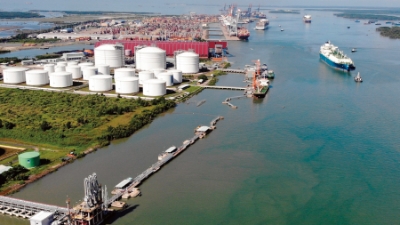
In terms of implementation, while storage infrastructure for petroleum products has been strongly developed by key enterprises, crude oil storage infrastructure remains largely tied to refineries such as Dung Quat and Nghi Son. In light of this, the Prime Minister has instructed and assigned the Vietnam National Industry - Energy Group (PetroVietnam) to study an investment project to build a crude oil storage facility at Nghi Son. The requirement is to clearly define scale, phased investment, funding sources, and implementation roadmap, while also proposing preferential mechanisms and policies to address bottlenecks in the operation and management of crude oil reserves, which have attracted public concern.
In parallel with the Nghi Son project, the Prime Minister has also tasked the Ministry to continue coordinating with relevant stakeholders to study and develop storage infrastructure at other strategic locations such as Dung Quat and Long Son, in line with the national sectoral plan. The synchronized implementation of the National Reserve Strategy and the Infrastructure Plan will be a key factor in completing the energy reserve system and achieving approved energy security objectives.
Mr. Ha Dang Son, Managing Director of the Centre for Energy and Green Growth Research
One of the key issues at the moment is the national energy reserve strategy. Member countries of the International Energy Agency (IEA) all maintain reserves of at least 90 days to stabilize the market during crises. In Vietnam, the risk lies not only in prices but also in potential fuel shortages. Domestic diesel production capacity currently meets just over 10 per cent of demand, with the majority still fully dependent on imports. If logistics systems, including rail, waterways, and aviation, were disrupted due to diesel shortages, the economy would be paralyzed.
The transition to net-zero is an especially long-term process, potentially extending to 2050 or beyond depending on the government’s roadmap. However, in the short term, it creates immense pressure when considered alongside energy security challenges.
In addition, policymakers face tariff pressures from major partners such as the US. LNG imports are sometimes not only an energy issue but also a tool to balance trade and avoid high tariffs that could affect export markets and domestic employment.
From this reality, it is necessary to review and reassess all energy development strategies. I fully agree that Vietnam should avoid excessive dependence on imported sources such as LNG due to high risks.
The net-zero decision is correct, but perhaps somewhat ambitious relative to Vietnam’s current capacity. It is time to consider adjusting the timeline to better align with realities, ensuring both a green energy transition and the safeguarding of national energy security.
Associate Professor Vu Sy Cuong, Chief Economist, Institute of Technology and Finance Development at the Academy of Finance
To fundamentally address current petroleum and energy issues, Vietnam needs a comprehensive mindset, clearly distinguishing between short, medium, and long-term scenarios rather than relying on ad hoc responses.
At present, short-term solutions mainly focus on direct government interventions such as economic diplomacy or reducing fuel taxes and fees to support the market. However, it is necessary to clearly define the duration of these measures and develop concrete plans for the medium term instead of stopping at immediate responses. A sustainable energy policy system must be based on three main pillars.
First, ensuring and diversifying supply. This is the key factor, requiring Vietnam to both secure traditional energy sources and diversify and restructure new energy sources.
Second, restructuring and conserving energy use. In both the medium and long term, it is necessary to promote energy efficiency among both households and businesses. However, a current challenge is that the transition to electric vehicles is not simple, as it would place enormous pressure on the power transmission and grid operation systems due to surging charging demand. Therefore, policies are needed to encourage rooftop solar for households to address on-site demand in the short term.
Third, reforming pricing mechanisms and regulating demand. Vietnam needs to adjust its electricity pricing structure, particularly by eliminating cross-subsidies between industrial and residential electricity prices. Time-of-use pricing (peak and off-peak) should be applied to influence consumption behavior. Currently, the lack of time-based electricity metering systems means households have little incentive to shift usage patterns (such as running washing machines or dryers), making load regulation more difficult.
Importantly, the most critical issue Vietnam currently faces is policy consistency. In partnerships, changing fuel supply partners or abruptly halting major power projects can create concerns among international partners about the stability of Vietnam’s market.




 Google translate