


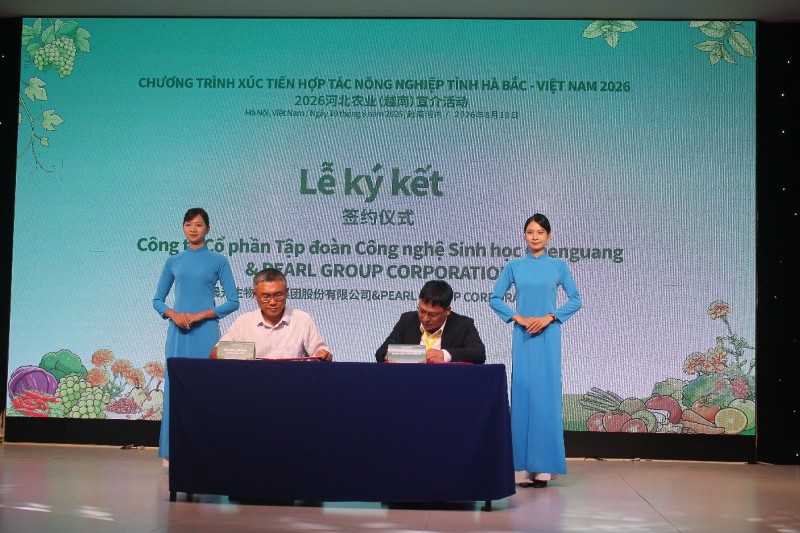
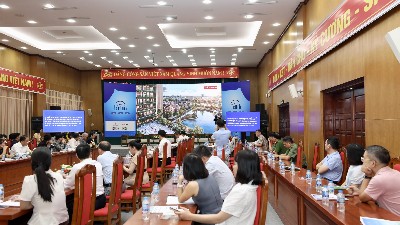
With nearly 100 businesses in attendance, the 2026 Hebei (China) - Vietnam Agricultural Cooperation Promotion Program, held on August 19 in Hanoi, opened new avenues for increased trade, deep processing, and the development of two-way agricultural supply chains.
In this framework, railway logistics has been identified as a pivotal competitive advantage.
Speaking at the event, Director of the Agricultural Trade Promotion Centre under the Vietnamese Ministry of Agriculture and Environment, Mr. Nguyen Minh Tien, emphasized that the railway logistics connection between Hebei and Hanoi is a vital asset for agricultural trade.
Beyond quality and price, Mr. Tien noted that transit time, preservation capabilities, and the stability of the logistics chain are decisive factors in agricultural commerce.
"When products are effectively linked to markets, businesses are connected to each other, and trade is integrated with logistics, geographical distance will no longer be a major barrier to cooperation between Vietnam and Hebei," he said.
Mr. Tien urged businesses from both sides to move beyond a simple "buying and selling" approach. Instead, they should focus on specific market demands, quality standards, food safety, traceability, packaging specifications, pricing, and volume.
He also encouraged expanding cooperation in deep processing, technology transfer, the utilization of agricultural by-products, and maintaining consistent networking after trade programs conclude.
Vast potential, but bottlenecks remain
Sharing her perspective at the event, Ms. Li Dan, Head of the International Cooperation Division of the Hebei Provincial Department of Agriculture and Rural Affairs, stated that the agricultural sectors of Vietnam and Hebei are highly complementary. Vietnam excels in tropical agricultural products, while Hebei holds strengths in vegetables, pears, edible mushrooms, and grains.
A significant development in this partnership was the launch of the ASEAN cargo train route connecting Zezhou (Handan) to Hanoi on March 5, 2025. This two-way transport line has slashed transit times from 12–15 days down to just 5–7 days.
Vietnam has now become Hebei's sixth-largest agricultural export market and a vital supplier of agricultural products for the province. Ms. Dan expected that direct trade activities will enable businesses from both sides to identify new partners and expand cooperation in deep processing, processed foods, and fresh produce.
According to Deputy Director of the Agricultural Trade Promotion Centre, Mr. Hoang Van Du, Vietnam's agricultural export turnover reached a record $70.09 billion in 2025, a 12% increase over 2024. In the first seven months of 2026, it reached $42.8 billion, up 7.5% compared to the same period last year.
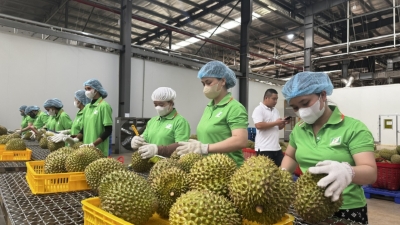
China continues to be a major destination for Vietnamese agricultural exports, particularly tropical fruits such as durian, dragon fruit, jackfruit, and mango. Conversely, Vietnam is a key market for many of China's temperate agricultural products. This complementary product structure creates significant room for two-way trade growth between Vietnam and Hebei.
However, according to Mr. Du, agricultural trade still faces several bottlenecks. These include unsynchronized logistics infrastructure, localized congestion at border gates during peak seasons, and high cold-chain costs. Furthermore, businesses must navigate increasingly stringent requirements regarding quarantine, growing area codes, and packing facility codes. Both sides also lack in-depth information regarding market trends, specific demands, and each other’s distribution systems.
To resolve these challenges, Mr. Du proposed maximizing the efficiency of the Hebei-Hanoi round-trip ASEAN cargo train. He also suggested researching priority customs clearance mechanisms for agricultural products and investing in cold storage systems at railway stations and border areas.
For Vietnamese enterprises, Mr. Du recommended standardizing quality starting from the production zones, strictly complying with regulations on growing area and packing facility codes, enhancing traceability, and adopting clean technologies.
Additionally, he emphasized that both sides should establish a periodic information-sharing mechanism covering demand, pricing, and market regulations. This would help facilitate long-term, official trade contracts between Hebei’s major distributors and Vietnamese cooperatives and enterprises with high export capacity.


 Google translate