


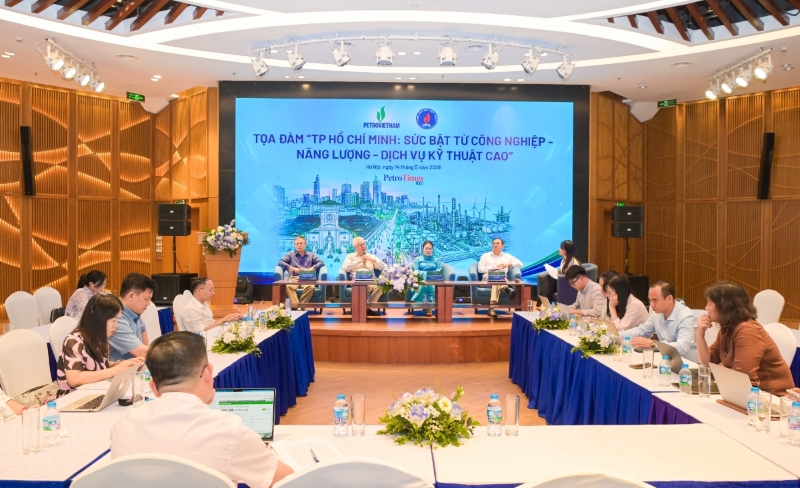
Green energy, LNG, offshore wind, maritime logistics, and high-tech industries are poised to become the new "growth engines" for Vietnam’s largest metropolis.
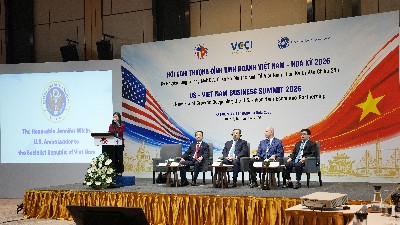
This vision was the focal point of the seminar "Ho Chi Minh City: Resilience from Industry - Energy - High-Tech Services," held on May 14 in Hanoi.
During the event, experts argued that energy should no longer be viewed merely as infrastructure or power supply, but as the foundational platform for restructuring the city's growth model in the coming period.
According to Director of the Institute for Policy Management and Development Strategy, Ms. Le Nguyen Thien Nga, the southern city must move beyond traditional mindsets.
“Energy development must be integrated into a holistic ecosystem encompassing green energy, digital energy, artificial intelligence, and high-tech industries across the entire Southeast region,” said Ms. Nga.
She emphasized that to go the distance and see Vietnamese enterprises enter the Fortune Global 500, the government must provide experimental mechanisms—or "sandboxes"—large enough for leading domestic firms to take the lead.
Ms. Nga further noted that the primary bottleneck is not necessarily a lack of policy mechanisms, but rather the absence of a robust “national governance architecture” capable of connecting, analyzing, and operating data for policy planning. Without this foundation, efforts toward digital transformation, smart cities, or integrated industrial-energy ecosystems will struggle to achieve real effectiveness.
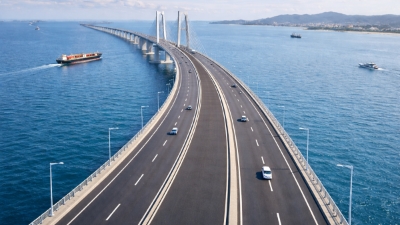
Dr. Du Van Toan, an expert in marine and island environments, highlighted that HCM City’s greatest competitive advantage currently lies in the Can Gio – Con Dao maritime economic space, supported by a long-established network of seaports, logistics, and oil and gas infrastructure. This provides more than just a gateway for shipping; it offers the potential to create a regional "hub" for industrial, energy, and maritime technical services.
Specifically, the offshore wind value chain extends far beyond power generation, driving growth in marine engineering, foundation manufacturing, maritime logistics, and environmental data services.
At the seminar, many participants agreed that the city is entering a critical transition phase as its traditional growth drivers approach their limits.
Dr. Nguyen Duc Kien, former Vice Chairman of the National Assembly's Economic Committee, stated that the city would struggle to maintain long-term growth if it continues to rely on traditional industrial models based on low-cost labor and land-intensive industries. The city must pivot toward a model driven by high-tech industries, clean energy, innovation, and high-quality technical services.
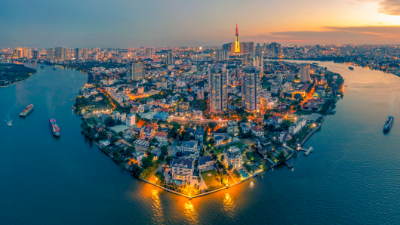
As Ho Chi Minh City's development space has been expands since the neighboring provinces of Binh Duong and Ba Ria - Vung Tau were merged into it. As a result, its structure is evolving from a monocentric urban model into a "regional megacity." This new model is built on economic connectivity, integrated logistics, energy, and technology.
Sharing this perspective, Dr. Tran Quang Thang, Director of the HCMC Institute of Economics and Management, asserted that the core issues remain institutional frameworks and development space.
“Only when institutional mechanisms are broad enough to foster regional linkages can the city truly form a new growth ecosystem for the entire Southeast region of the country,” said Mr. Thang.

 Google translate