


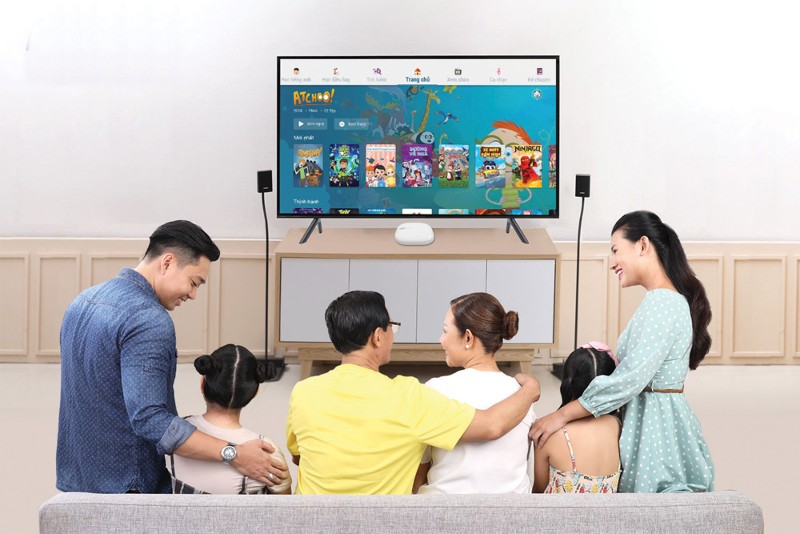
After 16 years of operations, in January 2026, K+, one of Vietnam’s pioneering subscription television providers, withdrew from a business increasingly challenged by changing viewing habits, rising content costs, intensifying competition from streaming platforms, and years of widespread digital piracy.
Yet only six months later, Warner Bros. Discovery delivered a very different message, by launching HBO Max in Vietnam on June 16 as part of its direct-to-consumer expansion across Southeast Asia.
Rather than sending contradictory signals, the two developments reflect a market undergoing structural change. Traditional pay television is gradually giving way to streaming, while international media companies continue to view Vietnam as one of the region’s most promising digital entertainment markets.
From growth to profitability
According to DataReportal’s “Digital 2026: Vietnam” report, the country had 85.6 million internet users at the end of 2025, representing 84.2 per cent of the population, alongside 137 million mobile subscriptions and approximately 79 million social media user identities. Combined with rising disposable incomes and one of Southeast Asia’s youngest online populations, those figures continue to attract global streaming companies seeking growth beyond increasingly mature markets in North America and Western Europe.
HBO Max will enter an increasingly competitive landscape already occupied by foreign players like Netflix and Apple TV+, and a growing number of domestic services, including FPT Play, VieON, TV360, Galaxy Play, and VTVgo. But unlike a decade ago, when streaming platforms competed primarily by introducing Vietnamese audiences to on-demand viewing, today’s contest is less about acquiring first-time users than building sustainable businesses in a market where consumers have abundant choice.
That evolution is evident across the industry. Platforms are facing higher costs for premium content, sports broadcasting rights, and customer acquisition, while viewers are spreading their attention across streaming services, short-form video, gaming, and social media.
Success increasingly depends not only on attracting subscribers but on retaining them through exclusive content, a superior user experience, and stronger brand loyalty.
Copyright enforcement
Vietnam’s regulatory environment is also changing in ways that could reshape the industry’s economics. For years, piracy remained one of the defining obstacles to the development of legitimate streaming services.
Unauthorized websites routinely offered newly-released films, television series, and sporting events free of charge, undermining subscription platforms that had invested heavily in licensing rights. While infringements were frequently identified, enforcement often relied on administrative penalties or civil proceedings, limiting their deterrent effect.
Authorities have now adopted a more assertive approach. The Ministry of Culture, Sports and Tourism has strengthened cooperation with the Ministry of Public Security through a joint program between the Copyright Office of Vietnam and the Department of Cybersecurity and High-Tech Crime Prevention (A05), covering the 2026-2029 period.
Recent cases have also seen authorities pursue criminal prosecution against organized copyright infringement while expanding efforts to target the revenue streams generated by illegal content distribution rather than simply removing infringing material.
The implications extend well beyond legal compliance. For international studios, sports rights holders, and streaming platforms, stronger copyright enforcement reduces investment risk and improves the commercial viability of licensed content. As Vietnam seeks to develop a more sophisticated digital economy, intellectual property protection is increasingly becoming an economic issue as much as a legal one.
Beyond piracy
Even so, stronger enforcement alone is unlikely to determine the industry’s future. The next phase of competition may ultimately be decided less by who owns the largest content library than by who wins the greatest share of consumers’ attention.
According to a recent social listening study by Kompa, nearly 85 per cent of online conversations about streaming platforms in Vietnam now take place on YouTube and TikTok, while traditional news outlets account for just 0.4 per cent.
Rather than discovering new movies or television series through conventional advertising, viewers increasingly rely on trailers, creator reviews, reaction videos, memes, and short-form clips shared across social media before deciding what to watch.
The findings point to a fundamental shift in the industry’s competitive dynamics. Marketing is no longer centered on television commercials or banner advertisements but on becoming part of everyday online conversations.
Netflix continues to dominate that conversation. Kompa found the platform generated around 18-times more online discussion than FPT Play and 24-times more than VieON during the study period, reinforcing its position as the default reference point for premium streaming among Vietnamese audiences.
Yet the report argues that the gap extends beyond content or pricing. Netflix has become embedded in internet culture, while many domestic platforms are still building comparable levels of brand familiarity.
That does not mean local platforms are losing the race. Rather than competing head-on with Netflix’s international catalogue, they are increasingly differentiating themselves through local strengths.
FPT Play has built its position around premium football rights, VieON around Vietnamese reality shows and entertainment programs, and TV360 through Viettel’s telecommunications ecosystem and its co-broadcast rights to all 104 matches of the 2026 FIFA World Cup, while VTVgo continues to leverage the credibility and broad reach of the national broadcaster. These four services account for nearly 80 per cent of online discussions about domestic OTT (Over-The-Top) platforms.
The challenge, however, is sustaining that momentum. Many platforms remain heavily dependent on a single flagship property, making them vulnerable to sharp declines in engagement once a major tournament ends or a hit program fades. Long-term success will depend less on producing the next blockbuster than on building a broader pipeline of exclusive content capable of turning temporary viewing spikes into lasting subscriber loyalty.
The Kompa study also highlights where the next opportunities may lie. Consumers increasingly view streaming as part of a broader digital ecosystem rather than a standalone service, creating room for bundled offers that combine broadband, mobile data, and entertainment subscriptions. Telecommunications operators are particularly well positioned to capitalize on this trend by leveraging existing customer relationships to lower acquisition costs while increasing average revenue per user. At the same time, underserved content segments, including anime and sports beyond football, could provide attractive niches for platforms seeking to differentiate themselves in an increasingly crowded market.
Contrary to long-held assumptions, Vietnamese consumers are not necessarily unwilling to pay for legitimate content. Rather, many cite practical shortcomings - limited content libraries, slower subtitle releases, and an inconsistent user experience - as the primary reasons they continue to use unauthorized streaming sites.
Vietnam’s streaming market is no longer defined by how many platforms compete for viewers, but by how effectively they can convert attention into sustainable businesses. For global entrants such as HBO Max, the country remains one of Southeast Asia’s most promising growth markets. For domestic platforms, success will depend on building stronger local content ecosystems rather than competing on scale alone. As the industry matures, the ultimate winners are likely to be those that convince audiences not only to watch but to keep coming back and to pay for the experience.
HBO Max will enter an increasingly competitive landscape already occupied by foreign players like Netflix and Apple TV+, and a growing number of domestic services, including FPT Play, VieON, TV360, Galaxy Play, and VTVgo.






 Google translate