


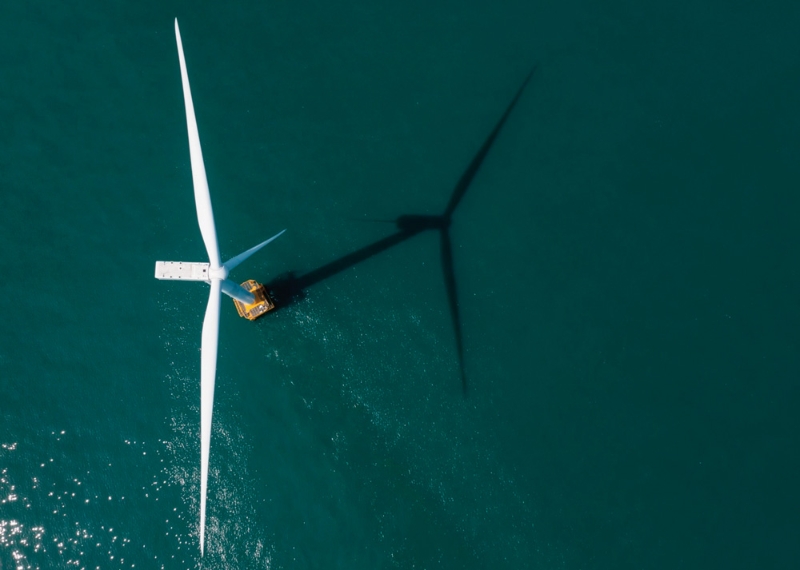
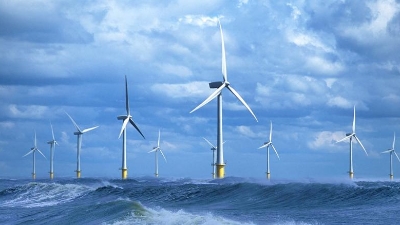
Vietnam’s offshore wind power landscape has undergone a notable transformation over recent times. After a prolonged period of near policy stagnation, the industry is now showing clear signs of acceleration, aligned with the targets set out in the revised National Power Development Plan for 2021-2030, with a vision to 2050 (PDP8), alongside National Assembly Resolution No. 253/2025/QH15 on mechanisms and policies for national energy development in the 2026-2030 period.
Specifically, under the revised PDP8, Vietnam aims to achieve a total offshore wind capacity of approximately 6,000-17,032 MW to serve domestic demand, with projects expected to come into operation between 2030 and 2035. Over the longer term, by 2050, total installed capacity is projected to rise to between 113,503 and 139,097 MW, reflecting strong ambitions to position offshore wind as a cornerstone of the national energy system.
Investment barriers
Vietnam is widely regarded as possessing highly-favorable preconditions for offshore wind development, comparable to those of Taiwan (China) 10-15 years ago in the early stages of its industry. On that foundation, the Vietnamese market is increasingly attracting strong interest from international investors, not only in project development but across the entire value chain, from equipment supply and technical services to supporting infrastructure.
However, as highlighted by speakers at the “Offshore Wind in Vietnam: Unlocking Southeast Asia’s Largest Clean Energy Opportunity” discussion session held within the framework of the EU-Vietnam Global Gateway Business and Investment Forum on March 24, policies related to survey licensing, project site allocation, and approval procedures for offshore wind projects in Vietnam remain insufficiently clear and consistent. This lack of clarity has made it difficult to establish a seamless development pathway from early-stage exploration to construction.
Therefore, the situation not only delays investment decision-making but also significantly heightens risk exposure, particularly given that offshore wind projects typically require seven to eight years to progress from early-stage preparation to full commercial operation. The long development timeline means that investors must commit capital well in advance, often without full visibility on future regulatory or market conditions.
For large-scale projects, which can reach capacities of up to 1,000 MW and require total investment of around $4-$5 billion per project, such uncertainty becomes even more critical. Any ambiguity in policies, licensing procedures, or approval processes can disrupt financial planning, complicate project financing, and ultimately undermine investor confidence. As a result, even well-prepared projects may struggle to secure funding, making policy clarity and consistency a decisive factor in attracting sustained international capital flows.
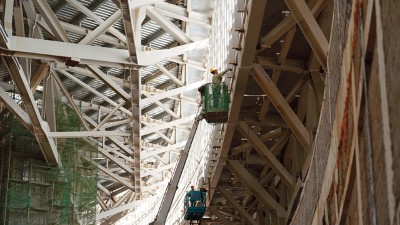
In addition, technical infrastructure and implementation capacity present further challenges to offshore wind development in Vietnam. Currently, the country’s port system, shipyards, and installation fleets remain insufficiently equipped to meet the logistical demands of large-capacity wind turbines and complex offshore structures.
According to Ms. Le Thi Phuong Nhi, Country Manager of Siemens Energy Vietnam, offshore wind development must be approached holistically across the entire value chain. Turbine manufacturing represents only one link, while other foundational elements, such as port infrastructure, logistics systems, and offshore technical services play equally critical roles in ensuring project viability. “Though Vietnam already has a relatively developed port system, it still requires upgrades to meet the specialized technical requirements of the offshore wind industry,” she emphasized.
Similarly, Mr. Alessandro Antonioli, CEO of Copenhagen Offshore Partners and Senior Representative of Copenhagen Infrastructure Partners in Vietnam, pointed out that one of the major bottlenecks lies in the capacity of the power grid. Offshore wind power development is not limited to generation but also requires large-scale investment in and upgrading of transmission infrastructure. Meanwhile, Vietnam’s power grid planning and investment progress have yet to keep pace with the rapid expansion of power generation. Without timely upgrades, even well-prepared projects may face risks of curtailment or delays in grid connection, directly affecting investment efficiency.
Mr. Antonioli noted that while the policy framework is gradually improving, not all investors are ready to enter Vietnam’s offshore wind market under existing conditions. Unless these issues are addressed systematically through policy reforms, infrastructure investment, and targeted capacity building, the pace of offshore wind development may fall short of the ambitious targets set out in the revised PDP8.
Ensuring clarity
In order to attract foreign investment, Vietnam needs to establish a policy and market ecosystem that is transparent, stable, and highly predictable, thereby fostering long-term investor confidence. In addition to refining the legal framework and upgrading infrastructure, investors particularly emphasize the importance of “strategic partnerships” between domestic and international enterprises in offshore wind development.
For foreign investors, this is not merely a process of technology transfer followed by disengagement. Rather, it should be structured as a long-term collaborative relationship in which all parties participate and share value throughout the entire project lifecycle. “Such cooperation can begin with planning and plant design, extend to supply and manufacturing, followed by transportation and logistics solutions, and continue through pre-assembly, installation, commissioning, and ultimately operations and maintenance,” Ms. Nhi explained.
Adding a practical perspective, Mr. Antonioli suggested that several core conditions must be ensured from the outset for offshore wind projects in Vietnam to be implemented successfully.
In particular, offshore wind power projects must be designed to be sufficiently “bankable,” meaning they meet the necessary criteria to attract financial institutions. This requires clear allocation of roles and responsibilities among stakeholders, particularly the power purchaser, along with appropriate financial guarantee mechanisms, which may involve domestic banks or State-backed institutions. At the same time, a transparent and stable pricing mechanism is also essential to build investor confidence.
Moreover, offshore wind development in Vietnam demands a fundamentally different and more structured, long-term, industry-building approach. This includes synchronized investment in infrastructure, especially port systems (notably in northern Vietnam), as well as the development of a capable domestic supply chain to support sustainable industry growth. “If the Ministry of Industry and Trade, along with State-owned enterprises and private developers, can come together under such a clear strategic direction, it will be entirely possible to establish appropriate contractual frameworks, not only for pioneering projects but also to lay the foundation for a fully-fledged offshore wind industry,” Mr. Antonioli emphasized.
In addition, Mr. Antoine Croize, Country Manager of Vestas Vietnam, underscored that a stable and predictable policy framework is a prerequisite for foreign investors to formulate long-term plans and operate effectively. Vietnam must continue to enhance market transparency and predictability, particularly by clarifying what can be realistically implemented. “Many countries have set highly-ambitious targets for offshore wind power but failed to realize them,” he said. “Therefore, establishing a clear and feasible development roadmap, accompanied by a concrete legal framework, will be the decisive factor in turning Vietnam’s offshore wind ambitions into reality.”
Offshore wind development must be approached holistically across the entire value chain. Turbine manufacturing represents only one link, while other foundational elements, such as port infrastructure, logistics systems, and offshore technical services, play equally critical roles in ensuring project viability.




 Google translate