


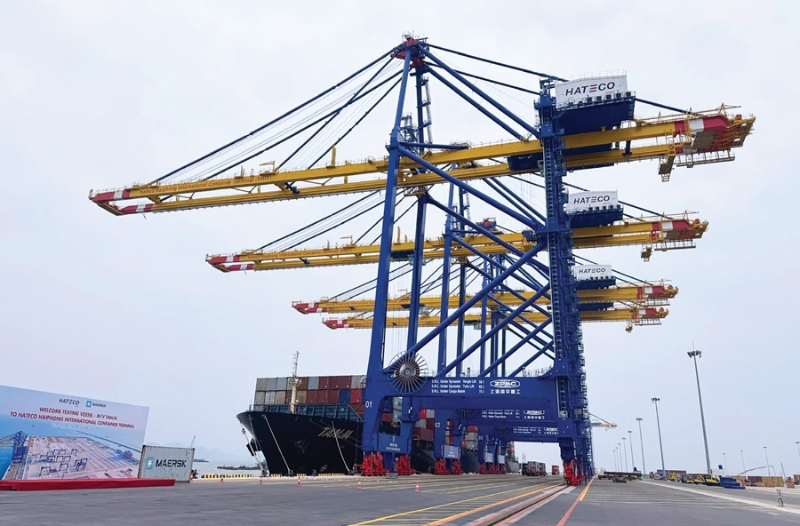
Vietnam has set an ambitious export target of some $546-550 billion for 2026, representing a year-on-year increase of 15-16 per cent. Amid increasingly complex and unpredictable geopolitical tensions, however, particularly in the Middle East, this goal is widely viewed as challenging and requiring decisive and flexible policy responses.
At the Ministry of Industry and Trade (MoIT)’s review conference for the first quarter of 2026, Mr. Bui Huy Son, Director General of the Planning, Finance and Enterprise Management Department, reported that Vietnam’s export turnover in the first two months of 2026 was estimated at $76.4 billion, a 18.3 per cent increase year-on-year and reflecting a robust recovery by domestic enterprises.
Exports to major markets posted solid gains, with shipments to the US rising 21.9 per cent, to China 38.1 per cent, and to the EU 8.7 per cent. The manufacturing and processing sector continued to serve as the primary growth engine, led by products such as computers and electronic components, which increased 41 per cent, and mobile phones, up 21 per cent.
Rising barriers and competition.
Despite the strong start, Vietnam’s export sector faces mounting headwinds from the global market. Acting Minister of Industry and Trade Le Manh Hung noted that global trade is being significantly affected by geopolitical instability, increasing technical barriers, and more stringent requirements related to quality standards and social responsibility.
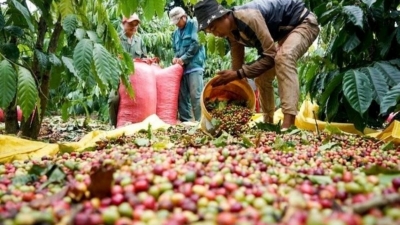
Mr. Nguyen Anh Son, Director General of the Agency of Foreign Trade at the MoIT, highlighted that agricultural exports are particularly vulnerable as global supply chains continue to be disrupted by conflicts. Businesses are grappling with longer shipping times and rising logistics costs, including higher freight rates, insurance premiums, and payment risks. As of early March 2026, container shipping rates to the US and the EU had surged by two to three-times.
According to Mr. Vu Ba Phu, Director General of the Trade Promotion Agency (Vietrade), achieving the annual export growth target of 15-16 per cent implies reaching a monthly export value of $45-46 billion. This represents a significant challenge for the entire industry and the broader economy.
A closer look at individual markets reveals a mixed picture. While several markets recorded strong growth, of above 10 per cent, including the US, Mexico, and Canada, as well as China, Hong Kong (China), and India in Asia, and countries such as Poland, Belgium, Bulgaria, Croatia, and the Czech Republic in Europe, others lagged behind.
In the Middle East, despite the ongoing instability, exports continued to grow: to Israel by 21.75 per cent, to Turkey 18.65 per cent, to the UAE 14 per cent, to Kuwait 28 per cent, and to Saudi Arabia 24 per cent. African markets such as Angola, Algeria, Senegal, Ghana, and Kenya also posted impressive growth, reaching as high as 44 per cent.
However, a number of markets posted low or negative growth. For example, exports to Ireland fell by 44 per cent, to Lithuania 46 per cent, to Romania 25 per cent, to Finland 19 per cent, and to Portugal 3 per cent.
In the key US market, Mr. Do Ngoc Hung, Head of the Vietnam Trade Office in the country, emphasized that while the market remains a top destination for Vietnam’s major export products, competition is intensifying and regulatory requirements are becoming more demanding.
From a business perspective, Ms. Le Hang, Deputy Secretary General of the Vietnam Association of Seafood Exporters and Producers (VASEP), outlined four major challenges facing the industry in 2026.
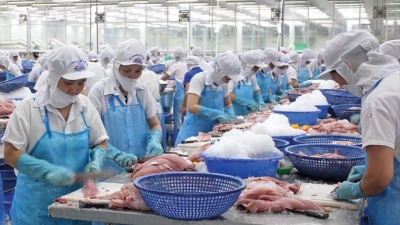
First, geopolitical risks and logistics disruptions remain the most pressing concerns. Second, key export products such as shrimp and pangasius (catfish) continue to face difficulties due to anti-dumping duties in the US. Third, stricter environmental and sustainability requirements, including those related to the Marine Mammal Protection Act (MMPA), the EU’s “yellow card” warning on illegal, unreported, and unregulated (IUU) fishing, and localized trade barriers. Fourth, input costs, including packaging and processing materials, are on the rise, further squeezing profit margins.
Unlocking markets and opportunities.
To achieve double-digit export growth in 2026 and support businesses through the current challenges, Mr. Son called on the MoIT to closely monitor market developments and advise the government on coordinated policy action.
He emphasized the need for alignment across ministries - including Agriculture and Environment, Construction, and Finance as well as the State Bank of Vietnam - to ensure synchronization between production, business activities, fiscal policy, and foreign exchange reserves.
Mr. Son also proposed assigning specific key performance indicators (KPIs) to Vietnam’s overseas trade offices by region, in coordination with Vietrade and the Agency of Foreign Trade. Beyond target-setting, these offices should be held accountable for declines in export turnover within their respective markets. They are also expected to proactively identify and propose new markets, recommend policy measures, and provide timely alerts to exporters about emerging opportunities and risks.
Additionally, trade offices should actively identify new product categories and uncover sectors with growth potential, while developing “market maps” and establishing risk management and early warning systems for both the ministry and the business community. For industry associations, the Agency of Foreign Trade urged stronger efforts to provide market risk warnings to members and offer guidance on risk management practices. Businesses should be encouraged to include clear insurance clauses in contracts and proactively anticipate adverse scenarios or force majeure events to minimize potential losses.
To ensure the realization of export targets, Acting Minister Hung stressed that commercial counselors, heads of trade offices, and trade promotion representatives will be held directly accountable for export performance in their assigned markets.
For markets experiencing negative growth, immediate reviews and analyses are required to identify causes and propose recovery measures, with the goal of restoring export turnover to at least the previous year’s level and moving toward positive growth.
Markets with low growth (0 to 10 per cent), meanwhile, must have sectors of high potential identified and targeted measures implemented to boost exports and post growth of 10 per cent, with reports to be submitted by March 31.
Markets with moderate growth (10-15 per cent) are expected to maintain momentum while supporting businesses in expanding market share, particularly by leveraging competitive products and existing free trade agreements to promote new export items. The target is to push annual growth beyond 15 per cent.
For high-growth markets (above 15 per cent), the priority is to sustain momentum and reinforce their role as key growth drivers. Efforts should focus on maintaining strong relationships with major retailers, distribution chains, and importers, with a view to achieving growth of over 18 per cent.
“The 10 per cent growth target for this year has been set and cannot be revised downward,” Mr. Hung emphasized. “If one area falls short, we must compensate elsewhere through restructuring. We need clear figures for each market and each sector in order to respond with timely and effective solutions.”






 Google translate