


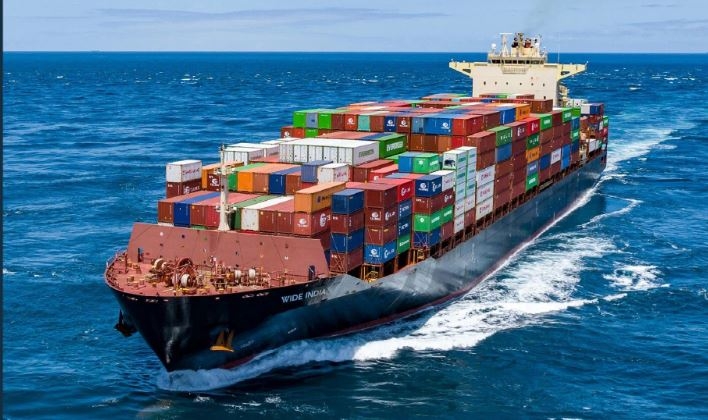
Geopolitical shocks in the Middle East have placed global supply chains on “red alert.” For Vietnam’s logistics and import-export businesses, understanding legal liabilities, identifying risks, and securing appropriate insurance are no longer routine tasks; they have become essential to protecting cash flow and corporate reputation.
According to Mr. Nguyen Duc Binh, Secretary General of the Vietnam Logistics Business Association (VLA), growing risks, from route disruptions and forced rerouting to rising surcharges and tighter insurance conditions, are putting unprecedented pressure on logistics and import-export companies. The VLA therefore organized a seminar entitled “Liabilities, Risks, and Insurance Solutions for Logistics Businesses in the New Context,” aimed at equipping members with stronger legal and financial safeguards amid escalating uncertainty.
Matrix of risks
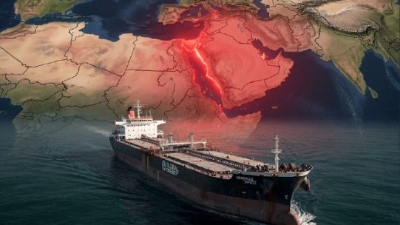
International data underscores the severity of the situation. According to Fitch Ratings, around 1,000 vessels, with total hull values exceeding $25 billion, are currently operating in the Gulf region and nearby waters. With such a massive concentration of assets in sensitive areas like the Strait of Hormuz, risk exposure is exceptionally high.
The immediate consequence has been felt in marine and aviation insurance markets, where many war-risk policies have been abruptly canceled or renegotiated at significantly higher premiums. Fitch warns that war-risk premiums for vessels transiting the Strait of Hormuz are highly volatile and could surge by as much as 20-times.
More concerningly, these elevated premiums may persist through the end of 2026. Morningstar DBRS has issued a similar warning, noting that prolonged geopolitical tensions will tighten reinsurance conditions, prompting insurers to raise prices and narrow coverage, especially for politically sensitive assets.
To help businesses better grasp the burden they face, Mr. Hoang Anh Phuoc, Director of Client Relationships at the AEGIS Insurance Brokers Co., Ltd and a member of the VLA’s Legal Advisory Division, outlined the complexity of logistics service chains. He emphasized that logistics is not merely about moving goods from point A to point B, but a continuous chain that includes transportation, cargo receipt, warehousing, packaging, labeling, and customs procedures.
Each of these stages carries distinct and inherent risks. In maritime transport, companies face threats such as sinking, grounding, piracy, cargo damage, or fire. In road transport, collision risks and third-party liability claims are constant concerns. Even in storage, goods remain vulnerable to fire, flooding, or theft.
At the loading, unloading, and customs declaration stages, even minor errors, such as outdated knowledge of tax policies, procedures, packaging, or fumigation requirements, can result in costly delays or shipment blockages.
Mr. Phuoc noted that beyond safeguarding cargo, freight forwarders must also bear significant liabilities, including bodily injury or property damage to third parties, unintentional legal violations, delivery without retrieving bills of lading, incorrect labeling, inaccurate cargo declarations, or even delivery to the wrong address, leading to substantial recovery and handling costs.
Given the complexity and intensity of these risks, understanding legal obligations is critical. Vietnam’s Civil Code, at Article 534, clearly stipulates the carrier’s obligations, including the requirement to purchase civil liability insurance where applicable. Article 541 further mandates compensation for loss or damage to entrusted goods.
Additionally, Government Decree No. 163/2017/ND-CP sets liability limits: if the customer does not declare the cargo’s value in advance, the maximum compensation is capped at VND500 million ($19,231) per claim. However, if the declared value is acknowledged by the service provider, liability rises to the full actual value of the shipment.
Navigating volatility
Facing mounting pressures, logistics companies are increasingly seeking effective risk transfer strategies. Mr. Phuoc identified two main approaches currently used in the market.
The first involves non-insurance risk transfer. The most common method is embedding strict contractual clauses. Companies can work with maritime law firms to incorporate exemption, indemnity, or liability limitation clauses to minimize losses in case of incidents. However, such provisions are often complex and not always easily accepted by partners or cargo owners.
Another option is outsourcing or corporate restructuring. Some firms shift high-risk operations to subcontractors to distribute liability, though excessive outsourcing can erode profit margins. Larger logistics groups may establish separate legal entities within their ecosystems to compartmentalize risks.
The second, and most widely adopted, approach is transferring risk through insurance. The mechanism is straightforward: companies pay a fixed premium in exchange for coverage of potentially large losses.
Mr. Phuoc noted that it stabilizes finances by converting unpredictable losses into a defined annual cost. “Instead of constantly worrying about when risks might occur and how much compensation would be required, spending a few thousand USD on insurance for coverage worth millions of USD allows businesses to operate with confidence,” he explained. However, he also cautioned that insurance only covers risks that are random, beyond control, lawful, and quantifiable in monetary terms.
Amid ongoing tensions in Iran and the broader Middle East, experts offered practical advice to help businesses avoid legal pitfalls. Ms. Vu Thi Thanh Dung, Hanoi Branch Manager and Head of Marine Line at QBE Vietnam, stressed an important point: “Standard carrier liability insurance policies issued by QBE typically exclude losses or costs arising directly or indirectly from war, armed conflict, or hostile acts.”
Nevertheless, businesses should not panic. Under Vietnam’s current legal framework, including the Maritime Code 2015 and the Commercial Law 2005, carriers are exempt from liability for losses caused by force majeure events. War risks or government-imposed restrictions can fall into this category.
To protect themselves, Ms. Dung advised transport operators to closely monitor developments in restricted maritime and airspace zones. Regularly consulting updated lists from the Joint War Committee can help companies proactively adjust routes and avoid high-risk areas.
From a dispute resolution perspective, Mr. Phuoc added that businesses should prepare for sudden unilateral decisions by international shipping lines, such as voyage abandonment, mid-route cargo discharge, or the imposition of steep war surcharges.
To minimize disputes between carriers and cargo owners, he recommended that logistics firms proactively engage with shipping lines to clarify the legal basis and timing of such surcharges. They should then transparently communicate and negotiate with cargo owners to pass on unavoidable costs.
For future contracts, companies must explicitly include clauses stating that in the event of war-related rerouting or port changes, logistics providers will be exempt from liability for any resulting additional costs.





 Google translate