


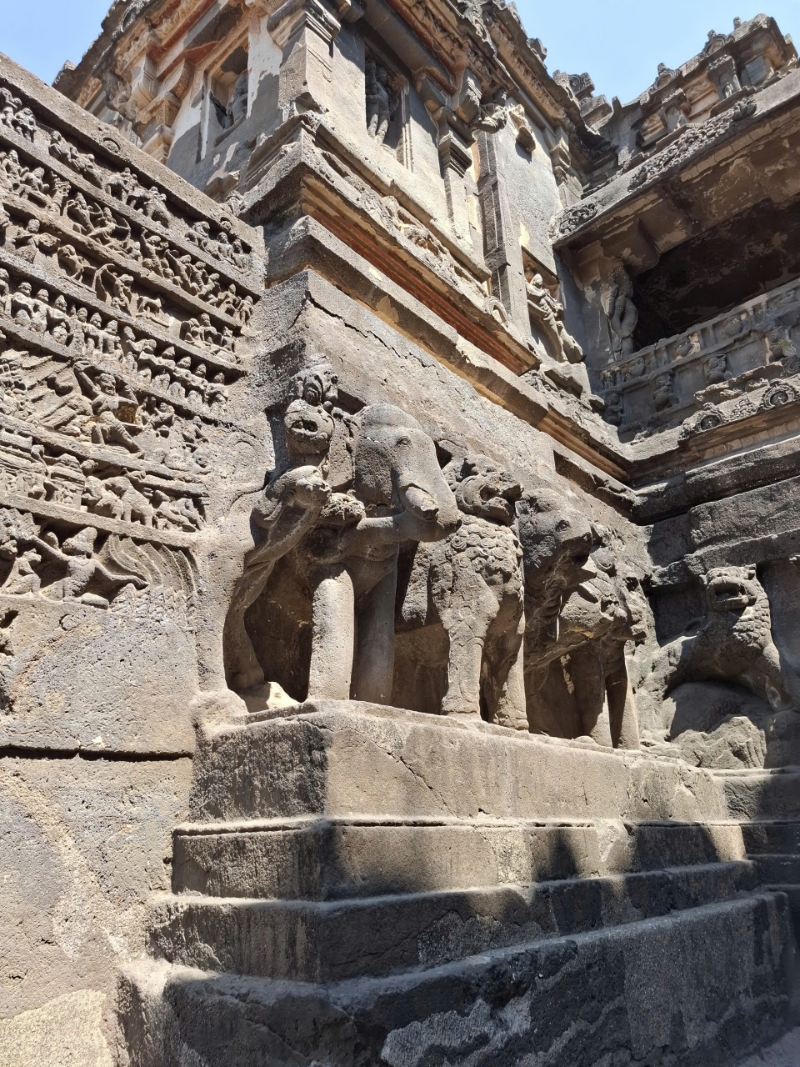
During a recent familiarization trip organized by the Embassy of India in Vietnam and the government of Maharashtra, a delegation of international journalists and travel companies - including a representative of Vietnam Economic Times (VnEconomy) - had the opportunity to experience the site firsthand. The visit offered a rare glimpse into how India preserves an ancient heritage site while promoting it as a strategic asset in the country’s rapidly growing tourism industry.
As the road approaches the complex, the long basalt cliffs of the Charanandri Hills slowly emerge on the horizon. Hidden within these dark volcanic rocks lies one of India’s most remarkable ancient architectural wonders. Unlike many historic monuments built from bricks or assembled stone blocks, the entire Ellora complex was carved directly into the mountainside.
At first glance, it is difficult to imagine that an entire network of temples and monasteries could be hidden inside these seemingly solid cliffs. For many members of our delegation, the approach to Ellora already hinted that the site would be far more extraordinary than expected.
The 34 caves that make up the complex stretch for more than two kilometers and reflect centuries of artistic, religious, and architectural development in India.
For the country’s tourism industry, Ellora is far more than a historical monument. Along with the nearby Ajanta Caves, it forms one of India’s most important cultural heritage destinations. Both cave complexes were designated UNESCO World Heritage Sites in 1983 and attract millions of visitors each year, making them central to travel itineraries across Maharashtra-one of India’s key tourism regions.
A monumental complex carved from solid rock
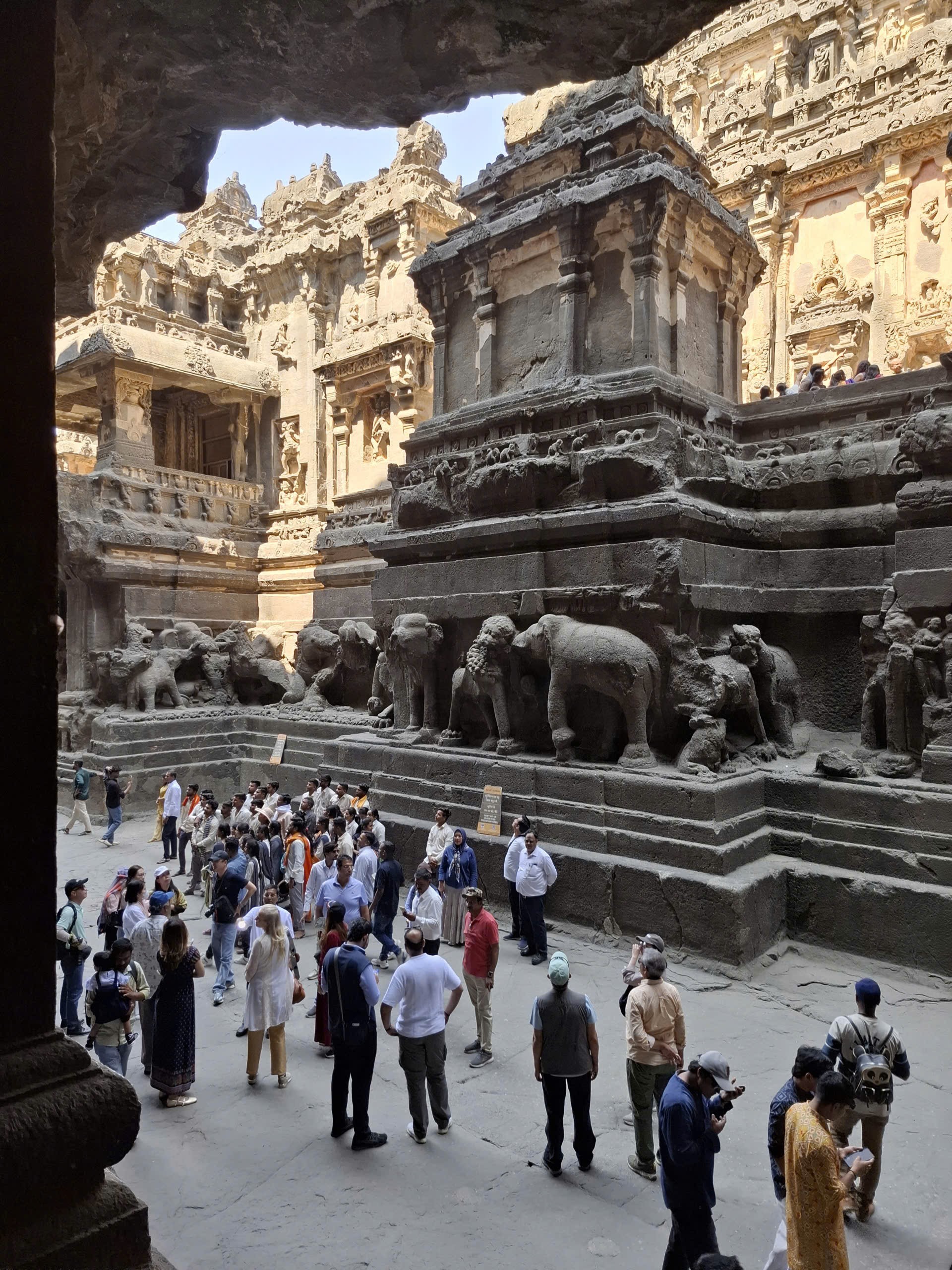
Located about 30 kilometers from the city of Aurangabad, the Ellora Caves extend along the slopes of the Charanandri Hills on the Deccan Plateau. The site consists of 34 rock-cut caves sculpted directly into the basalt cliffs, forming one of the largest monolithic architectural complexes in the world.
What makes Ellora truly remarkable is not only its scale but also the method by which it was built. Instead of constructing temples by stacking stone blocks, ancient artisans carved downward from the top of the rock face, gradually removing enormous volumes of stone to create temples, monasteries, corridors, and elaborate sculptures.
Archaeologists believe that the caves were created between the 6th and 10th centuries. One of the most striking features of Ellora is the coexistence of three major religions-Buddhism, Hinduism, and Jainism-within the same complex.
Of the 34 caves, twelve are Buddhist, seventeen Hindu, and five Jain. The presence of these three traditions side by side is widely regarded by scholars as evidence of the spirit of religious tolerance that existed in parts of India’s history.
Walking through the stone corridors today, visitors encounter hundreds of intricately carved statues and bas-reliefs depicting Hindu mythology, scenes from the great epics Ramayana and Mahabharata, and aspects of ancient spiritual life.
Even travelers who have visited many historic monuments around the world often find themselves awed by the scale and atmosphere of Ellora.
As we moved deeper into the caves, the atmosphere grew quieter and more contemplative. The cool stone walls, dim light, and the silent presence of centuries-old sculptures created the feeling of stepping back in time.
The world’s largest monolithic rock temple
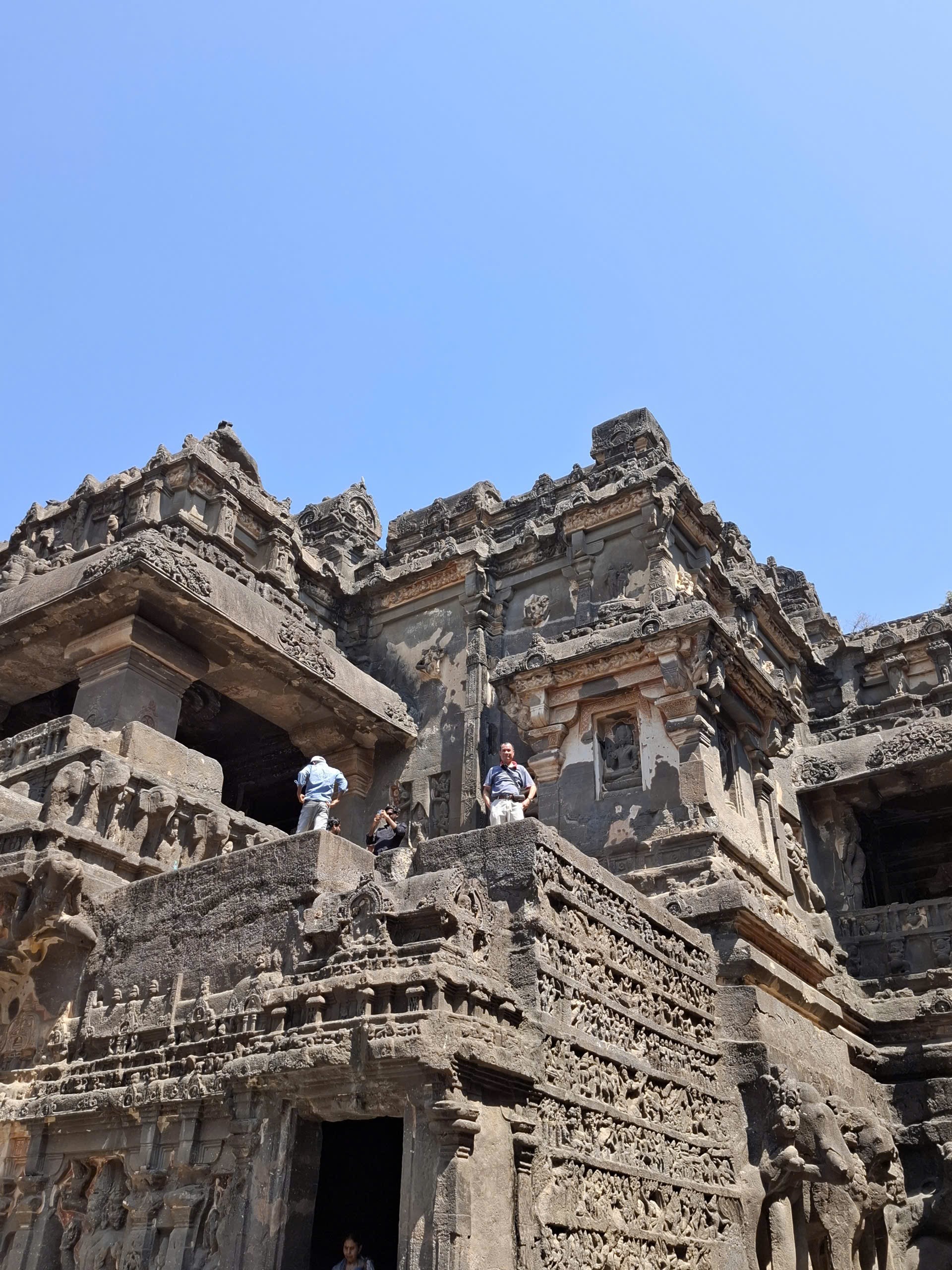
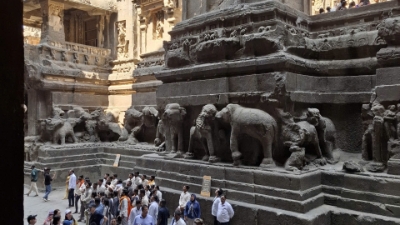
At the heart of the Ellora complex lies Cave 16, home to the Kailasa Temple-one of the largest monolithic rock structures ever created by human hands. For our delegation, it was undoubtedly the most breathtaking highlight of the visit.
Constructed in the 8th century during the reign of the Rashtrakuta dynasty, the temple was dedicated to Lord Shiva, one of the principal deities in Hinduism. What makes the Kailasa Temple so extraordinary is that the entire structure was carved out of a single massive rock.
Rather than assembling materials piece by piece, ancient craftsmen sculpted the temple directly from the natural basalt cliff, removing an estimated 200,000 tons of rock in the process.
The temple rises roughly 30 meters high and features a vast courtyard, a towering central shrine, surrounding corridors, and numerous intricately carved sculptures. Its design is believed to represent Mount Kailash, the mythical Himalayan home of Lord Shiva.
Entering through the main gateway and looking across the open courtyard, visitors often feel as though they are standing before an entire city carved into the mountain.
For many of us visiting Ellora for the first time, that initial view of the Kailasa Temple was unforgettable. Standing at the edge of the courtyard, it was almost impossible not to pause for a moment, trying to comprehend how ancient craftsmen managed to transform a single block of rock into a structure of such scale and complexity.
At the center stands the main sanctuary crowned by a towering spire adorned with detailed bas-reliefs. In front of it sits the Nandi Mandapa, which houses the statue of Nandi-the sacred bull and divine vehicle of Shiva. Around the courtyard are smaller shrines, pillared halls, and galleries, all carved directly from the rock.
The temple’s walls are covered with monumental sculptures illustrating stories from India’s great epics. One of the most famous carvings depicts Ravana, the demon king, attempting to lift Mount Kailash and shake the abode of Shiva-a dramatic scene widely considered a masterpiece of ancient Indian sculpture.
Deeper inside the corridors, visitors can still see traces of ancient paintings on the ceilings and pillars. Though faded by time, they offer a glimpse of the artistic sophistication achieved by early craftsmen.
Natural light streaming into the open courtyard creates a shifting play of light and shadow across the stone surfaces, giving the temple an atmosphere that feels both sacred and mysterious.
What makes the Kailasa Temple even more astonishing is the fact that it was completed more than 1,200 years ago, without modern machinery or technology. Scholars believe the monument was built over several generations of artisans during the Rashtrakuta dynasty, with much of the work likely completed under King Krishna I.
Today, Cave 16 stands not only as the centerpiece of the Ellora complex but also as one of the greatest achievements of rock-cut architecture in the world.
Beyond its religious significance, Ellora also played an important role in ancient trade networks.
Historical research suggests that the region lay close to an important route linking northern and southern India. Merchants, monks, and pilgrims frequently passed through the area, making Ellora a key stop along both commercial and spiritual journeys.
Several caves served as Buddhist monasteries where monks lived, studied, and taught. Funding for the construction of the caves came not only from royal patrons but also from wealthy merchants.
This pattern reflects the close relationship between religion, commerce, and everyday life in ancient India. In this sense, Ellora was not merely a religious monument but also part of a broader economic and social ecosystem.
A key pillar of Maharashtra’s tourism strategy
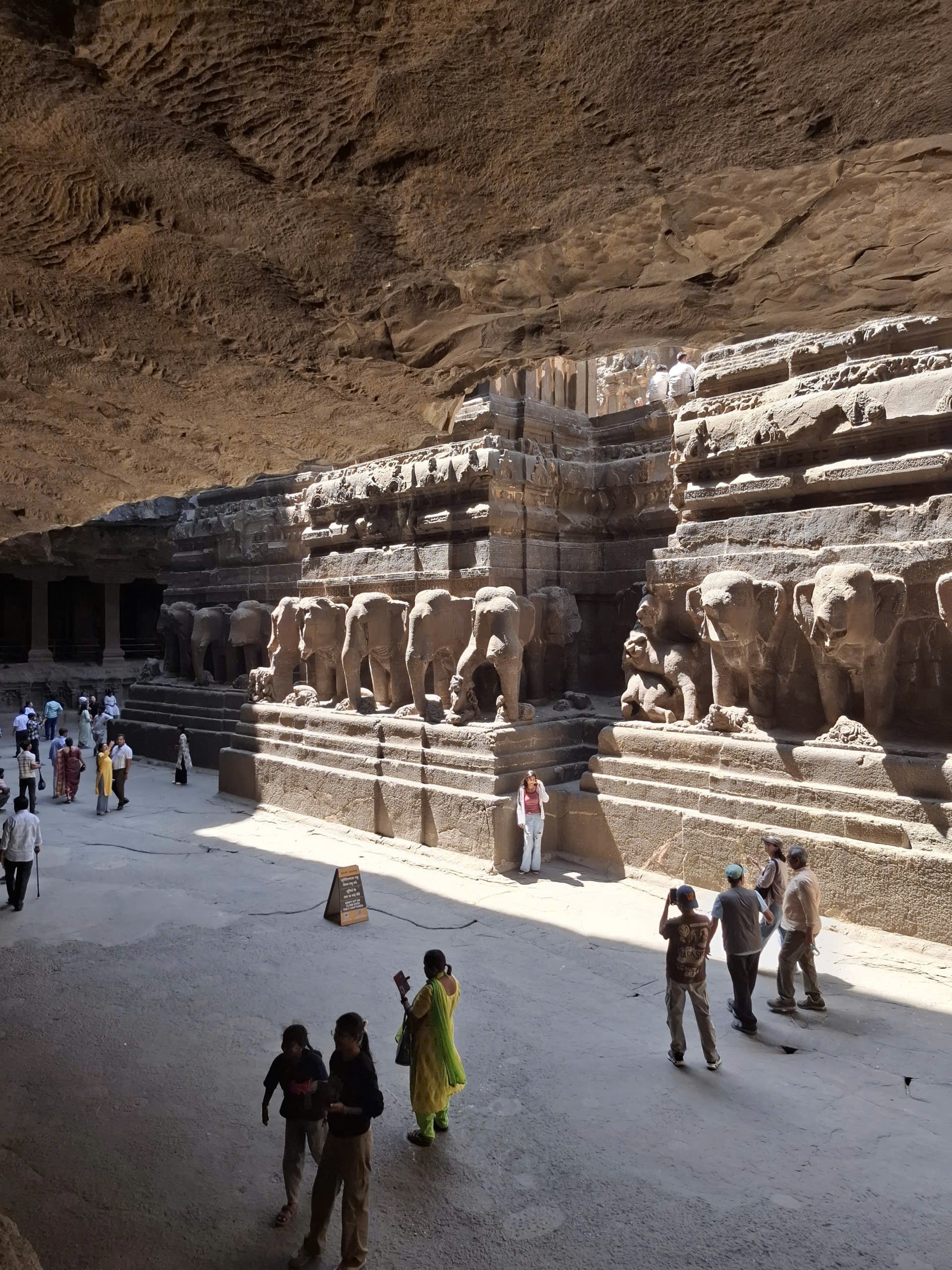
Today, Ellora has become one of the most important tourist destinations in Maharashtra. Together with the Ajanta Caves, located about 100 kilometers away, it forms a renowned cultural tourism corridor in the Marathwada region.
Millions of visitors travel to the two cave complexes every year, making heritage tourism an increasingly important contributor to the local economy.
The Maharashtra government has invested heavily in transportation infrastructure, hospitality facilities, and tourism services in and around the city of Aurangabad, aiming to develop the area into a major cultural tourism hub.
Improved highways, an international airport, and a growing number of hotels and resorts now support the steady rise in visitor numbers.
For India’s tourism industry, sites like Ellora represent long-term economic assets. Unlike artificial attractions that may quickly lose their appeal, heritage monuments that have survived for centuries possess a timeless fascination for travelers.
The visit by our delegation of journalists and travel companies formed part of the state’s broader tourism promotion strategy.
Participants included media representatives and tour operators from Vietnam, South Korea, Taiwan, Indonesia, Sri Lanka, Malaysia, the Netherlands, Brazil, and several other countries. The aim was to give them direct experience of Maharashtra’s major attractions so they could develop new travel itineraries and promotional campaigns for international markets.
In recent years, India has placed particular emphasis on attracting travelers from Southeast and East Asia-regions where outbound tourism is expanding rapidly.
For many participants in the delegation, Ellora was a surprising discovery. While most had long been familiar with iconic landmarks like the Taj Mahal or the palaces of Jaipur, few had imagined the scale and beauty of this ancient cave complex.
A heritage of the past, an opportunity for the future
As the sun began to set over the basalt cliffs of Ellora, the site seemed to glow in the warm evening light-a reminder of the enduring power of history.
More than a thousand years ago, ancient artisans carved these monuments using simple tools and deep religious devotion. Today, the caves continue to tell stories of the past while creating economic opportunities for the present.
Across the world, heritage tourism is becoming an increasingly important part of national economies, and India offers a compelling example of how history can be transformed into a resource for sustainable development.
With its vast collection of heritage sites-from ancient temples to historic cities-the country is gradually turning its cultural legacy into a powerful driver of tourism.
For Maharashtra, Ellora represents both cultural pride and a strategic tourism asset. And for visitors seeing the site for the first time, it serves as a powerful reminder that some of humanity’s greatest wonders were not built with concrete or steel, but with imagination, faith, and the patience of generations.
By the end of the familiarization trip, Ellora left a lasting impression on the delegation, not only as a magnificent architectural achievement created more than a millennium ago but also as an inspiring example of how heritage conservation can go hand in hand with sustainable tourism development.
For me personally, the visit to Ellora was more than a journey to a historic site. It was a reminder that some of humanity’s greatest achievements were created with simple tools, patience, and imagination-qualities that continue to inspire visitors more than a thousand years later.





 Google translate