


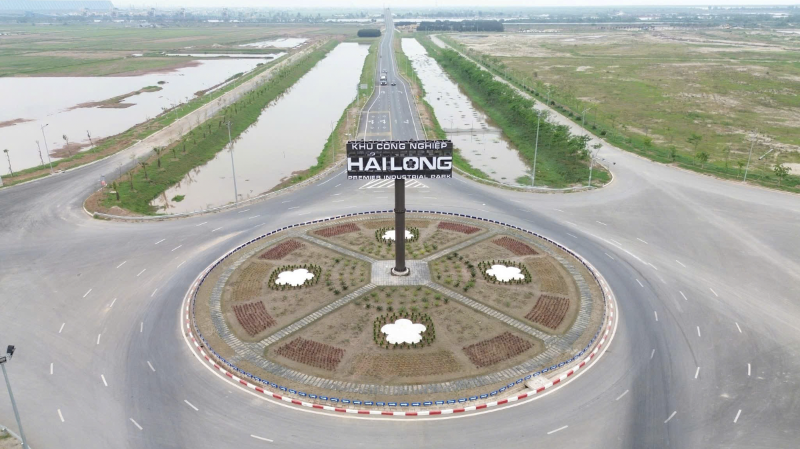
This consensus was reached by experts, regulatory officials, and business leaders at the workshop “Green Ecosystem for Supporting Industries: A Platform to Attract New-Generation FDI,” held on September 17 at the Vietnam Exposition Center (VEC) in Hanoi, within the framework of the 10th Manufacturing International Business Matching Fair (from September 16-18).
Delegates noted that this approach aligns with Resolution No. 10 of the Politburo on the development of the foreign-invested economic sector.
Highlighting economic performance, Mr. Pham Van Quan, Deputy Director General of the Industry Agency under the Ministry of Industry and Trade (MoIT), stated that Vietnam’s GDP grew by 8.18 percent in the first half of 2026. In the first eight months, total import-export turnover reached more than $770 billion, up over 28 percent year-on-year.
However, the country recorded a trade deficit of approximately $20 billion during the eight-month period, driven partly by supply chain disruptions, geopolitical conflicts, and increased equipment imports for production recovery and expansion. Despite these headwinds, the MoIT official maintained a positive outlook, citing growing business confidence in institutional reforms, administrative streamlining, and active corporate investments in technology.
Addressing challenges in supporting industries, Mr. Quan pointed to domestic firms’ limited capacity to invest in infrastructure, machinery, and technology. MoIT is currently refining key policies, including the proposed Law on Key Industries and amendments to Decree 111 on supporting industry development, to help enterprises access preferential credit, interest rate subsidies, and new technologies.
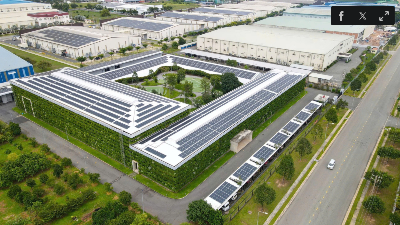
Under Resolution No. 10, Vietnam aims to transform 10 percent of its 430 industrial parks into eco-industrial parks by 2030, requiring pioneering models and concrete implementation strategies.
Representing domestic suppliers, Ms. Truong Thi Chi Binh, Vice President and General Secretary of the Vietnam Association for Supporting Industries (VASI), stressed that requirements from foreign investors are evolving rapidly.
Reflecting on Vietnam’s presence at Germany’s Hannover Messe, Ms. Binh noted significant advancements in the country’s manufacturing image over the past decade. However, welcoming new-generation FDI requires a comprehensive ecosystem beyond green factories and modern machinery.
“What does new-generation FDI demand? ESG compliance is a given... But what else do they require? First and foremost, an ecosystem,” Ms. Binh emphasized.
Establishing local supply chains enables Vietnam to meet multinational demands while providing domestic enterprises greater access to global production networks.
She highlighted semiconductor equipment manufacturing and drone/UAV production as emerging sectors where global players are seeking alternative production hubs outside China. To capitalize on these shifts, Vietnamese firms must transition from single-component manufacturing to sub-assemblies, OEM, and eventually ODM and OBM roles.
From an investment policy perspective, Mr. Pham Thanh Binh, Director of the Investment Promotion, Information and Support Center for Northern Vietnam under the Ministry of Finance’s Foreign Investment Agency, noted that global FDI flows are increasingly shifting toward green, smart, and high-value-added sectors. Attraction metrics must move beyond project quantity to focus on technological transfer, workforce development, and local value integration.
“Multinational corporations base investment decisions not just on incentives, but heavily on the quality of infrastructure, institutions, human resources, and logistics,” Mr. Binh stated.
Discussing infrastructure development, Ms. Tran Thi Thu Hien, Member of the VASI Infrastructure Board and General Director of DTJ Industrial, noted that “green” concepts must extend beyond tree planting and renewable energy. A true green ecosystem requires circular energy and water systems, recycled materials, industrial symbiosis, and connected data networks.
Drawing from international models - such as Denmark’s Kalundborg, Singapore's Jurong Island, and South Korea’s Ulsan - Ms. Hien suggested establishing specialized industrial clusters in northern hubs like Thai Nguyen, Bac Ninh, Hai Phong, Hung Yen, and Ninh Binh, integrating ESG and circular economy principles directly into master planning.
 Google translate