


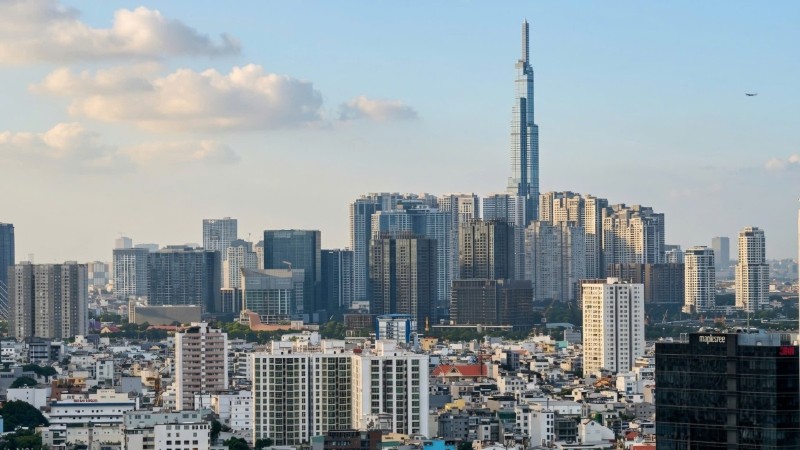
Ho Chi Minh City is studying the addition of Ring Roads 4.5 and 5, with a combined length of approximately 632-679 km, to strengthen transport links with southeastern cities and provinces and expand connectivity to the Central Highlands and south-central coastal regions.
According to the HCMC Department of Construction, the city is preparing a master plan for 2025-2050 with a 100-year vision and is considering additional external transport infrastructure to improve regional connectivity and create new development space.
Ring Road 4.5 is being studied as a roughly 192-km route through HCMC, Dong Nai and Tay Ninh. The preliminary alignment would begin at a planned interchange between Ring Road 5 and the Bien Hoa-Vung Tau Expressway, follow National Highways 56 and 56B, and reconnect with Ring Road 5 in Go Dau, Tay Ninh.
The proposed route would be designed as a high-speed urban arterial with limited interruptions, a design speed of 80-100 km/h, eight lanes and a planned width of about 62-80 metres.
Ring Road 5, meanwhile, is envisioned as a major regional corridor linking HCMC with southeastern cities and provinces while extending connections to the south-central coast and Central Highlands. It is proposed as a six- to eight-lane urban expressway with a design speed of 100 km/h, supplemented by parallel roads where required.
Two preliminary alignment options are being considered, with lengths of approximately 487 km and 440 km, respectively. Depending on the selected option, the combined length of Ring Roads 4.5 and 5 would range from about 632 km to 679 km.






 Google translate