


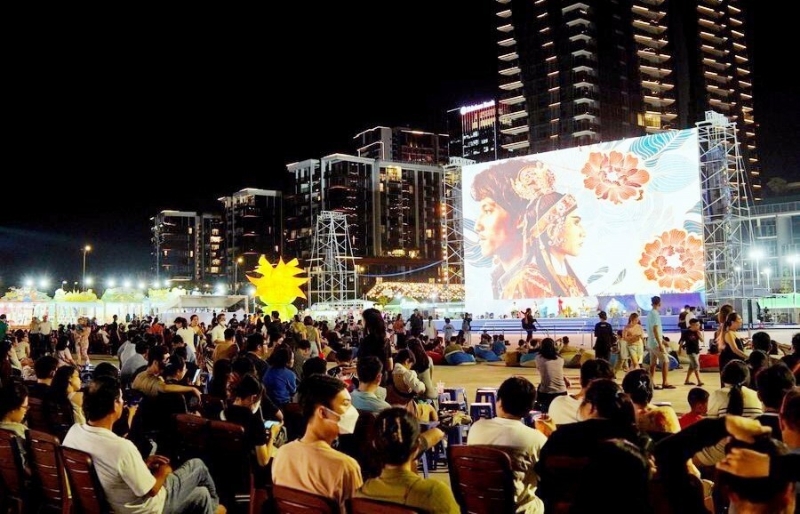
As the cultural industry emerges as a new pillar of economic growth, Ho Chi Minh City is refining its mechanisms, infrastructure, and resources. The city is currently prioritizing the development of a large-scale film studio and a music museum utilizing AI and digital technologies.
The municipal People’s Committee has issued directives to local departments to urgently implement the conclusions of the City Party Secretary, Mr. Tran Luu Quang, following his recent meeting with the business community operating in the cultural industry.
Accordingly, the People's Committee has tasked relevant units with researching and advising on favorable policies regarding funding, land use, and administrative procedures. These efforts aim to create the most favorable conditions for businesses and individuals to participate in the development of the cultural economy.
The Department of Culture and Sports has been assigned to coordinate with other agencies to study investment plans for a massive film studio complex, spanning approximately 100 to 150 ha. This facility is intended to meet the evolving needs of the film and television industry while attracting high-quality, large-scale domestic and international film productions.
In addition to the film studio project, the People’s Committee has directed departments to review and propose public investment for other key cultural works.
Specifically, the Department of Culture and Sports will lead the research and proposal for the "Vietnam Music Museum". This project will utilize Artificial Intelligence (AI) and digital transformation in its collection and exhibition processes. The museum’s goal is to preserve and showcase the essence of national music while providing modern interactive experiences to engage the public, particularly the younger generation.
In the context of globalization and the digital technology boom, the cultural industry is increasingly becoming a vital pillar of the creative economy worldwide.
In Vietnam, this strategic orientation has been formalized through Resolution 80-NQ/TW, which targets a 7% contribution to GDP from cultural industries by 2030. One of the most promising avenues being explored is film-induced tourism, a sector that has already proven its economic effectiveness in many other countries.




 Google translate