


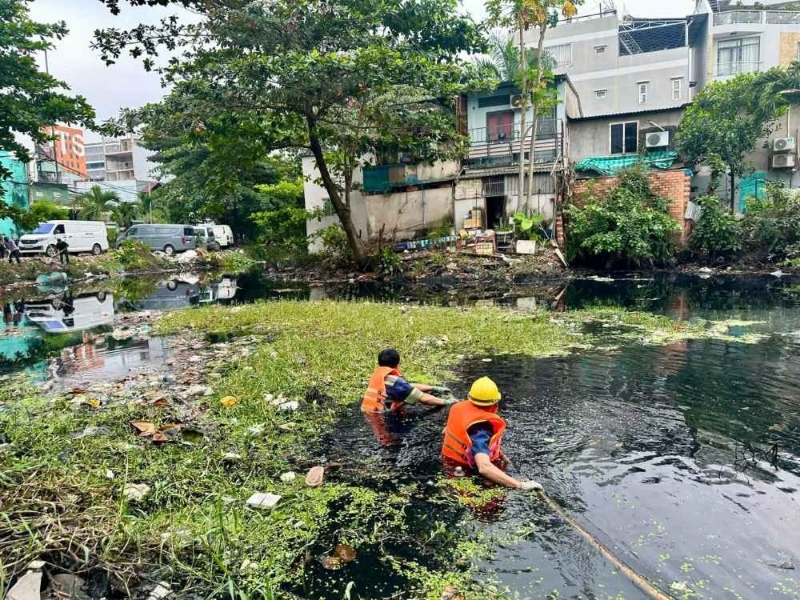
Ho Chi Minh City is continuing to accelerate its urban renovation and environmental improvement programs in the inner city with the upcoming launch of a renovation project for the Ong Bau and Chin Xieng canals, carrying a total investment of nearly VND3 trillion (about $114.5 million).
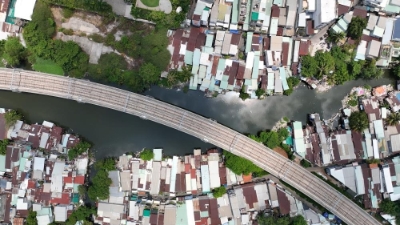
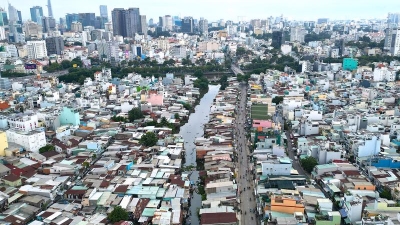
Located in the western part of the southern city, these two canals have suffered from severe pollution and long-term encroachment for many years, significantly impacting residents' lives and the area’s drainage capacity.
The project will be implemented in Binh Hung Hoa Ward and surrounding areas. It aims to improve the water environment, enhance drainage, renovate the urban landscape, and gradually raise the quality of life for local residents.
Key investment objectives include boosting drainage capacity to reduce localized flooding for riverside residential areas and nearby roads, particularly during the rainy season. This will minimize the frequent flooding that disrupts daily life and economic activities. Furthermore, the project aims to tackle water pollution caused by domestic trash and untreated sewage being discharged directly into the canals.
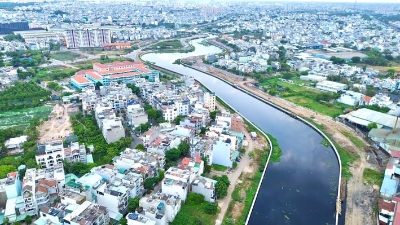
The project includes dredging, clearing flows, and restoring the natural ecosystem. Specifically, Ong Bau Canal will be renovated over a length of approximately 380 meters, while Chin Xieng Canal will cover about 890 meters.
The city plans to construct embankments, roads, public parks, and wastewater collection systems along the routes to put an end to the years-long practice of direct waste discharge into the canals.




 Google translate