


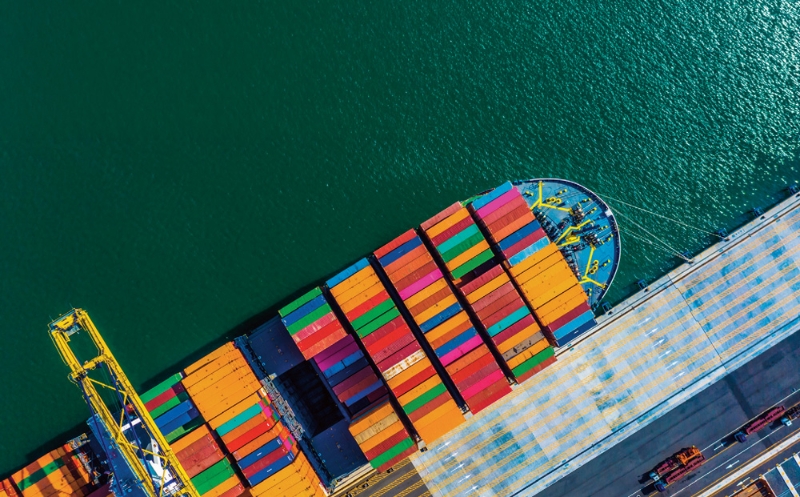
Against a backdrop of geopolitical volatility and shifting “shoring” strategies that are reshaping the global investment map, Vietnam is emerging as a strategic destination thanks to its macro-economic stability and flexible diplomacy. In this new context, it may be able to find a new “balance point” in negotiating investment conditions with multinational corporations, securing fairer and more sustainable benefits for both sides.
Shifting FDI trends
In recent years, global FDI flows have undergone significant changes due to a host of factors. Vietnam is among the few countries able to meet the “shoring” requirements of many multinational corporations. By understanding its own advantages, Vietnam can take a more proactive role in negotiating investment conditions to achieve a balanced outcome that ensures mutual and fair benefits.
Global supply chains and global value chains have changed considerably amid rising geopolitical instability and the lingering effects of the pandemic. Multinational enterprises have been implementing strategies to improve resilience and efficiency, often with support from governments.
These strategies commonly include selecting investment destinations based on “friend-shoring” criteria, including both political friend-shoring and economic friend-shoring, as well as “near-shoring” and “reshoring.”
According to the “Shifting Shores: FDI Relocations and Political Risk” (2024) report from the World Bank, friend-shoring and near-shoring create both opportunities and challenges, while the benefits will not be distributed evenly. Countries need to strengthen their internal capabilities rather than rely solely on politically-driven relocation trends. The long-term fundamentals for attracting FDI remain a favorable business environment, macro-economic stability, skilled labor, reasonable taxation policy, and quality infrastructure.
FDI sources
Vietnam has attracted substantial foreign investment from South Korea, Japan, Taiwan (China), Singapore, and China, including Hong Kong (China), primarily because of its macro-economic stability, strong domestic growth, extensive port network, young and competitively-priced workforce, and attractive FDI incentives.
Foreign investors come to Vietnam mainly for economic rather than political reasons, as the country’s “bamboo diplomacy” approach has positioned it as a nation that does not lean excessively toward any one side. Vietnam is among the few countries that maintain Comprehensive Strategic Partnerships with all five permanent members of the United Nations Security Council - China, Russia, the US, France, and the UK. It currently has Comprehensive Strategic Partnerships with 15 countries, despite geopolitical tensions existing between many of them.
In addition, Vietnam has signed 17 free trade agreements (FTAs), providing access to markets across more than 50 countries and territories.
New balance point
Foreign investment in Vietnam is not limited to manufacturing. International investors also want barriers removed in service sectors such as telecommunications, finance, banking, and retail.
In addition, logistics infrastructure and energy are two areas where foreign investors want to see greater improvements. Road transport currently remains the dominant mode for freight movement, accounting for an estimated 80 per cent by volume, despite limitations in both quantity and quality. In the World Bank’s 2023 Logistics Performance Index, Vietnam ranked 43rd out of 140 economies, still behind Malaysia, Thailand, and the Philippines.
Finally, foreign investors consistently seek simpler, faster, and more efficient administrative procedures. Surveys show that their biggest concerns are overlapping and inconsistent laws and regulations, inefficient administrative processes, and high compliance risks.
The improvements sought by FDI investors are also reforms that Vietnam’s new government is determined to pursue, many of which continue initiatives from previous administrations. More importantly, the country wants local enterprises to participate more deeply in global value chains and move into higher value-added segments.
Therefore, future FDI attraction efforts, as well as reviews of existing projects, should aim to better harmonize the interests of all parties in a way that is fairer to Vietnam. By recognizing its own advantages, Vietnam can negotiate more confidently and selectively with FDI projects, fostering long-term, sustainable partnerships that deliver mutual and equitable benefits.



 Google translate