May 11, 2026 | 06:40

Intel plans to expand semiconductor investment in Vietnam

Hạ Chi

The move expected to help strengthen Vietnam’s role in the global semiconductor value chain.

Intel plans to expand semiconductor investment in Vietnam
Deputy Minister of Science and Technology Bui Hoang Phuong (right) at the working session with Ms. Sarah Kemp, Vice President for International Government Affairs at Intel Corporation. (Photo: MST)

Vietnam’s Ministry of Science and Technology recently held a working session with Intel, during which both sides reaffirmed their commitment to expanding cooperation and strengthening Vietnam’s role in the global semiconductor value chain.

At the meeting, Intel executives shared the company’s updated strategic directions in Vietnam, highlighting plans to further expand investment, support workforce development, and contribute to the growth of the country’s semiconductor ecosystem.

Deputy Minister of Science and Technology Bui Hoang Phuong said the ministry would continue to create favorable conditions for Intel and its supply chain partners to scale up high-tech investments in Vietnam, helping position the country as a critical hub in the global semiconductor industry.

He proposed five key areas for cooperation: expanding Intel’s investment, research and manufacturing activities in Vietnam; providing advisory support for the National Semiconductor Chip Prototyping Support Center; collaborating on the construction of Vietnam’s first semiconductor chip manufacturing plant; developing skilled talent for the semiconductor sector; and fostering a broader domestic semiconductor ecosystem.

Both sides expressed determination to deepen cooperation in the next phase of development.
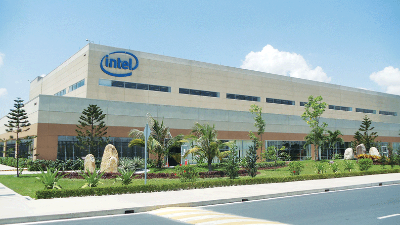
Separately, the Management Board of the Saigon Hi-Tech Park (SHTP) recently announced that Intel is considering relocating part of its production line from Costa Rica to Ho Chi Minh City as part of its global manufacturing restructuring strategy, a move expected to create new momentum for Vietnam’s semiconductor industry.

Attention
The original article is written and published on VnEconomy in Vietnamese, then translated into English by Askonomy – an AI platform developed by Vietnam Economic Times/VnEconomy – and published on En-VnEconomy. To read the full article, please use the Google Translate tool below to translate the content into your preferred language.
However, VnEconomy is not responsible for any translation by the Google Translate.

Google translateGoogle translate