


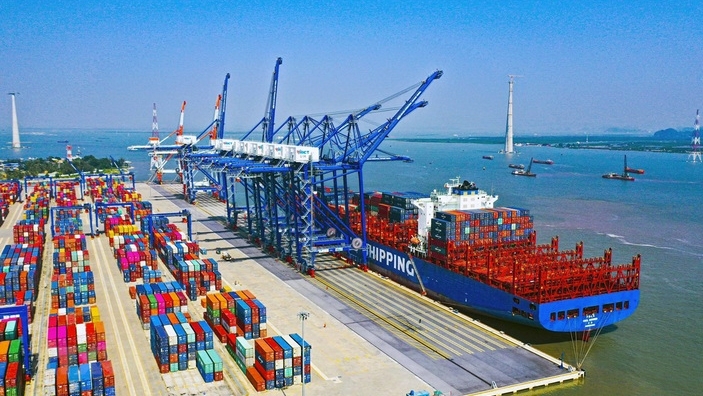
The Council of the European Union (EU) has formally adopted amendments to the European Climate Law, introducing a binding mid-term target for 2040 that commits the bloc to reducing net greenhouse gas emissions by 90 per cent compared to 1990 levels. The move is widely seen as a critical step in reinforcing the EU’s pathway toward economy-wide climate neutrality by 2050.
The new target is expected to both increase pressure and create opportunities for Vietnam to accelerate its green transition and adapt to increasingly stringent climate standards in the European market.
Reshaping Vietnam’s exports
According to Dr. Nguyen Phuong Nam, International Reviewer for Climate Change Reports under the United Nations Framework Convention on Climate Change (UNFCCC) and CEO of Klinova, the 90 per cent emissions reduction target for 2040 is not a standalone figure. Rather, it represents the next step in the long-term roadmap of the European Green Deal; the EU’s overarching strategy to become a carbon-neutral continent by 2050.
In this context, the 2040 target serves as an “acceleration milestone,” signaling that climate requirements will become increasingly stringent and mandatory in global trade. The implications for Vietnam’s key export sectors are expected to be significant and multi-dimensional.
High-emissions industries such as steel, cement, aluminum, and textiles will face direct pressure from mechanisms like the Carbon Border Adjustment Mechanism (CBAM). As the EU gradually incorporates carbon costs into import pricing, Vietnam’s cost-based competitive advantage could erode without a timely transformation.
Carbon transparency requirements are also expanding beyond individual companies to encompass entire supply chains. The EU is placing growing emphasis on the full “carbon footprint” of products, from inputs to final output. This presents a major challenge for sectors such as textiles, footwear, and agriculture, which rely on complex and often unwieldly supply networks.
From a market perspective, green consumption trends in the EU are accelerating. European consumers and distributors increasingly prioritize products with sustainability certifications, low emissions, or carbon neutrality. Vietnamese businesses that transition early may not only retain market access but also tap into higher-value segments, thereby enhancing export value. “The EU’s 2040 target is essentially a strong and anticipated policy signal, since the European Green Deal was launched in 2019, about restructuring global trade toward a low-carbon model,” Dr. Nam said.
He added that, over the long term, the EU may prioritize partnerships with countries that demonstrate credible emissions reduction pathways. “This is not just about cost pressure, it reflects a fundamental shift in market demand, requiring Vietnamese businesses to move from cost-based competition to competition based on sustainability.”
New opportunities
Under the revised law, from 2036 onward, high-quality international carbon credits may be used, but only up to 5 per cent of the EU’s 1990 net emissions, with at least 85 per cent of reductions required to occur domestically. These credits must be based on credible emissions reduction activities in partner countries and aligned with the Paris Agreement.
Dr. Nam noted that the EU’s consideration of international carbon credits is a noteworthy signal, indicating that global carbon markets are becoming more interconnected rather than operating in isolation. However, he stressed that this opportunity will not come automatically. The key lies in ensuring the quality and transparency of carbon credits. The EU will only accept credits that meet strict standards for measurement, reporting, and verification (MRV). Vietnam’s shift from planning to implementing a domestic carbon market is therefore a positive step.
Mr. Do Duc Tien, Co-founder and CEO of NAYAN Sustainability Social Enterprise, said the policy changes present a “golden opportunity” for Vietnam, given its strong potential in forest-based credits (such as REDD+), low-emission agriculture, and carbon capture and storage (CCS) projects. However, this also requires Vietnam to rapidly develop its domestic carbon exchange and bring itself in line with international standards.
The country should learn from its experience with the Clean Development Mechanism (CDM), where it ranked fourth globally in project numbers, at around 260, but had a relatively low issuance rate due to procedural and verification challenges.
To avoid repeating a “quantity over quality” scenario, Vietnam needs a clear roadmap focused on improving credit quality to meet stringent EU criteria, particularly regarding permanence and additionality. Building a robust MRV system aligned with international standards will be essential not only to leverage natural advantages but also to ensure that carbon projects contribute meaningfully to sustainable development. This could position Vietnam as a credible destination for green capital flows from Europe, rather than merely a supplier of low-cost credits.
Dr. Scott McDonald, Lecturer in Logistics and Supply Chain Management at RMIT University Vietnam, noted that analysts project the EU could spend €50 billion ($58 billion) on carbon credits in the 2030s, which underscores actual demand. Vietnam’s strengths in forestry, mangrove restoration, and renewable energy align well with EU priorities. The country has also signed bilateral agreements with Singapore, Japan, and South Korea under Article 6.2 of the Paris Agreement for emissions trading. He emphasized that credit quality will be the decisive factor, with MRV readiness serving as the “gateway” to entering the EU market.
Policy lessons for Vietnam
Drawing from the EU’s climate law framework, Dr. Nam highlighted policy consistency and long-term vision as the most important lessons. The EU has not only set targets but also built a comprehensive legal framework, from climate law to carbon markets, sectoral standards, and financial mechanisms, all aligned with the 2050 neutrality goal.
Another key feature is the legally-binding nature of climate targets. Codifying commitments puts stronger enforcement pressure on governments and businesses while providing stable market signals for long-term investment decisions.
Despite having a unified EU framework, member states retain flexibility to develop national laws and roadmaps tailored to their domestic contexts, translating overarching goals into country-specific long-term strategies. This approach enables each country to fulfill its responsibilities while contributing to the bloc’s collective target. “For Vietnam, the priority is not just to introduce more policies, but to ensure coherence, feasibility, and clear roadmaps,” Dr. Nam said. “A stable and transparent policy framework will provide a solid foundation for achieving the country’s 2050 net-zero target.”
Dr. McDonald added that the EU’s binding 2040 target is already shaping investment decisions. Vietnam’s own net-zero commitment by 2050 similarly requires a strong legal anchor. He pointed to the EU’s phased expansion of its Emission Trading System, known as ETS2 and covering buildings, transport, and small-scale industries from 2027, as a structured approach that Vietnam can learn from, particularly in moving from pilot phases to full implementation.
At the same time, local-level policy implementation will be critical. Cities and provinces need to proactively develop emission reduction plans suited to their socio-economic conditions, integrating climate goals into development planning. “This is how national commitments can be translated into concrete local action, making the overall target more achievable,” Dr. Nam said.
Vietnam’s own net-zero commitment by 2050 requires a strong legal anchor.






 Google translate