


Mr. Vu Duc Giang, Chairman of the Vietnam Textile and Apparel Association (VITAS)
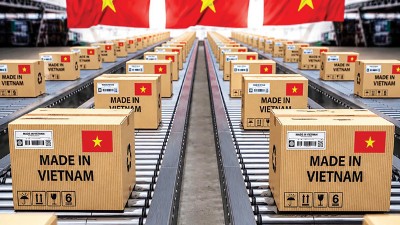
The conflict in the Middle East was not something we anticipated. Vietnam’s textile and garment industry has begun to clearly feel its impact, and we expect it will affect the stability of orders. Three major challenges are currently confronting the industry.
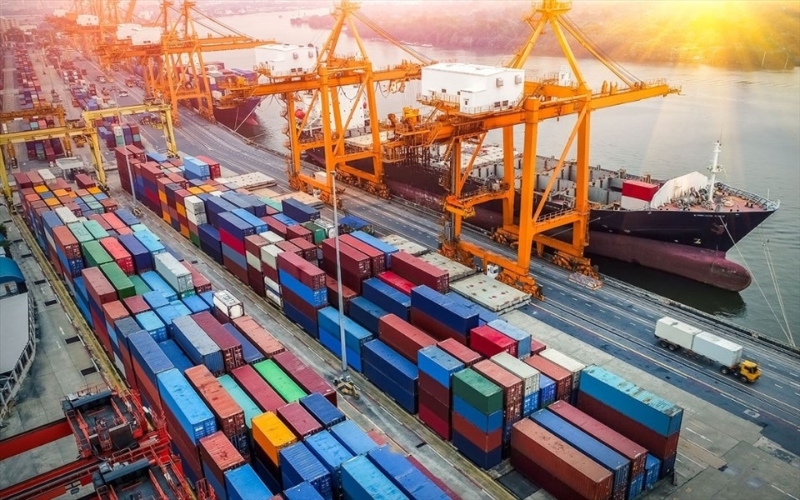
First is cost pressure, particularly transport costs. Some international brands have started recalculating their production cost structures in Vietnam. The issue is not only the cost of manufacturing but also logistics costs, as shipping routes linked to the Middle East carry increasing risks. If shipping flows are disrupted or transit times lengthen, the entire supply chain will be affected.
Second is the challenge of market stability. When geopolitical tensions escalate, global consumer sentiment can be easily affected. There is a possibility that consumers will tighten spending, particularly on apparel, which is not considered an essential item. This could directly affect orders for Vietnamese textile and garment enterprises in the coming months.
Third is the risk stemming from oil price volatility. If oil prices rise, a range of input costs will increase accordingly, especially products derived from petroleum, such as synthetic fiber and yarn. Synthetic fiber products currently account for 40-45 per cent of the industry’s production structure.
We are closely monitoring developments to provide timely guidance and share updates with businesses, as the situation will certainly affect order stability in March and April and may extend through June.
To respond to these fluctuations, enterprises have proactively engaged with the Association and are focusing on several groups of solutions. These include recalculating production plans and cash flows. Companies are working with banks to restructure their finances while also seeking alternative shipping solutions in case routes through the Middle East are disrupted. This is considered an urgent issue, as extended delivery times could lead to the risk of contract violations.
At the same time, businesses are reviewing their internal operations to cut costs. As transport costs trend upward, companies must optimize production processes, reduce waste, and improve workplace productivity to offset rising expenses.
Enterprises must also improve their ability to adapt to customer requirements. In times of uncertainty, international partners often tighten requirements on both pricing and delivery timelines. Companies may have to accept a certain level of risk.
If vessels are unable to pass through normal shipping routes and must detour via southern Africa, transit times will lengthen and costs will rise significantly. In that case, the ability to coordinate production and ensure on-time delivery will become a decisive factor.
Mr. Nguyen Quoc Ky, Chairman of the Vietravel Corporation
Tourism is an industry that is highly sensitive to geopolitical fluctuations. The Middle East serves as a key global aviation transit hub connecting Europe and North America with the Asia-Pacific region.
When instability occurs in the Middle East, the impact extends beyond the region and also creates a new “filter funnel” in the travel routes of international tourists. Many airlines are forced to adjust flight paths, extend travel times, or change transit hubs. This may increase costs and lead some travelers to reconsider long-haul travel plans in the short term.
However, from a more positive perspective, we believe this represents a cyclical adjustment. Vietnam remains a safe destination with political stability and is becoming increasingly attractive to travelers from Europe and North America. As flight routes are restructured through alternative hubs in Northeast Asia or Southeast Asia, international tourist flows will continue to return.
What matters is that the tourism industry must proactively adapt to shifts in the global aviation network. For Vietravel, rather than reacting passively, we are implementing a strategy to rebalance our market portfolio around three key pillars.
First, we are expanding operations in “green-zone markets” that remain stable, particularly Japan, South Korea, Australia, and several Northeast Asian markets. These markets offer strong stability, good air connectivity, and robust two-way travel demand.
Second, we aim to leverage regional advantages to capture the shift of international travelers towards safer destinations in the Asia-Pacific, where Vietnam holds strong advantages in natural landscapes and cultural heritage.
Third, we are developing high-end domestic tourism and in-depth travel experiences. As routes to Middle Eastern destinations such as Dubai, Egypt, and Türkiye are affected, demand for new travel experiences within Vietnam and the region is expected to increase.
In emergency situations such as the current one, Vietravel prioritizes flexibility and transparency in order to maintain customer trust. We respond quickly by activating emergency procedures, coordinating with partners to update developments, and identifying the most appropriate solutions for each travel group.
Flexible solutions are prioritized, including supporting itinerary changes of equivalent value, preserving tour value, or adjusting departure schedules rather than strictly applying cancellation and refund policies. The responsibility of a company is to balance customer interests with business stability in order to avoid reputational shocks.
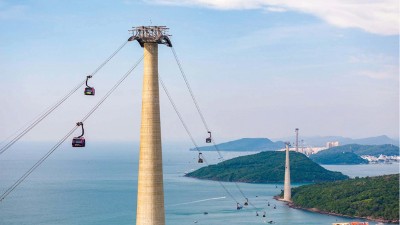
Tourism has always been closely linked with global mobility. Therefore, rather than simply trying to avoid risks, we believe it is necessary to proactively adapt and “live with” geopolitical fluctuations, turning challenges into opportunities to restructure markets and enhance the competitiveness of both businesses and Vietnam’s tourism industry.
Mr. Bui Ngoc Bao, Chairman of the Vietnam Petroleum Association
Conflicts in the Middle East inevitably affect global oil prices, as the region supplies 30-40 per cent of the world’s oil. In particular, any blockade or disruption in the Strait of Hormuz represents a major risk that must be closely monitored. However, in my view, the current impact is still largely psychological, given that the situation has only unfolded over a short period.
In reality, fuel prices are not determined solely by supply and demand but are also strongly influenced by financial speculation. Around 95 per cent of current transactions are non-commodity trades, which leads to what can be described as “virtual pricing.” Ultimately, however, prices tend to return to levels that reflect the pace of economic growth, typically fluctuating around $70 a barrel.
Looking back at the price volatility in 2022 during the Russia-Ukraine conflict, when domestic fuel prices surged, I can affirm that Vietnam did not face an oil shortage. The real difficulty lay in the lack of flexibility in the regulatory mechanism, which caused businesses to incur heavy losses and made it impossible for them to continue selling fuel.
At present, low discount margins are placing many retailers, particularly private ones, under significant pressure, and they have been voicing concerns for months. This is essentially a domestic regulatory issue rather than a direct impact of the conflict involving the US, Israel, and Iran.
Therefore, to ensure energy security and market stability under all circumstances, it is necessary to quickly address regulatory bottlenecks so that businesses are not forced to operate at a loss, thereby maintaining a natural supply flow to the market. At the same time, the government should promptly issue and implement the new decree on petroleum trading to allow the market to operate under proper market-based pricing mechanisms. Though the necessary procedures have been completed, the signing and promulgation of the decree have been delayed.
It is also important to diversify supply sources by lowering import tariffs on fuel from other regions to match ASEAN preferential rates, which are currently lower by about 7-8 per cent. This would make it easier for businesses to access supplies from outside the region.
National reserves should also be strengthened. Instead of maintaining a stabilization fund in cash, which can be inefficient, these resources should be used to build centralized oil reserves. Maintaining reserves equivalent to 5-20 days of supply would help the country respond more effectively to sudden market fluctuations.
At the same time, Vietnam needs to strengthen its energy self-reliance. Though the country can meet around 70 per cent of its refining demand, domestic crude oil production only accounts for about 30 per cent of feedstock supply. Refineries such as Nghi Son still have to import crude oil from Kuwait through maritime routes that carry potential risks.
Mr. Dang Phuc Nguyen, General Secretary of the Vietnam Fruit and Vegetable Association (VINAFRUIT)
Exports of fruit and vegetables to the Middle East and Europe currently account for less than 10 per cent of the sector’s total export value. In the Middle East alone, Vietnamese fruit represents only about 3-5 per cent of total export turnover. Though the share remains relatively small, these markets play an important role in the industry’s diversification strategy, helping reduce reliance on a limited number of traditional markets.
However, escalating tensions in the Middle East have caused fruit shipments to the region to nearly stall, even as orders had recently shown signs of recovery following trade cooperation agreements between Vietnam and partners such as the UAE, Saudi Arabia, and several other countries. The risk of disruption is not limited to the Middle East but could also extend to Europe; another key destination for Vietnamese fruit and vegetables.
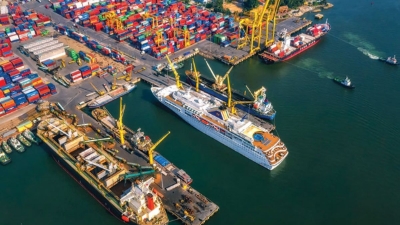
Most maritime routes from Asia to Europe pass through the Suez Canal and the Red Sea. As security risks increase, many shipping lines have been forced to reroute vessels around the Cape of Good Hope in the southern tip of Africa, extending transit times by several days or even up to a week. As a result, freight rates have surged sharply, reaching as much as $7,000-$8,000 for a 40-foot container on some routes.
For fresh fruit - products that are particularly sensitive to time - even delays of a few days can significantly affect freshness, appearance, and selling prices. Longer transport times mean refrigerated containers must operate for extended periods, increasing preservation costs and raising the risk of quality deterioration. This directly undermines the price competitiveness of Vietnamese agricultural products in international markets.
In this context, if logistics costs return to the heightened levels seen during 2024-2025, the fruit and vegetable sector’s export growth targets for this year will face significant challenges. Beyond rising costs, the risk of declining orders and increased caution among importers could further complicate the export outlook.
Mr. Nguyen Tuan Viet, CEO of the VIETGO Export Promotion Company
Escalating tensions involving the US, Israel, and Iran are raising serious concerns about export prospects in the coming period. When the global economic order shifts toward conflict, markets react quickly: demand for luxury goods tends to stall or even freeze, while essential goods, food, and logistics supplies often see rising demand.
The biggest challenge at present lies in transportation, as shipping routes through the Suez Canal are under threat, forcing many carriers to reroute vessels around the Cape of Good Hope. Transit times to Europe have extended from around 25 days to as much as 50 days, disrupting delivery schedules and directly affecting both corporate cash flows and business credibility.
In addition to delays, logistics costs have doubled or tripled due to higher risk insurance premiums and additional fuel costs, eroding the already thin profit margins in the agricultural sector. Fresh products such as bananas and dragon fruit, which have short preservation periods, are particularly vulnerable to extended transit times. This increases the risk of spoilage and the possibility of losing entire shipments. To safeguard cash flows and limit potential losses, companies need to proactively implement practical “frontline” solutions.
First, prioritize FOB (Free on Board) delivery terms. Selling goods at the port of departure and receiving payment once the cargo is loaded onto the vessel allows exporters to transfer most transportation risks and additional costs to the buyer. In an environment of unpredictable volatility, this is one of the most effective ways to reduce risk.
Second, carefully manage letters of credit (LC). As transit times may extend by 20-25 days beyond the original schedule, many LCs risk expiring before shipments arrive at their destination ports. Exporters should work proactively with partners to extend LC validity as soon as they receive notice of changes to shipping routes, avoiding the risk of being caught unprepared.
Third, pay close attention to insurance coverage and shipping line selection. If deliveries must be made under CNF (Cost and Freight) or CIF (Cost, Insurance and Freight) terms, companies should ensure that comprehensive war-risk insurance is in place. At the same time, priority should be given to carriers operating direct routes rather than those requiring transshipment, thereby minimizing additional risks. If buyers fail to make payment before vessels arrive at port, contracts should include clear provisions allowing flexible responses, including the possibility of redirecting or returning shipments to protect assets.
Ms. Le Hang, Deputy Secretary-General of the Vietnam Association of Seafood Exporters and Producers (VASEP)
The Middle East is currently a major market for salmon, shrimp, tuna, and many high-value seafood products imported from Asia, Europe, and the Americas.
Tensions in the Middle East are creating serious disruptions to seafood supply chains, a sector that requires strict control of temperature and timing. As airspace restrictions tighten and flight schedules are disrupted, supplies of fresh seafood transported by air have quickly become scarce, forcing importers to shift towards frozen products. However, this transport channel is also facing difficulties as bookings for refrigerated containers are increasingly limited or temporarily suspended.
In Dubai, Jebel Ali Port, operated by DP World, serves as a major seafood transshipment hub in the region. When vessels are forced to reroute, longer transit times and increasing vessel queues raise the risk of port congestion and shortages of electrical plug-in points for refrigerated containers. As a result, storage and demurrage costs rise sharply, while the risk of product quality deterioration also increases if storage times exceed safe limits.
For Vietnamese exporters, particularly those shipping pangasius (catfish) and shrimp, longer transit times of one to two weeks significantly increase electricity costs, as temperatures in refrigerated containers must be maintained. At the same time, the extended journey raises the risk of disputes over product quality.
Price impacts are already visible at two levels. At the regional level in the Middle East, rising transport and insurance costs directly push up import prices. Fresh and chilled seafood may face localized supply shortages, especially in the premium restaurant and hotel segment, potentially leading to higher retail prices and menu prices.
At the global level, the extent of the impact will depend on how long the crisis lasts. If the share of containers passing through the Strait of Hormuz remains relatively small compared with total global shipping volumes, the broader container price environment may remain manageable. However, for companies with direct trade ties to the Middle East, higher shipping costs may force them to restructure markets, redirect exports, or renegotiate contracts.
Given that the Middle East is a relatively high-margin market for pangasius and several value added seafood products, sharply rising logistics costs could alter the profit structure across the entire supply chain.
Future scenarios for the seafood market will largely depend on security developments. If tensions ease, shipping lines may restore routes through the Strait of Hormuz and gradually reduce risk surcharges, allowing supply chains to recover quickly. Conversely, if risks persist, elevated transport costs may become a “new normal,” leading to broader price volatility.
In this context, VASEP recommends that Vietnamese seafood companies diversify shipping routes to avoid dependence on a single maritime corridor, increase inventory at regional cold storage facilities, particularly at major transshipment hubs, and prioritize long-term freight contracts to reduce exposure to volatile spot markets. At the same time, businesses should closely monitor developments in maritime insurance and shipping line policies in order to proactively adjust negotiations and export plans.



 Google translate