


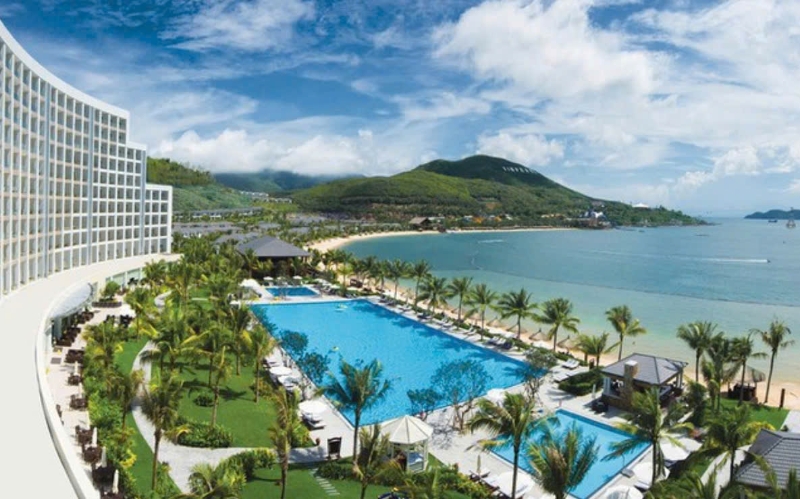
Vietnam’s resort real estate segment showed signs of slowing in the first quarter of 2026, with both supply and demand declining, according to market analysts.
Presenting a quarterly report, Ms. Pham Thi Mien, Deputy Director of the Vietnam Institute for Real Estate Market Research, said new supply reached around 6,500 units, down 22% from the previous quarter. Supply continued to come mainly from large-scale, high-end resort urban developments built on integrated models combining living, working and leisure functions. Low-rise and high-rise products accounted for 52% and 48% of supply, respectively.
Market absorption also weakened, with the absorption rate falling to 45%, down seven percentage points quarter-on-quarter. Total transactions were estimated at more than 2,900 units, a 30% decrease compared to the fourth quarter of 2025.
Despite the slowdown, investment demand remains, though investors are becoming more selective. Capital is increasingly concentrated in projects offering new development models, particularly integrated coastal urban developments that combine residential, hospitality and commercial functions.
Support factors include the rollout of large-scale projects, more flexible financing policies from developers, and the recovery of the tourism sector, especially rising international arrivals. Improvements in transport infrastructure are also enhancing regional connectivity.
However, primary market prices continued to edge up under cost pressures. High-rise units were priced between VND39 million ($1,482) and VND200 million ($7,604) per square metre, up 10% year-on-year, while low-rise properties ranged from VND8 billion ($304,000) to VND170 billion ($6.46 million) per unit, up 9%.



 Google translate