The adjustment aims for greater flexibility, with the threshold to be raised to approximately VND1 billion ($38,000) to reflect economic realities, support household businesses, and ensure budget balance.
Though results indicate a degree of recovery momentum in Q1 and March, ongoing global headwinds continue to pose concerns for Vietnam macro-economic situation.
The Ministry of Education and Training (MoET) held a conference on cooperation and investment in education both in-person and online on September 15. As of the end of June, Vietnam had attracted 605 foreign-invested education cooperation projects from 33 countries and territories with total investment of more than $4.57 billion. The number of foreign-invested educational institutions accounts for 17 per cent of the more than 3,800 non-public educational institutions in the country. At the university level, Vietnam has more than 400 joint training programs with foreign partners.
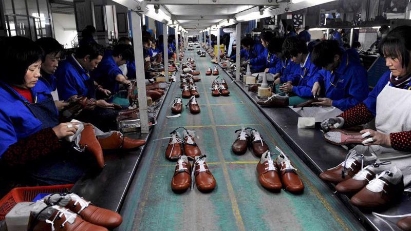
A report summarizing ten years of implementing Directive No. 16-CT/TW from the 11th Party Central Committee’s Secretariat “on strengthening the leadership of the Party in the task of sending Vietnamese workers and experts to work abroad” said there are now 451 organizations and enterprises in the country providing labor export services. Results at some listed companies, however, reveal that business performance is quite poor.
Despite improving over recent years, the qualifications and skills of Vietnamese workers are still low compared to requirements in other countries. This continues to be a “bottleneck” for the development of productive jobs. According to the Ministry of Labor, Invalids and Social Affairs (MoLISA), the proportion of Vietnamese workers with degrees and certificates stands at just 26 per cent, with major disparities seen between urban and rural areas and between male and female workers.
Hanoi is implementing a host of solutions to support sustainable poverty reduction and has set a target of cutting the number of poor households by 25-30 per cent each year and basically having no poor households by the end of 2025. Total funding to 2025 is nearly VND1.6 trillion ($67.6 million).
According to the United Nations Development Program (UNDP), Vietnam’s Human Development Index (HDI) was 0.703 in 2021, almost equal to the 2019 result of 0.704. In the global HDI rankings, Vietnam climbed two places, from 117th out of 189 countries in 2019 to 115th out of 191 countries in 2021. Its Gender Inequality Index (GII) continued to improve last year, reaching 0.296 and ranking 71st out of 170 countries. The UNDP said Vietnam will face many challenges in the future, such as climate change and economic development depending on global growth.
After five years of implementation, certain provisions in the Law on Pharmacy are no longer consistent with actual circumstances and the process of international integration, causing many difficulties for pharmaceutical enterprises. The Ministry of Health has proposed revising the Law, supplementing certain provisions such as simplifying drug registration procedures and applications for circulation registration certificates.