


The institutional framework and organizational structure of Vietnam’s International Financial Center (IFC) have been essentially established, creating the necessary groundwork to transition it into operational reality, according to a report by Vice Minister of Finance Nguyen Thi Bich Ngoc at the third meeting of the IFC Executive Council on September 7.
Under the current model, the IFC is organized across Ho Chi Minh City and Da Nang. The structure includes a National Executive Council at the central level, two Executive Agencies in the respective cities, and a Joint Oversight Agency. The Executive Agencies in Ho Chi Minh City and Da Nang officially issued registration and membership recognition procedures on August 17, 2026.
“In the immediate future, efforts must focus on key programs such as selecting projects in energy, infrastructure, logistics, and green transition—linked with partner banks and strategic investors. We must also develop an ecosystem for investment funds and international asset management, while simultaneously fostering commodity markets tied to trade and supply chain financing,” the Ministry of Finance (MoF) proposed.
To date, numerous banks, securities firms, asset management organizations, and investors have signed Memorandums of Understanding (MOUs), certified their commitments, or submitted applications to participate. This marks a pivotal shift, moving the IFC from the organizational setup phase to the preparation of actual business activities.
According to the MoF, the IFC’s competitive advantage should be built on the scale and growth prospects of the Vietnamese economy, its position in global production and logistics chains, and the massive demand for medium- and long-term capital for infrastructure, energy, and the green transition. Furthermore, the potential for developing capital markets, fund management, and fintech is seen as a key differentiator for Vietnam's IFC.
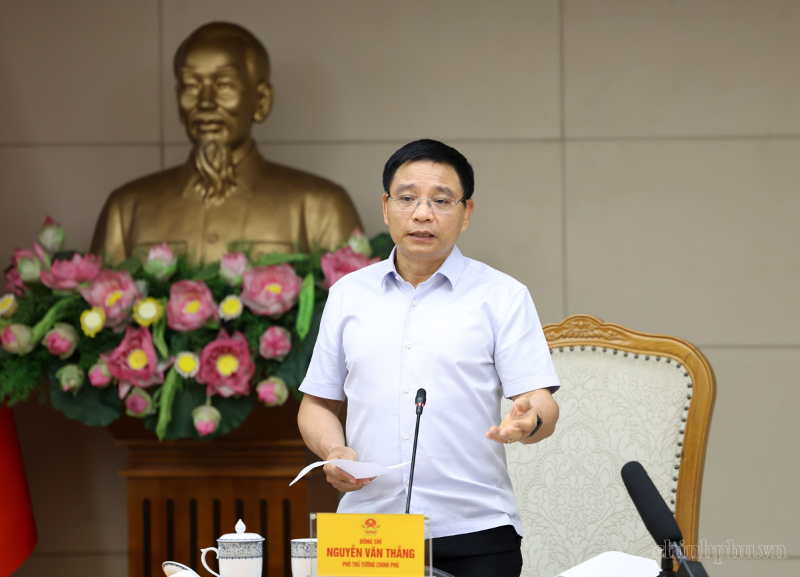
Addressing the meeting, Deputy Prime Minister Nguyen Van Thang noted that since the Executive Agencies in HCM City and Da Nang are officially operational, the center cannot afford to wait for "perfect conditions" before launching.
The Deputy PM instructed the two Executive Agencies to proactively engage with investment funds and enterprises. For financial products that are already prepared and meet all requirements, he demanded immediate implementation rather than waiting for the entire system to be finalized.
For each specific financial product, Mr. Thang required a clear definition of necessary mechanisms, the lead drafting agency, the issuing authority, and a strict implementation deadline. This approach aims to provide a basis for monitoring progress and preventing policy stagnation.
The Executive Agency in HCM City reported that it is currently working with investors to mobilize capital for infrastructure projects, while also preparing for the issuance of international and municipal bonds. Meanwhile, the Da Nang Executive Agency is focusing on implementing several specific projects through the IFC framework.
Deputy PM Thang concluded by calling for the urgent completion of all remaining conditions for the IFC to reach full operational capacity. This includes working in parallel to refine institutions and human resources while simultaneously negotiating with investors to gradually realize major deals.




 Google translate