


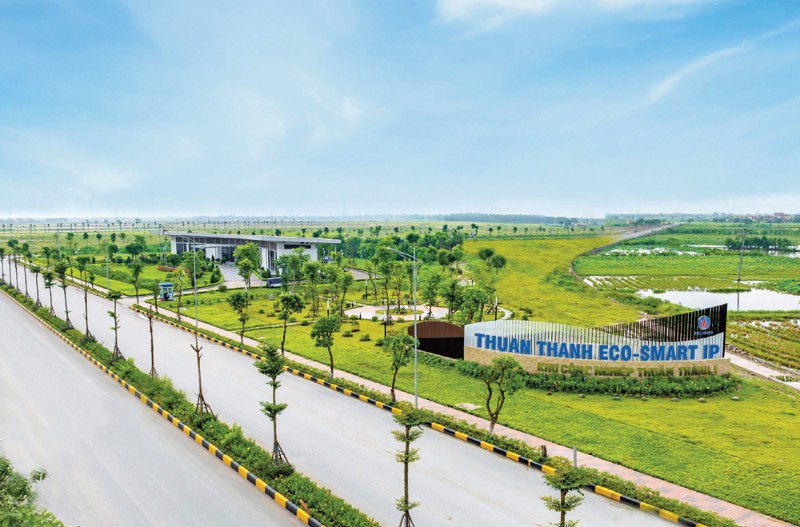
Amid intensifying geoeconomic competition, the green transition, and the restructuring of global supply chains, Vietnam is entering a new phase of industrial development. Drawing on its experience supporting industrial development across many countries, as well as its ongoing programs in Vietnam, the United Nations Industrial Development Organization (UNIDO) believes that enhancing industrial competitiveness will require a more integrated approach. In this context, attracting high-quality FDI should be embedded within a broader strategy to build modern, resilient, and sustainable industrial ecosystems.
New phase of industrial development
Manufacturing has been one of the principal drivers of Vietnam’s economic growth over the past four decades. Deep international integration, together with sustained inflows of FDI, has expanded production capacity, boosted exports, and positioned Vietnam as an important link in global value chains. These achievements provide a strong foundation for the country’s ambition of becoming a modern industrial economy in the decades ahead.
At the same time, the global development landscape is evolving rapidly. Geopolitical tensions, supply-chain diversification and restructuring, rapid advances in AI, and the global commitment to net zero emissions are reshaping production networks and investment decisions. Sustainability requirements, circular economy practices, supply-chain transparency, and policy instruments such as the EU’s Carbon Border Adjustment Mechanism (CBAM) are becoming increasingly important for international market access.
As a result, investment decisions are shifting away from a primary focus on labor costs and investment incentives toward the quality of industrial ecosystems, including green infrastructure, clean energy, support industries, skilled human resources, and innovation capacity.
This changing landscape presents Vietnam with both challenges and opportunities to upgrade its industrial development model. Politburo Resolution No. 10 on foreign-invested economic development clearly signals a shift from attracting investment by quantity to prioritizing projects that promote advanced technology, innovation, green transformation, stronger links with domestic enterprises, and greater domestic value creation.
UNIDO’s international experience shows that countries capable of sustaining long-term industrial growth are those that successfully transform external resources into stronger domestic industrial capabilities. This calls for industrial policies that go beyond expanding production capacity and instead focus on building modern industrial ecosystems that are innovative, resilient, and sustainable.
Toward higher-quality industry
To realize the objectives of Politburo Resolution No. 10, UNIDO’s experience suggests that success depends not only on selecting the right investment projects but also on building industrial ecosystems capable of absorbing technology, raising productivity, and generating greater domestic value-added.
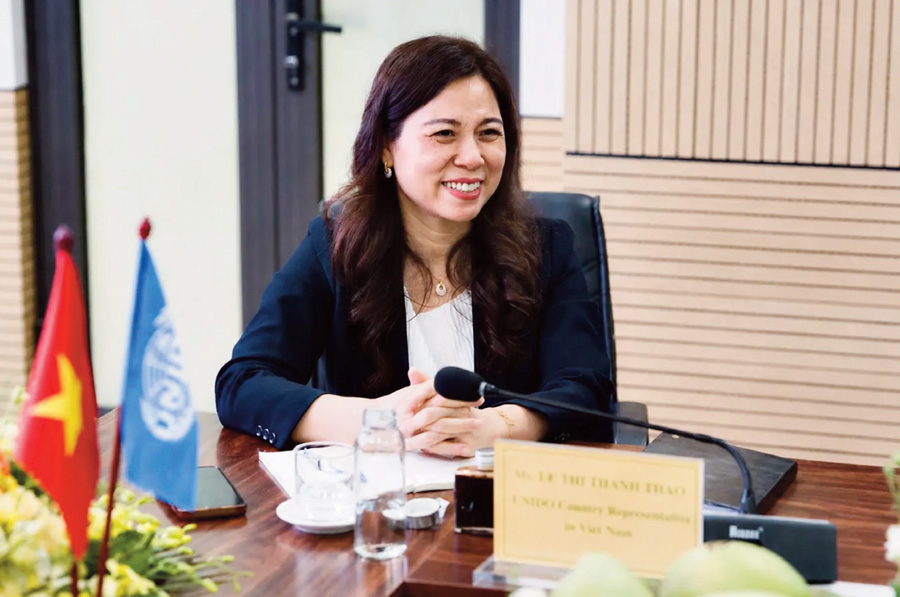
Its Global Eco-Industrial Parks Programme (GEIPP) provides a compelling example. More than an environmental initiative, eco-industrial parks (eco-IPs) have proven to be an effective approach to strengthening the competitiveness of both enterprises and industrial parks (IPs). Through resource efficiency, cleaner production, and industrial symbiosis, the GEIPP has supported ten IPs and 159 enterprises in identifying 2,036 resource-efficiency opportunities, of which 1,078 have already been implemented. Each year, participating enterprises save more than 60,000 MWh of electricity and nearly 700,000 cubic meters of water, reduce approximately 248,000 tons of CO2 emissions, and generate direct cost savings of more than $7.6 million. These achievements demonstrate that green transformation can reinforce both productivity and business performance.
Building on these results, UNIDO is promoting the Global Energy Districts Programme (GEDP), which introduces shared energy infrastructure at the IP and urban levels. The Energy Districts concept supports integrated systems for steam, heating, cooling, and energy supply, facilitating greater use of renewable energy, industrial waste heat recovery, and improved energy efficiency. This approach is expected to become a key feature of next-generation IPs, where green infrastructure, clean energy, and resource efficiency are planned and developed in an integrated manner.
Alongside infrastructure development, strengthening the capabilities of domestic enterprises is essential to maximizing the spillover effects of FDI. Through the Global Quality and Standards Programme (GQSP), UNIDO supports the strengthening of national quality infrastructure, standards, testing, and certification systems, enabling enterprises to meet international market requirements and integrate more deeply into global supply chains.
In parallel with upgrading existing industries, UNIDO is also supporting Vietnam in preparing for the industries of the future. As the global transition toward clean energy and sustainable mobility accelerates, e-mobility represents not only a technological shift but also an opportunity to develop new industrial value chains.
Drawing on experience from a number of countries, UNIDO is working with Vietnamese partners to develop an e-mobility ecosystem program focusing on policy development, standards, charging infrastructure, enterprise capability enhancement, and domestic supply-chain development. The objective is to help Vietnam evolve from being primarily a consumer market into an increasingly important participant in the global electric mobility value chain.
Though these initiatives span different sectors, they all reflect a common vision: industrial development is not simply about attracting more investment or expanding production capacity; it is about progressively building industrial ecosystems that are more productive, greener, and better equipped to withstand global economic shocks.
Partnering with Vietnam
The rapidly-evolving global landscape calls for a fresh approach to industrial development. In UNIDO’s view, future competitiveness will depend less on production costs or the scale of investment and more on the ability to build industries that are productive, innovative, green, and resilient. For Vietnam, this calls for an integrated industrial development strategy built around four priorities.
First, FDI attraction should shift from maximizing the number of projects to maximizing their quality and development impact. The value of FDI should be assessed not only by capital inflows but also by its contribution to technology transfer, human capital development, innovation, and stronger links with domestic enterprises.
Second, IPs should evolve into next-generation industrial ecosystems by integrating green infrastructure, shared energy systems, and industrial symbiosis from the planning stage. Such an approach would improve resource efficiency, reduce emissions, and enhance Vietnam’s attractiveness among high-quality investors.
Third, strengthening domestic enterprises should become the centerpiece of industrial policy. Sustainable industrial development requires local firms that can meet international standards, participate more deeply in global supply chains, and progressively upgrade their technological capabilities. This, in turn, requires coordinated investment in supplier development, innovation, skills, and national quality infrastructure.
Finally, Vietnam should proactively prepare for the industries of the future rather than relying solely on its existing comparative advantages. Clean energy, electric mobility, smart manufacturing, the circular economy, and other green industries will create new value chains over the coming decade. Early investment in institutions, standards, infrastructure, human resources, and enterprise capabilities will enable Vietnam to capture emerging opportunities arising from global investment shifts and technological transformation.
These four priorities are mutually reinforcing and together provide the foundation for building a modern, competitive, green, and inclusive industrial economy. They also reflect the approach that UNIDO is advancing through its cooperative programs in Vietnam and around the world.
As the UN’s specialized agency for industrial development, UNIDO remains committed to supporting Vietnam by sharing international experience, strengthening policy and institutional capacity, developing pilot models, and fostering partnerships between government, the private sector, and development partners. Building on the UNIDO Country Programme for Vietnam 2025-2028, UNIDO looks forward to continuing its contribution to Vietnam’s industrial development agenda toward 2030 and the vision for 2045, helping to build an industrial sector that is more productive, greener, and more resilient.




 Google translate