


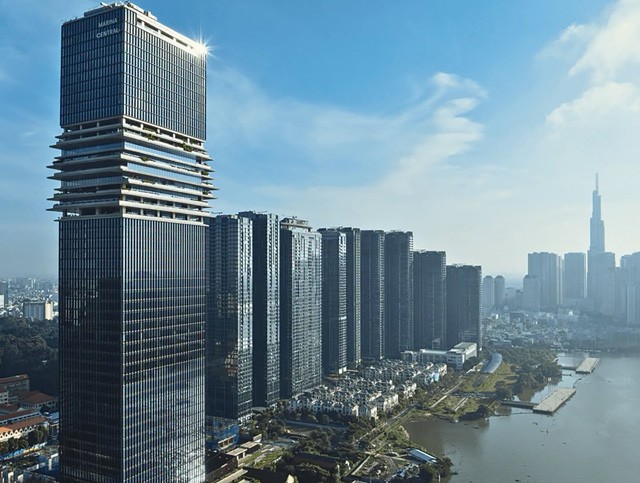
Vietnam’s ambition to develop an internationally-competitive financial center is steadily moving from planning to implementation, with greater focus placed on the capital, skills, and institutional infrastructure needed to connect the domestic financial system with international markets. This was highlighted at the UK-Vietnam High-Level Conference on Financial Services 2026, held in Ho Chi Minh City on September 14, where financial sector representatives from Vietnam and the UK discussed the conditions needed to deepen capital markets and turn the Vietnam International Financial Center (VIFC) framework into a functioning market.
Dame Susan Langley, Lady Mayor of the City of London, said the development of the VIFC has moved “from ambition to implementation,” with Ho Chi Minh City and Da Nang expected to play complementary roles in developing a trusted and internationally-connected financial ecosystem serving the wider Southeast Asian region. However, any international financial center (IFC) requires more than financial institutions and investment, as deep capital markets, professional skills, legal infrastructure, and investor confidence are also crucial.
Deepening capital markets
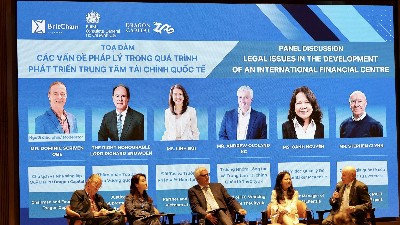
At the Conference’s panel discussion on capital market development, Mr. Dominic Scriven, Chairman and Founder of Dragon Capital, said Vietnam’s capital markets were already established but the next stage would require greater attention to the structures that allow capital to be deployed effectively. For international investors, he noted, the question extends beyond whether investment opportunities exist to whether the legal, financial, and risk management structures are sufficiently developed to support actual transactions.
Ms. Anna Rogers, Director of TheCityUK, used a simple analogy to describe this requirement: “You cannot land a plane without a runway.” The “runway,” she continued, includes the legal, regulatory, and governance framework as well as market infrastructure, investor protection, and mechanisms for dispute resolution. The issue, therefore, is not simply how much capital is available, but whether Vietnam has projects and financial structures capable of absorbing it.
Mr. Nguyen Do Hoa, Chief Representative of UK Export Finance (UKEF) in Vietnam, noted that UKEF had made available up to $6.5 billion for potential projects in Vietnam, including infrastructure projects such as additional rolling stock for Ho Chi Minh City’s Metro Line 1 and potential metro lines connected to Long Thanh International Airport.
For investors and lenders, however, access to financing is only part of the equation. Bankability depends on whether a project can generate predictable cash flows, whether risks are appropriately allocated, and whether the legal and contractual framework provides sufficient certainty.
Vietnam also has a sizeable pool of long-term domestic capital. The panel cited around $25 billion managed by regulated investment managers, including approximately $20 billion held by life insurers. The challenge is to connect this capital with long-term assets through appropriate financial products and risk management structures.
Mr. Conor M. O’Neill, Chief Financial Officer at Prudential Vietnam, said insurance liabilities can extend over eleven, 15, 20, or even 30 years, creating demand for a deeper and more diversified investment universe. This includes infrastructure, corporate bonds, equities, and other long-term assets capable of matching insurers’ liabilities.
From TheCityUK’s perspective, the opportunity for the VIFC lies in developing products and services that respond to market demand rather than directly replicating established financial centers. Ms. Rogers highlighted areas such as innovation finance, green and sustainable finance, capital markets, commodity trading, open banking, and voluntary carbon markets.
The panel suggested that the VIFC could potentially provide a testing ground for mechanisms that allow investors to manage currency exposure more effectively, while also supporting the development of domestic financial market capabilities.
Building talent for a financial center
Dame Susan highlighted skills, qualifications, and professional standards as critical to building a “trusted, durable and adaptable workforce.” The focus is extending beyond formal degrees. During her visit to Vietnam, she attended the presentation of certificates to the first cohort to complete a Green Finance course at the University of Economics, Ho Chi Minh City, developed through collaboration between City St George’s, the University of London; the UK Skills Partnership; and Vietnamese universities.
At the panel discussion on Skills and Talent, professionals from accounting, finance, and law emphasized the shift from technical knowledge to practical application. Ms. Vo Ngoc Thuy An, Vice Chair of the Member Advisory Committee of ACCA Vietnam and Executive Committee Member at PwC Vietnam, said clients increasingly need professionals who can apply their knowledge to specific business situations rather than simply provide technical or regulatory answers.
Mr. Brett Dixon, Vice President of The Law Society of England and Wales, said professionals need to define problems, identify risks, and develop mechanisms to manage them, while helping clients resolve disputes. The shift is particularly relevant as financial transactions become more complex and cross-border.
AI is adding another layer to the skills challenge, with panelists saying it is changing how professional expertise is applied rather than eliminating the need for that expertise.
In accounting, data analytics is becoming ever-more important as routine processes are automated. Professionals will need to move toward analyzing data and generating insights rather than simply processing information.

You cannot land a plane without a runway. For the VIFC, the ‘runway’ includes a credible legal, regulatory, and governance framework, alongside market infrastructure, investor protection, and effective mechanisms for dispute resolution.

Mr. Dixon noted that AI can process large volumes of information but human judgment remains important where decisions involve risk, responsibility, and client interests. This is also changing professional education.
Mr. K. Holly Shiflett, Director of Education Business Development at City St George’s, University of London, said higher education institutions need to support professionals throughout their careers rather than treating a degree as the end of formal learning. Short courses, professional qualifications, and continuing professional development are therefore growing in relevance as technology and market requirements change.
For Vietnam, the challenge is not simply to import international expertise, but to develop the capacity to absorb, adapt, and apply it to local market conditions.
Trust beyond the market
Alongside capital and talent, institutional credibility will determine how effectively an IFC can operate. Dame Susan placed particular emphasis on the legal and institutional foundations of financial market development, stressing that “international financial centers are built on trust.”
For international investors, the ability to enforce contracts and resolve disputes predictably is part of the investment infrastructure itself. This places legal and judicial capacity alongside financial products and market infrastructure in the development of the VIFC.
The City of London’s engagement with Vietnam has consequently extended beyond banking and capital markets to legal services, insurance, asset management, green finance, and fintech. TheCityUK and the UK Foreign, Commonwealth & Development Office have supported technical, legal, and regulatory work related to the financial center agenda in recent years, while cooperation has also expanded into professional education and legal training.
The development of the VIFC has moved from ambition to implementation. The City of London, TheCityUK, and the UK Foreign, Commonwealth & Development Office have supported Vietnam’s financial center agenda through technical input and legal and regulatory advice.

Dame Susan said the UK’s support was aimed at helping Vietnam establish the institutional foundations needed for a trusted and internationally-connected financial center. The development of the VIFC is now entering a stage in which these components need to advance together. Capital markets need products capable of attracting and deploying long-term capital. Investors need bankable projects and mechanisms to manage risk. Businesses need professionals capable of operating across jurisdictions. And the wider market needs legal and institutional safeguards that underpin confidence.
She added that the City of London’s engagement was intended to support Vietnam in turning its ambition into practical collaboration, rather than simply transferring an existing model. For Vietnam, this distinction is important. An IFC cannot be built by replicating another market. Its products, regulations, professional capabilities, and institutions need to respond to the structure and financing needs of the Vietnamese economy while remaining connected to international standards.
The next stage will therefore be measured not only by the amount of international capital attracted but by the ability to turn that capital into actual transactions. For Vietnam, the task is to turn the VIFC framework into a functioning market in which international capital can find opportunities, while domestic businesses and infrastructure projects can meet the standards required for long-term financing.




 Google translate