


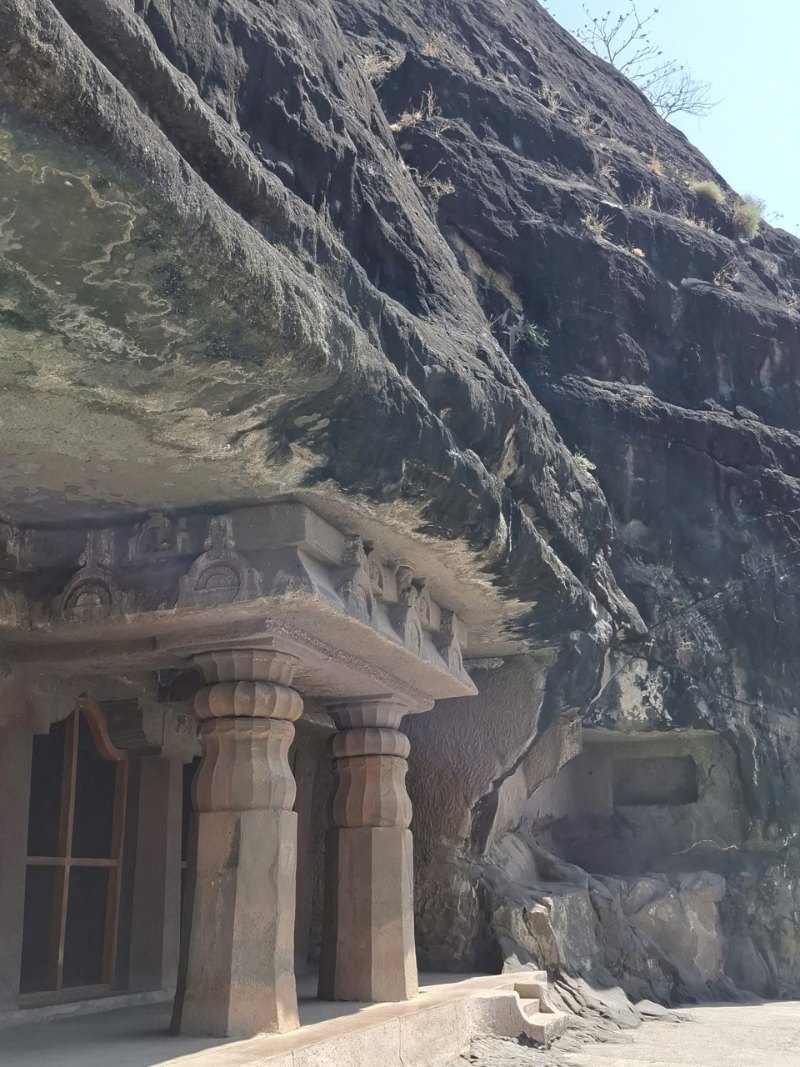
More than just an architectural wonder carved into a mountainside over 2,000 years ago, Ajanta is also regarded as a “museum of ancient painting,” preserving invaluable Buddhist murals that reflect the life, beliefs, and artistic achievements of ancient India.
A Buddhist Cave Complex Over Two Millennia Old
The Ajanta Caves are located in the state of Maharashtra, about 100 kilometers from the city of Aurangabad. From a distance, the caves appear almost hidden within the basalt cliffs of the Deccan Plateau, overlooking a horseshoe-shaped gorge carved by the Waghur River.
That morning, the delegation departed early to reach Ajanta under the soft morning light. From the visitor center, access to the caves is carefully managed-vehicles are not allowed beyond a certain point, and visitors continue on foot along a path hugging the hillside, a system designed to minimize environmental impact.
At the first panoramic viewpoint, the entire complex gradually reveals itself: a sweeping arc of cave entrances carved into the cliff face, perfectly echoing the curve of the gorge below. The scene feels less like a man-made monument and more like a natural formation shaped over time.
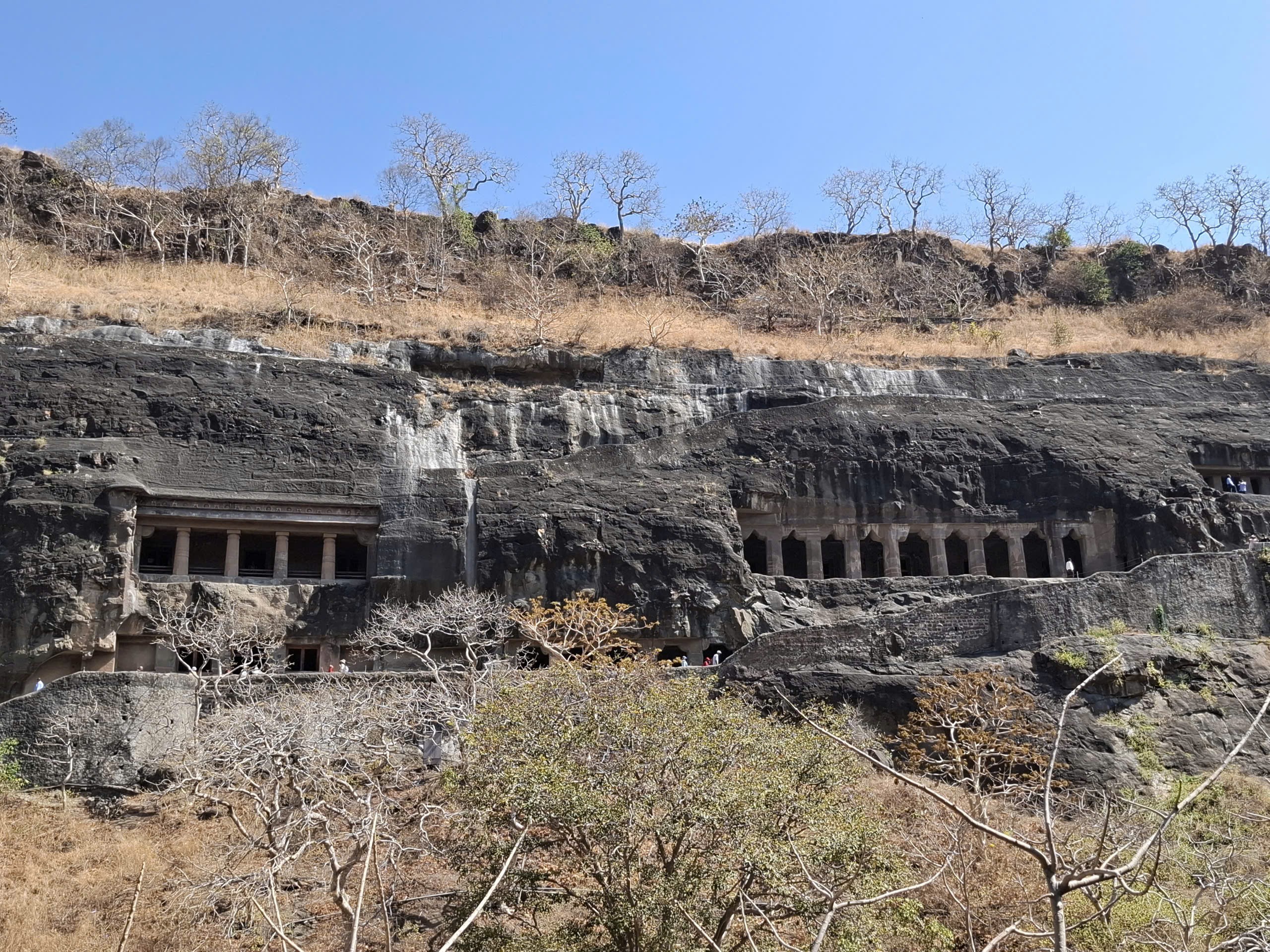
The majestic yet tranquil landscape gives many visitors the feeling that they are looking at a creation of nature rather than a monument made by human hands.
Ajanta Caves are among the oldest Buddhist cave complexes in India, comprising around 30 caves hewn directly from basalt rock and dating from the 2nd century BCE to around the 5th century CE.
Researchers believe that Ajanta was built in two main phases. The first began around the 2nd century BCE when the earliest monasteries and prayer halls were created under the patronage of the Satavahana dynasty. Construction then paused for several centuries before entering a second phase in the 5th century during the Vakataka dynasty, when many new caves and the famous murals were completed.
The caves at Ajanta mainly consist of two characteristic types of Buddhist architecture. The first is the vihara, or monastic residence where monks lived and meditated. These caves usually feature a square central hall surrounded by small cells for monks.
The second type is the chaitya, or prayer hall, which contains a stupa at the far end. In these chaitya halls, visitors can walk around the stupa in a ritual known as circumambulation - an important practice in Buddhism.
Ancient craftsmen began carving from the top downward, removing rock layer by layer to create complete architectural spaces-an approach that required extraordinary precision and planning.
An Ancient Art Museum Inside the Mountain
What truly distinguishes Ajanta in the history of world art is not only its architecture but its extraordinary system of murals and relief sculptures.
These paintings, created more than 1,500 years ago, cover walls, ceilings, and pillars, depicting scenes from the Jataka tales-the stories of the Buddha’s previous lives-as well as court life, nature, and daily activities in ancient India. The level of detail, emotional expression, and compositional sophistication continues to impress scholars and visitors alike.
Most of the paintings depict stories from the Jataka tales - legends describing the previous lives of the Buddha. In these stories, the Buddha appears in many forms, from human beings to animals, embodying noble virtues such as compassion, sacrifice, and wisdom.
Ancient painters did more than simply illustrate the narratives; they captured subtle emotions through the characters’ eyes, gestures, and postures. Processions of people, royal palaces, forests, and animals are all rendered with dynamic composition and remarkable detail.
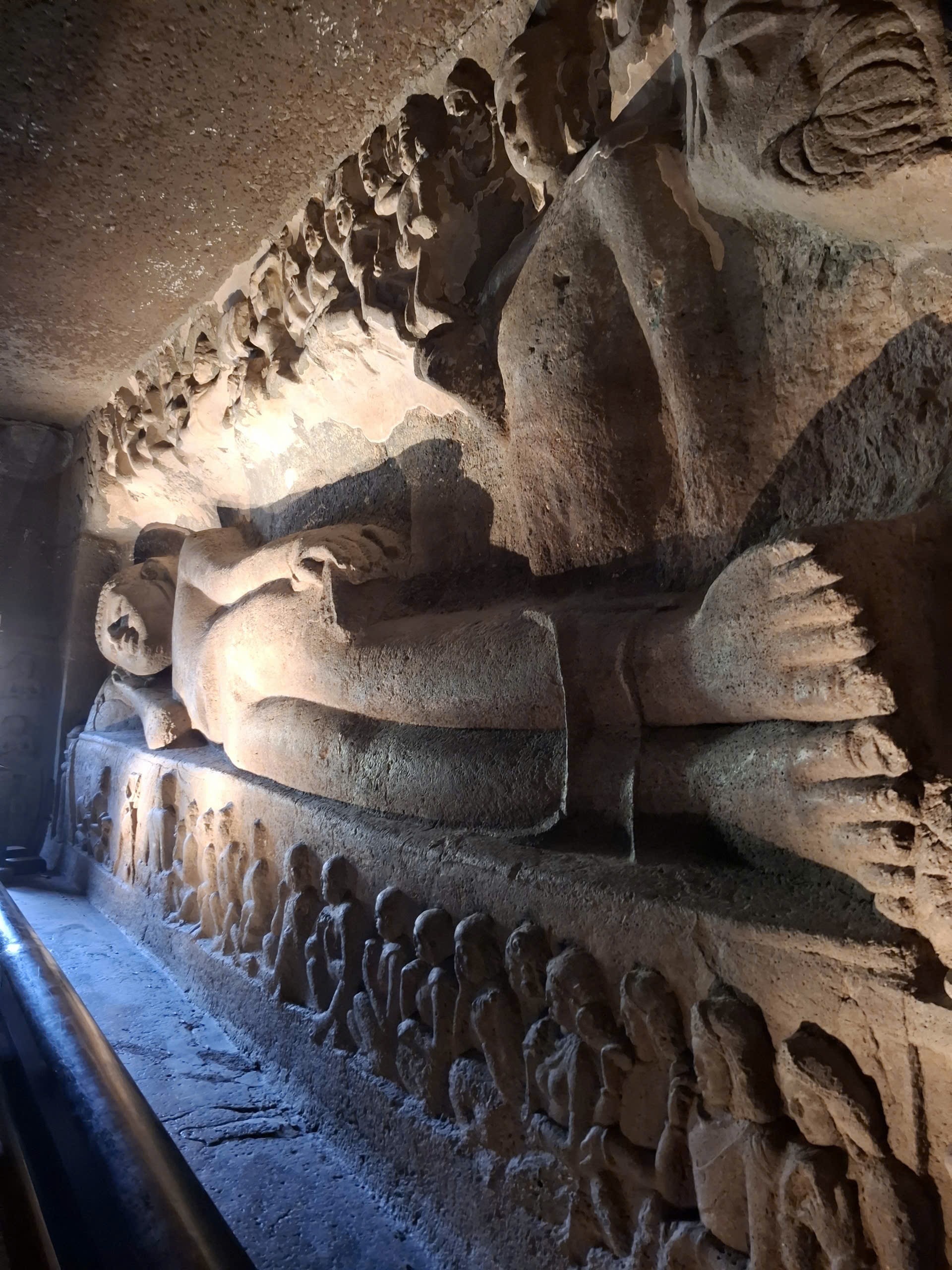
One of the most surprising aspects for visitors is that, despite more than a millennium having passed, many paintings still retain clear colors and lines. Historians believe this demonstrates the highly advanced techniques of ancient Indian craftsmen, from preparing the rock surfaces to mixing pigments.
Among the caves, numbers 1, 2, 16, and 17 are considered to house the most beautiful murals. The paintings here are illuminated only very gently to protect their original colors, giving visitors the feeling of stepping into a mysterious and ancient world.
From a Forgotten Monument to a Famous Tourist Destination - and a Lesson in Heritage Conservation
For the international delegation, exploring Ajanta was not a brief visit but a full-day journey through history. Moving from one cave to another along the cliffside, the experience unfolds gradually, each space revealing a different layer of artistic and spiritual expression.
By the end of the day, what remained was not only admiration for the scale and craftsmanship of the site, but also a sense of quiet reflection. In the dimly lit interiors, where ancient murals have survived for over two millennia, visitors can feel a rare connection to the past-one shaped by faith, artistry, and human perseverance.
From intricately carved pillars to sacred stupas deep within the caves, each space reflects the architectural and spiritual life of ancient Buddhist communities.
Walking along the cliff, visitors can see that each cave features its own architectural and decorative style, reflecting the development of art over several centuries. Many members of the delegation were particularly impressed by how ancient craftsmen combined sculpture and painting within the same space. Stone pillars, ceilings, and walls served both as surfaces for carving statues and as “canvases” for murals. This integration creates a unified artistic composition, making Ajanta not merely an archaeological site but a complete work of art.
After religious activities declined around the late 5th century, Ajanta gradually became overgrown with jungle and was largely forgotten for many centuries. It was not until 1819 that a British officer named John Smith accidentally rediscovered the caves while participating in a tiger hunting expedition in the area. The discovery quickly attracted the attention of archaeologists and European scholars.
Throughout the 19th and early 20th centuries, numerous research and restoration projects were carried out. Scholars reproduced many of the murals for study and preservation purposes.
After India gained independence, the government of Maharashtra continued to invest in infrastructure and heritage management. Ajanta was later recognized as a UNESCO World Heritage Site in 1983. Today, together with Ellora Caves, Ajanta has become one of the most important heritage destinations in Maharashtra, attracting millions of visitors each year.
One issue that particularly interested the international delegation was how India preserves the Ajanta heritage while still developing tourism. Conservation remains a central concern. The preservation of Ajanta is carried out in close coordination with the Archaeological Survey of India (ASI), with strict measures in place, including controlled lighting, humidity regulation, limited visitor capacity, and restrictions on flash photography.
At the same time, authorities have introduced innovative solutions such as life-size replicas of selected caves at the visitor center, allowing tourists to appreciate the artwork without putting additional pressure on the original structures.
After a full day exploring Ajanta, many members of the delegation realized that the value of this cave complex lies not only in its millennia-old age or its rare murals. Ajanta also represents the intersection of art, religion, and nature in the history of India.
Amid basalt cliffs and quiet forests, ancient craftsmen created a world of color and emotion. More than two thousand years later, that world continues to tell the story of human history, faith, and creative talent. For first-time visitors, Ajanta is not just a tourist attraction but a journey back into the past - where every brushstroke and every carved stone bears the imprint of time.
From a monument once lost to time, Ajanta has become one of India’s most significant cultural tourism destinations. Millions of visitors each year not only help preserve its historical and artistic value but also support the development of local tourism and livelihoods.
The story of Ajanta demonstrates how heritage, when carefully preserved and responsibly developed, can become a sustainable driver of economic growth.
For many first-time visitors, it is not just a destination, but a rare encounter with the enduring legacy of Buddhist art and human creativity.






 Google translate