


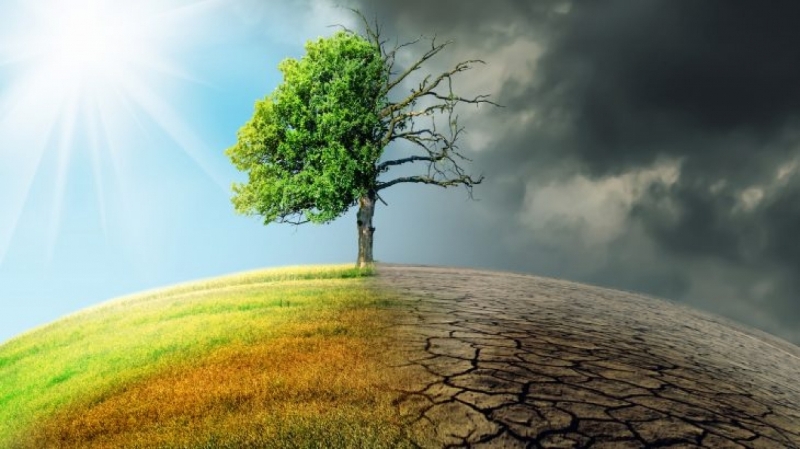
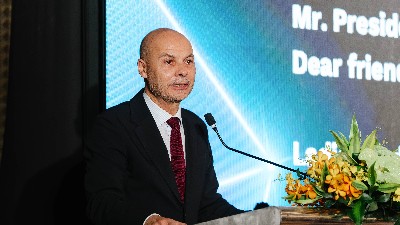
As Vietnam aims to become a high-income country by 2045, its traditional resource-intensive growth model is facing serious macro-economic risks. At a technical training workshop entitled “Applying the GTAP-InVEST Model in Spatial Planning and Integrated Development,” Associate Professor Nguyen Dinh Tho, Deputy Director of the Institute of Strategy and Policy for Agriculture and Environment (ISPAE) at the Ministry of Agriculture and Environment (MAE), said Vietnam is currently recording an ecological capacity deficit of up to -220 per cent, meaning the economy is consuming resources at more than twice the rate at which nature can regenerate them. Solutions are therefore urgently needed to address this challenge.
Natural capital at risk
Within the framework of cooperation between the MAE, ISPAE, the United Nations in Vietnam, and international partners, the Nature-Transition Support Programme (NTSP) is being implemented to help the government establish a strong scientific foundation for balancing economic growth, human well-being, and the wealth of nature. The program is a global initiative funded by the UK Department for Environment, Food and Rural Affairs (DEFRA) through the Global Centre on Biodiversity for Climate (GCBC).
The first phase of the NTSP is being implemented in Ecuador, Colombia, Ghana, Indonesia, and Vietnam, with support from GCBC. The global partnership includes the UN Environment Programme World Conservation Monitoring Centre (UNEP-WCMC), the UN Development Programme (UNDP), and the University of Minnesota in the US.
According to findings presented by the NTSP, Vietnam’s GDP growth could decline by as much as 24 per cent during the 2021-2030 period if key ecosystem services - such as crop pollination, timber supply, fisheries, and carbon sequestration - continue to deteriorate as a result of land use changes under current growth pathways.
Vietnam has experienced remarkable economic growth over the years, with GDP measured in purchasing power parity terms rising from $79 billion in 1990 to more than $1.6 trillion in 2024. However, rapid growth has also increased pressure on natural resources and ecosystems. Analysis shows that climate change impacts caused losses equivalent to around 3.2 per cent of national GDP in 2020.
In Vietnam, the program works closely with ISPAE, focusing on policy development for agricultural growth, environmental protection, climate change response, and sustainable development. The NTSP helps Vietnam better understand trade-offs between economic development and nature, while identifying alternative development pathways that safeguard both economic prosperity and natural capital.
“The health, stability, and trajectory of economic systems depend on the health and functioning of the biosphere,” Associate Professor Tho noted. “Therefore, restructuring the relationship between nature and the economy is essential for building an economic structure that is resilient, sustainable, and equitable.”
Ms. Frida Diaz Almeyda, Program Officer at UNEP-WCMC, added that an assessment report developed by the Centre in Vietnam found that around 5 per cent of the economy’s value added depends moderately, highly, or very highly on ecosystem services.
Green growth route
Notably, under the NTSP framework, researchers have developed an analytical report using economic modeling methods that combine two analytical tools - GTAP and InVEST - to provide an evidence base for economic development policies linked to natural capital conservation in Vietnam.
Experts at the workshop introduced the integrated economic-ecological model GTAP-InVEST, a platform that connects Computable General Equilibrium (CGE) modeling with spatially-mapped ecosystem services.
Dr. Nfamara Dampha, Research Scientist in Natural Capital & Ecosystem Services at the University of Minnesota, emphasized that the analysis is structured around a rigorous comparison of two main branching scenarios.
Scenario A (Business-as-usual / fragmented growth): A trend-based trajectory reflecting the continuation of historical patterns, designed to reveal the profound hidden costs and illusory gains generated by the depletion of natural capital.
Scenario B (Green transition / resilient sustainability): This scenario assumes the effective implementation of national green growth strategies, where circular economy practices become mandatory and ecosystem service values are explicitly internalized in economic accounting.
“This tool creates a ‘closed feedback loop’ in which natural degradation is quantified as productivity shocks within the economic model,” Dr. Dampha said. “Simulation results show that if the business-as-usual growth pathway continues, potential GDP in 2030 could decline by as much as 26 per cent due to ecosystem losses. In contrast, the green transition scenario, with smart investments in nature, delivers a higher and more sustainable long-term growth trajectory.”
Within Vietnam’s current legal and economic framework, applying the integrated GTAP-InVEST model could help address several practical policy challenges.
Representatives from the Ministry of Construction and MAE attending the workshop raised concerns about risks in spatial planning and land management following the decentralization of land use conversion authority under the Land Law 2024. Experts emphasized that the GTAP-InVEST model can serve as a key tool for quantifying economic losses from ecosystem service degradation, helping local authorities avoid sacrificing ecological land for short-term gains from industrial or real estate development.
Regarding marine spatial conflicts and energy development, representatives from the Ministry of Industry and Trade and the Vietnam Administration of Seas and Islands highlighted competition for space between offshore wind projects and traditional fishing grounds. Experts explained that the model’s capacity to provide high-resolution spatial data at 300 meters (through the SEALS tool) offers a scientific basis for optimizing site selection and minimizing conflicts between renewable energy development and coral reef conservation.
Meanwhile, representatives from the Department of Climate Change and the Department of Forestry and Forest Protection raised concerns about “fake forests,” where natural forests are replaced by monoculture plantations.
Regarding the circular economy and export competitiveness, participants pointed to an “implementation paradox” in the National Action Plan on the Circular Economy under Decision No. 222/QD-TTg, where high treatment costs remain a barrier to private investment. Experts said the model can quantify the long-term economic benefits of resource reuse, providing an evidence base for Extended Producer Responsibility (EPR) and helping exporters navigate the EU’s Carbon Border Adjustment Mechanism (CBAM).
On social equity and a “just transition,” representatives from the Ministry of Home Affairs and the MAE stressed that the green transition scenario must consider social impacts, such as job losses in coal power or coastal aquaculture sectors. The GTAP-InVEST framework is therefore recommended to incorporate “just transition” indicators to ensure that the shift towards a 75 per cent renewable energy share by 2050 does not negatively affect the livelihoods of vulnerable rural and coastal communities.
Overall, according to Dr. Dampha, by leveraging this integrated modeling framework, the report provides a robust empirical evidence base for policymaking. Subsequent chapters offer a detailed historical overview of national growth, project the long-term outcomes of the business-as-usual scenario, and envision a prosperous future under a green transition pathway. The report also analyzes key sectoral intersections and outlines the systemic institutional transformations required to ensure that Vietnam’s long-term prosperity remains firmly anchored in ecological stability.
Quote
Associate Professor Nguyen Dinh Tho, Deputy Director of the Institute of Strategy and Policy on Agriculture and Environment, Ministry of Agriculture and Environment
The health, stability, and trajectory of economic systems depend on the health and functioning of the biosphere. Therefore, restructuring the relationship between nature and the economy is essential for building an economic structure that is resilient, sustainable, and equitable.
Box
The “Applying the GTAP-InVEST Model in Spatial Planning and Integrated Development” technical training workshop was held on March 3 by the Institute of Strategy and Policy on Agriculture and Environment at the Ministry of Agriculture and Environment in coordination with relevant partners.



 Google translate