



Experts estimated that cybercrime causes approximately $10 trillion in damages annually across the globe, far exceeding the impact of many traditional crimes such as drug trafficking or terrorism. In Vietnam, losses from this type of crime are also reaching trillions of Vietnamese dong (VND) each year.
According to data from the Ministry of Public Security, online fraud in Vietnam resulted in estimated losses of over VND8 trillion (over $304 million) in 2025.
Meanwhile, a report by the National Cybersecurity Association revealed that domestic information systems encountered roughly 552,000 cyberattacks throughout 2025, representing a 19.38% decrease compared to 2024 (which saw approximately 659,000 attacks).
Despite the decline in the total number of attacks, the severity of the damage has shown an upward trend. Up to 52.3% of government agencies, organizations, and enterprises reported being affected by cyberattacks in 2025—a significant jump from the 46.15% recorded in 2024.
Over the past three years, law enforcement authorities have detected and handled more than 30 cases involving the illegal trading and misappropriation of data. These incidents resulted in the exposure and leaking of over 160 million data records across various sectors.
From a business standpoint, Mr. Nguyen Hung Son, Vice Chairman of FSI, noted that organizations are currently caught in a "pincer" of dual pressure. On the one hand, cyberattacks are becoming increasingly sophisticated and complex. On the other, Vietnam’s cybersecurity legal framework is tightening, demanding much higher levels of compliance.
In reality, statistics reveal a stark situation: only about 11% of organizations in Vietnam possess sufficient capacity to defend against cyberattacks, while 56% lack dedicated information security personnel. "For government agencies and small-to-medium enterprises (SMEs), even basic IT staff are in short supply, let alone specialized security experts," Mr. Son said.
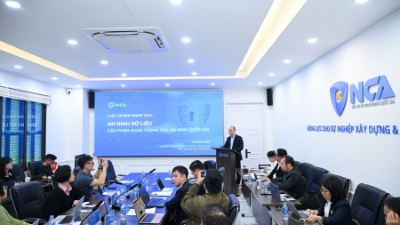
Speaking at the seminar "Compliance with the Personal Data Protection Law - Challenges, Risks, and Technological Solutions" held on March 20, Senior Lieutenant Colonel Nguyen Dinh Do Thi, Deputy Head of the Network Information Security Division under the Department of Cybersecurity and High-Tech Crime Prevention (Ministry of Public Security), emphasized that data now plays a vital role as the "lifeblood" of the digital economy. Many nations have come to regard data as a precious asset requiring stringent protection.
According to statistics, there are currently over 30 types of cybercrime, with perpetrators viewing personal data as a "gold mine."
Following nearly 30 years of internet connectivity, Vietnam has recorded impressive growth. As of January 2026, the country boasts approximately 85.6 million internet users, accounting for 84.2% of the population.
However, alongside this progress, the infringement and illegal trading of personal data in cyberspace have become increasingly complex. On both public and private forumso and groups, the sale of data has reached alarming levels. Numerous datasets, some containing tens of millions of Vietnamese records, are being openly traded and meticulously categorized by specific sectors.









 Google translate