


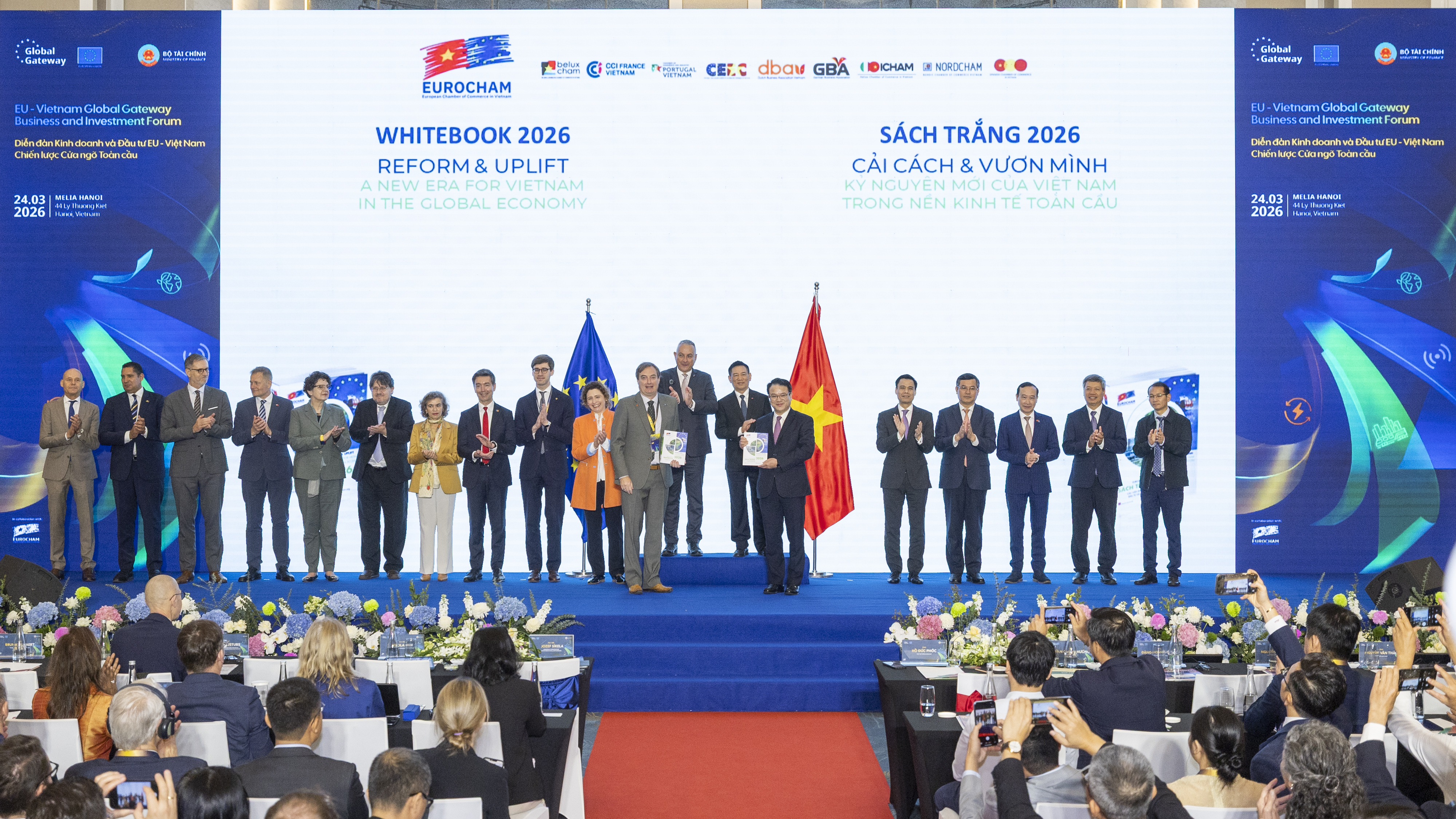
The European Chamber of Commerce in Vietnam (EuroCham) officially launched the 17th edition of its Whitebook on March 24, highlighting the need for stronger policy implementation to translate growing European investment commitments into tangible outcomes.
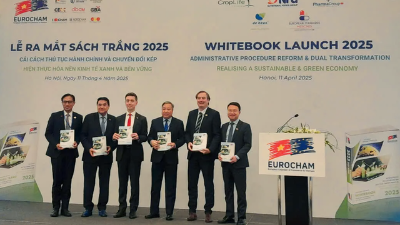
The Whitebook was presented to representatives of the Vietnamese Government in the presence of Deputy Prime Minister Ho Duc Phoc and European Commissioner for International Partnerships Jozef Síkela, on the the occasion of the EU–Vietnam Global Gateway Business and Investment Forum.
Serving as EuroCham’s flagship annual publication, the Whitebook 2026 provides a structured set of policy recommendations aimed at improving Vietnam’s regulatory environment and supporting the effective deployment of large-scale European investment.
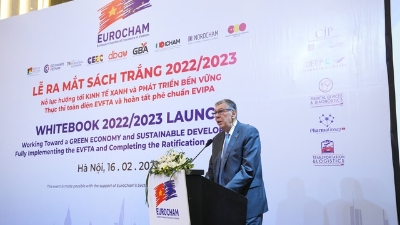
Speaking at the launch, EuroCham Chairman Bruno Jaspaert emphasized that European businesses are already deeply engaged in Vietnam’s economy. “We are already here, and we are investing in this country,” he said. "We may not always be the largest investors, but we bring investments that matter. More importantly, we aim to build this country hand in hand with the authorities. As investors, we are here to make a profit, of course, but we also believe we should give something back. We want to bring part of what makes us Europeans stand out and contribute to Vietnam’s development."
The 2026 edition spans 280 pages and reflects a year of work by 20 sector committees, drawing on the operational experience of more than 1,500 European companies in Vietnam. The recommendations cover a wide range of sectors, from energy and logistics to healthcare and digital industries, and are designed to improve the investment climate while enhancing Vietnam’s competitiveness in Southeast Asia.
According to EuroCham, as global competition for investment intensifies, cost advantages alone are no longer sufficient. Investors are increasingly focused on regulatory transparency, governance efficiency, and sustainability standards.
“The next step is to ensure consistent implementation. The 2026 Whitebook serves as a roadmap to effectively translate billion-euro investment commitments into tangible results,” Mr. Jaspaert said.
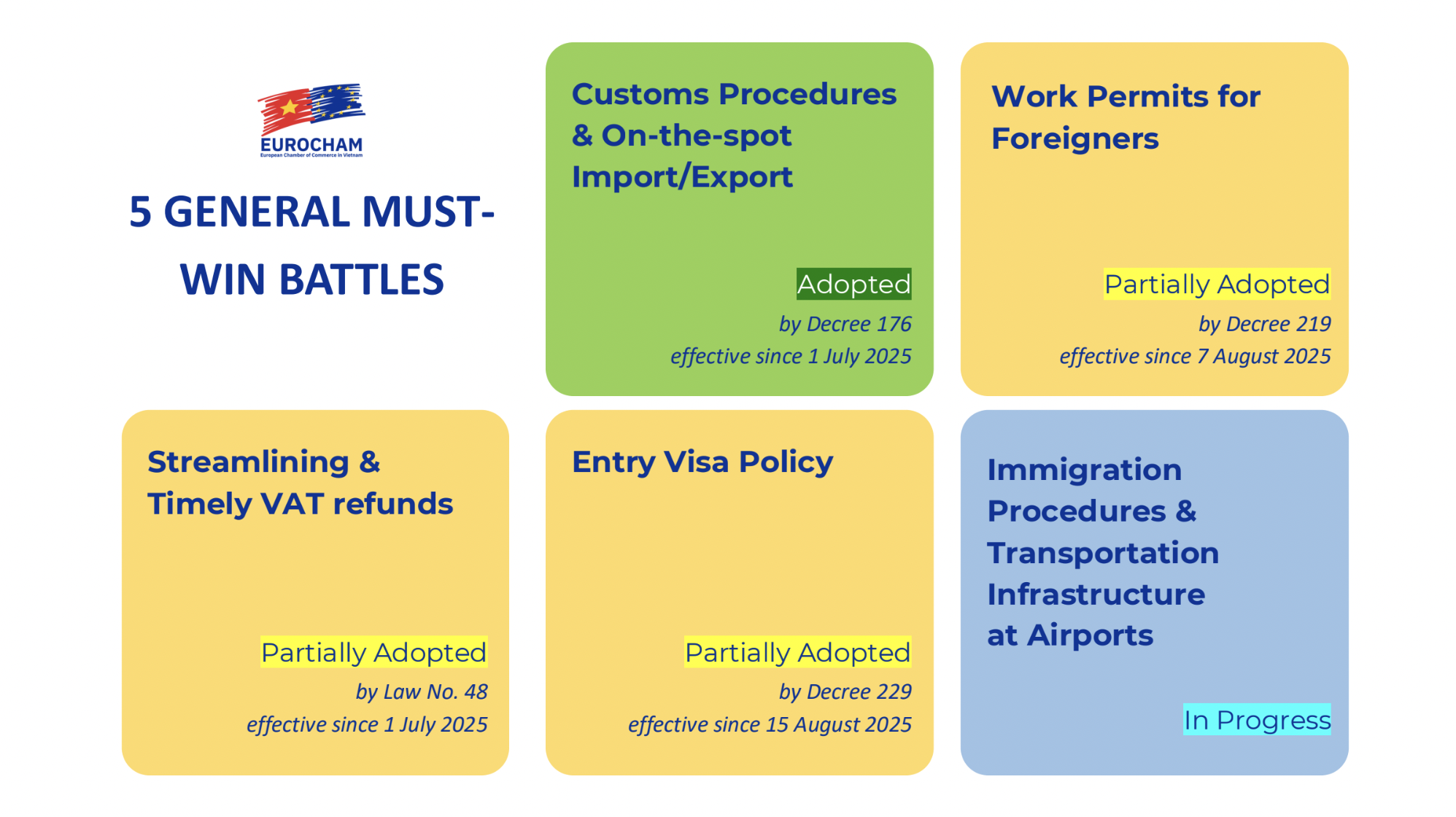
A key feature of this year’s Whitebook is the “Must-Win Battles” initiative, which prioritizes reforms that can deliver fast and measurable improvements to the business environment.
Over the past year, 10 recommendations have been fully adopted, 7 partially implemented, and 22 remain in progress. These reforms have led to concrete improvements for businesses, including expanded visa exemptions, streamlined work permit procedures, and enhanced support for on-the-spot import-export activities.
Mr. Jaspaert also noted that EuroCham closely tracks the implementation of these recommendations, reflecting both the pace of reform and the responsiveness of Vietnamese authorities to business feedback.
Beyond the publication itself, EuroCham announced a new approach to policy engagement through the introduction of a Whitebook Dialogue Week. This initiative will involve in-depth working sessions with ministries and government agencies to translate recommendations into actionable policy measures.
“Today’s progress is not accidental, but the result of shared ambition and sustained cooperation between both sides,” Mr. Jaspaert added.
In the context of Vietnam’s ongoing green transition and institutional reforms, the Whitebook is positioned as a bridge between policy vision and business practice, helping to create a more transparent, predictable, and efficient investment environment.
As Vietnam seeks to attract the next wave of European investment, EuroCham underscored that the focus must now shift from commitments to execution, ensuring that policy reforms keep pace with the country’s growth ambitions and evolving role in global value chains.





 Google translate