


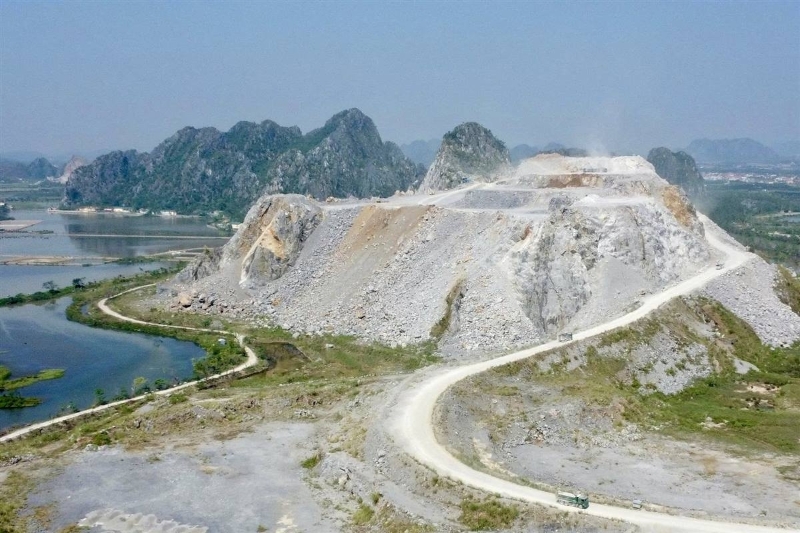
The People’s Committee of Hai Phong city, northern Vietnam, has approved the results of a survey to delineate areas where mineral activities are either prohibited or temporarily prohibited in the eastern part of the city.
Accordingly, the city identifies a total of 3,246 areas where mining and mineral extraction are restricted. These zones are directly linked to 10 different sectors and fields of management.
Specifically, the list includes: national defense (1,016 areas); security (441 areas); information and communications (683 areas); culture, sports, and tourism (607 areas); religious sites (272 areas); transport (72 areas); industry and trade: (63 areas); agriculture and rural development (51 areas); natural resources and environment (24 areas); and construction (17 areas).
The primary objective of delineating these prohibited zones is to ensure that mineral exploitation is balanced with the protection of the environment, natural landscapes, and historical-cultural relics. The move is also designed to safeguard national defense, security, and social order.
According to the People’s Committee, this initiative provides a legal and administrative foundation for the effective State management of mineral resources. It aligns with the city’s broader strategy to protect the ecological environment and promote sustainable development.





 Google translate