


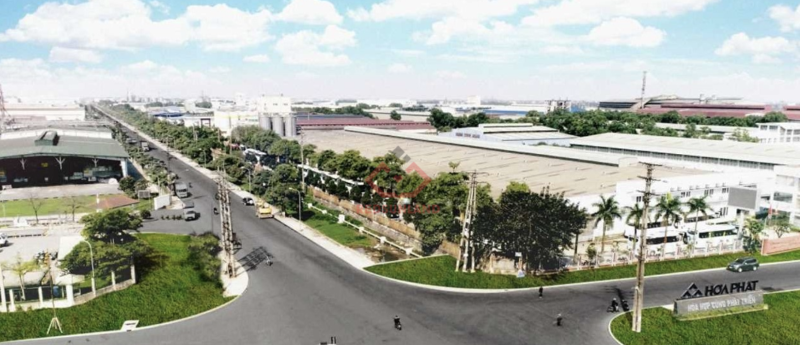
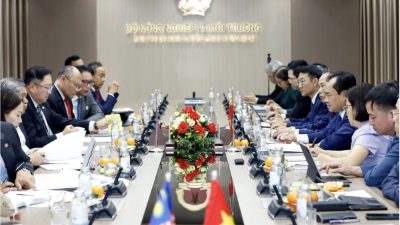
The VASI Supporting Industry Infrastructure Map 2026 has been unveiled during an event held on May 14, drawing participation from the supporting industry community as well as various domestic and foreign business associations.
The event was jointly organized by the Infrastructure Board of the Vietnam Association for Supporting Industries (VASI), in collaboration with DTJ Industrial.
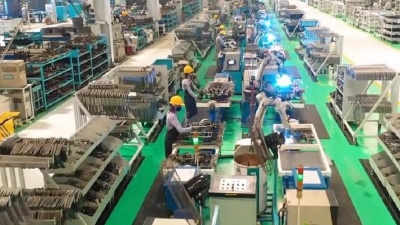
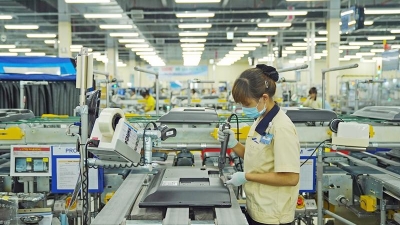
The central message of the program is to create a synchronized, modern, green, and internationally competitive supporting industry ecosystem. In this environment, businesses will not only access land and production infrastructure but will also be connected to supply chains, technology, factory support services, logistics, and strategic investment resources.
At the event, VASI’s Infrastructure Board announced seven key supporting industry infrastructure development hubs in Northern Vietnam and provided an analysis of the Red River Delta supply chain. Additionally, two key industrial clusters in Thai Nguyen and Hung Yen were introduced. These projects are designed as concentrated supporting industry models, featuring shared infrastructure, supply chain connectivity, and optimized operations tailored for small and medium-sized enterprises (SMEs) in the sector.
Vice President and Head of VASI’s Infrastructure Board, Mr. Nguyen Quoc Khanh, stated that the "VASI Supporting Industry Infrastructure Map" is expected to become a specialized data and investment platform for the Vietnamese supporting industry community. This initiative aims to increase localization rates, enhance the competitiveness of Vietnamese firms, promote exports, and gradually help local businesses integrate more deeply into global supply chains."
Deputy Director of the Industry Agency under the Ministry of Industry and Trade, Mr. Pham Van Quan, noted that this marks the beginning of a transition toward "new-style" industrial parks and clusters in Vietnam. In these areas, businesses move beyond simply leasing land for production to participating in an integrated, green, and modern industrial ecosystem.
"Forming deep industry-linked clusters is a vital step in creating a sustainable foundation for Vietnam's supporting industries, facilitating business operations, attracting investment, and strengthening cooperation between domestic and international firms," said Mr. Quan.
Vice President of the Vietnam Green Transformation Association, Ms. Phung Thi Thu Huong, evaluated the move as being in line with global industrial trends.
According to her, the new generation of foreign investment no longer focuses solely on tax incentives or low labor costs. Instead, it is shifting toward factors such as synchronized infrastructure, local supply chains, Environmental, Social, and Governance (ESG) standards, green energy, and global production connectivity. This requires Vietnam to rapidly establish highly specialized supporting industry ecosystems capable of meeting international standards.



 Google translate