


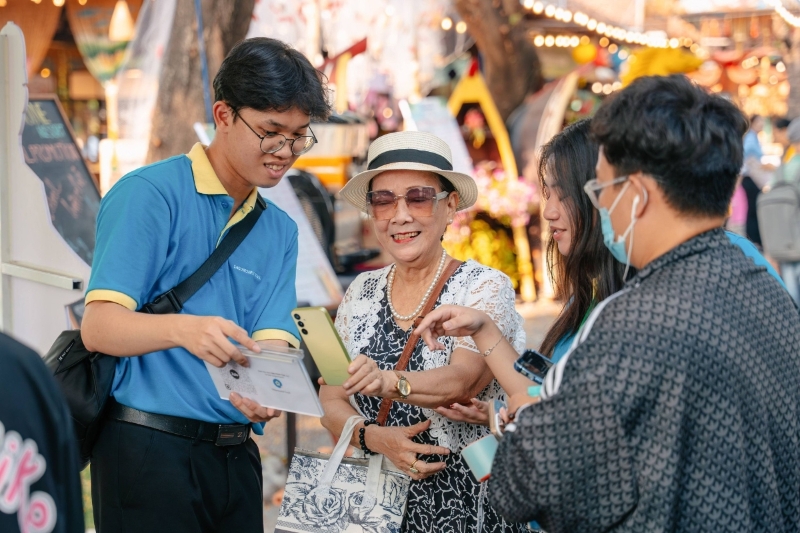
The 22nd Ho Chi Minh City Tourism Festival 2026, themed “Vibrant Summer Vibes,” will take place from April 2 to 5 at September 23 Park.
The event is set to feature over 120 booths from travel agencies, hotels, airlines, and service providers from both Vietnam and abroad.
On this occasion, numerous travel firms will simultaneously launch discounts and promotions for peak Summer 2026 itineraries. Hotels in the 3-to-5-star segments are also implementing room discounts of 20% to 50% for guests who book directly.
According to the City Department of Tourism, travel businesses should avoid mass discounting in the current climate and instead focus on restructuring their products. Rather than competing through low prices, companies are encouraged to optimize their entire service packages—from itineraries to the chain of accompanying experiences—to create distinct value and attract tourists.
Currently, units are ramping up domestic land-based tours and nearby destinations to optimize costs and diversify experiences, rather than focusing on international tours amid ongoing global volatility.
In reality, under the pressure of rising input costs, tourism enterprises are implementing various solutions to keep tour prices stable.
Director of Marketing and Communications at Vietluxtour, Ms. Tran Thi Bao Thu, said “Summer 2026 will be a ‘litmus test’ for travel companies. When input costs fluctuate, businesses cannot rely solely on discounts but must enhance their adaptability.”
Her firm is currently recording a rapid shift toward Northeast Asian markets such as Japan, South Korea, mainland China, and Taiwan (China). These markets offer the advantage of short flight distances and are less affected by airspace instability, while costs remain attractive thanks to favorable exchange rates for the Yen and Won.
CEO of Vietravel, Mr. Tran Doan The Duy, stated that his company is proactively reorienting its tour portfolio toward greater flexibility, focusing on short-haul and domestic routes.
Similarly, a representative from Flamingo Redtours shared that the company is working with land transport providers to balance vehicle rental prices at reasonable levels, while also recalculating group sizes and selecting appropriate vehicles.
For travel programs where contracts have not yet been signed, businesses are proactively discussing with customers to adjust tour prices appropriately. By sharing the burden of costs arising from objective factors, they aim to ensure trip quality while limiting losses for all parties involved.

 Google translate