


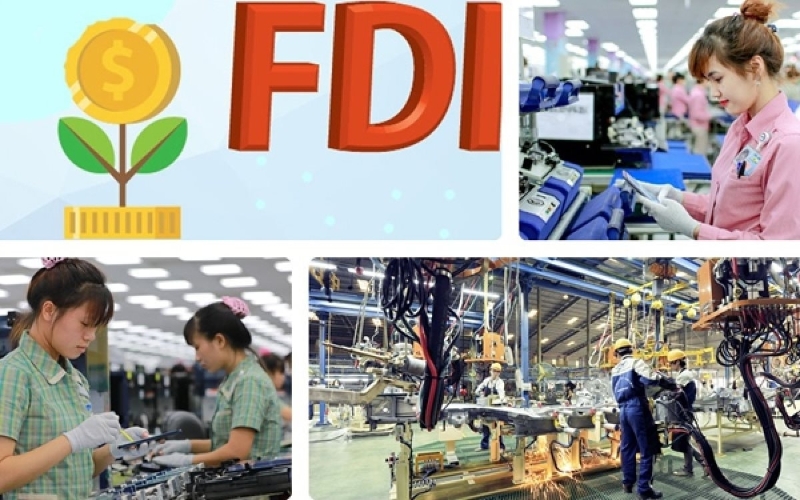
Vietnam has secured its position as one of the top three investment destinations favored by regional CEOs, trailing only the United States (42%) and overtaking mainland China (14%). Investor interest in the country has nearly doubled, surging from 8% to 15% in just a single year.
According to PwC’s newest Global CEO Survey, released on March 5, Vietnam is emerging as a standout performer amidst a global landscape defined by geopolitical volatility and rapid technological breakthroughs.
The report identifies Vietnam not only as an innovation hub but also as a primary investment destination playing a pivotal role in the restructuring of global supply chains. Vietnam is entering a new growth phase, bolstered by solid macroeconomic foundations, deeper integration into global value chains, and a continually modernizing legal framework. These factors have placed Vietnam at the heart of the restructuring strategies of many of the world’s largest corporations.
A key highlight of this year’s report is the contrast between general regional caution and the rise of Vietnam’s strategic status. While the majority of global CEOs are recalibrating their growth expectations downward, leaders in the Asia-Pacific region are demonstrating strong confidence in Vietnam as a preferred investment destination and a critical link in supply chain diversification.
Mr. Mai Viet Hung Tran, General Director of PwC Vietnam, said “Vietnam currently stands before a rare opportunity. Amidst a cautious regional sentiment, Vietnam is regarded as one of the top three investment destinations for Asia-Pacific CEOs, while simultaneously becoming a strategic link in the restructuring of global trade and supply chains.”
The report attributes Vietnam's strong appeal to a combination of economic resilience and institutional modernization. For instance, while the Asia-Pacific region is expected to contribute nearly 60% of global growth in 2026, it still faces persistent inflation and geopolitical risks. Despite these headwinds, Vietnam’s outlook remains exceptionally optimistic. This is highlighted by an impressive GDP growth rate of 8.02% in 2025 and a national GDP growth target of 10% annually for the 2026–2030 period. This momentum is further supported by stable domestic consumption and a projected 20–30% increase in public investment for infrastructure.
Furthermore, Vietnam’s institutional reforms are a major draw. The Investment Law 2025, which officially took effect on March 1, 2026, is simplifying administrative procedures, enhancing transparency, and strengthening investor confidence—all of which bolster the long-term competitiveness of Vietnam’s private sector.
Despite a volatile international trade environment, exports are expected to remain a vital pillar of the Vietnamese economy, with a forecasted growth of 8% in 2026. A prime example of this resilience occurred in 2025: despite a 20% tariff formerly imposed by the United States, export turnover to the US market still grew by nearly 28%.








 Google translate