


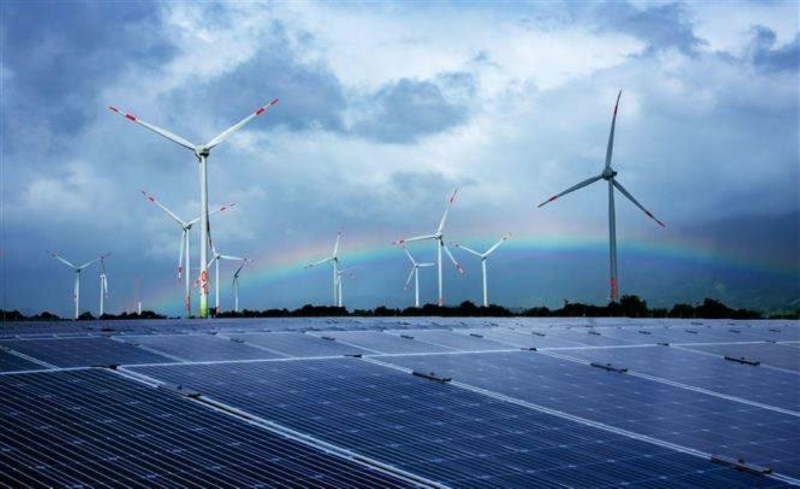
Vietnam’s energy transition is moving from policy formulation to implementation, creating a new landscape for investors and developers navigating regulatory reforms, market restructuring, and rising ESG (environmental, social, and governance) expectations. Industry experts at a recent BritCham Vietnam webinar entitled “Vietnam’s Energy Transition 2026: Unlocking Opportunities for Investors & Developers” highlighted how the country is entering a decisive phase shaped by National Power Development Plan VIII (PDP8), evolving market mechanisms, and the growing role of private capital.
Regulatory shift
Mr. Giles Cooper, Partner at Allens, Hanoi Branch, said Vietnam is moving into a phase where policy direction is translating into actionable regulations. “We are definitely moving into the implementation phase of PDP8,” he noted, emphasizing that recent resolutions from the Politburo, National Assembly, and government collectively establish a coordinated policy environment for energy projects.
A central theme is the expanded role of private investment. Given the scale of capital required for new generation capacity, authorities have explicitly called for stronger participation from both foreign and domestic investors, including through public-private partnerships and transmission projects - areas previously dominated by State entities.
Structural reforms are also being introduced to modernize the electricity market. Among the most significant is the planned adoption of a two-component retail tariff system combining capacity charges and energy charges, a model widely used internationally to improve cost recovery and ensure stable payments to generators.
Administrative streamlining is another priority as the government has committed to reducing approval timelines and bureaucratic steps that have historically delayed projects. At the same time, policymakers have acknowledged the need for stronger contract enforcement mechanisms, particularly in dispute resolution - a longstanding concern among investors.
Previously, even minor adjustments to master plans required approval from the highest levels of government, causing prolonged delays. New rules now allow certain amendments at the provincial level, enabling planning to better align with on-the-ground realities.
Recent regulations are also lowering barriers to market entry. Circular No. 66 on investor selection allows special purpose vehicles without prior project experience to participate, provided they demonstrate adequate financial and technical backing. The measure aims to unblock stalled projects while encouraging partnerships, including technology transfer to local partners.
Meanwhile, Direct Power Purchase Agreement (DPPA) reforms are expected to further transform the market. Proposed amendments would expand participation to industrial parks, economic zones, and major energy users such as data centers and electric vehicle charging operators.
Crucially, the removal of tariff caps on physical direct-wire DPPAs could restore commercial flexibility and stimulate private renewable projects, particularly rooftop solar installations that face fewer land and permitting constraints.
Mr. Cooper also highlighted emerging regulations supporting new technologies. Circular No. 62 establishes Vietnam’s first tariff framework for standalone battery energy storage systems connected to the grid - a foundational step towards integrating variable renewable energy and enhancing system reliability.
Competitive market reality
While regulatory reforms are creating opportunities, developers face a markedly different environment from the rapid expansion triggered by feed-in tariffs.
Mr. Murthy Nuni, Managing Director of Marshal Green Energy Limited, described Vietnam’s power sector as entering a more disciplined phase shaped by market fundamentals rather than subsidies. Vietnam currently has about 87,600 MW of installed capacity, with renewables accounting for roughly 28 per cent of capacity but only about 12 per cent of actual generation, reflecting curtailment and operational challenges.
Solar projects generated approximately 20.5 billion kWh in the first ten months of 2025, operating at an average capacity of around 15 per cent, with big projects achieving about 25 per cent. Curtailment remains a significant risk, particularly during periods of high hydropower output following severe floods and storms.
Despite these challenges, PDP8 sets aggressive expansion targets through 2030, projecting total investment of about $134.7 billion across all power sources, according to Mr. Nuni. However, grid expansion has lagged behind generation growth. Renewable projects can be built relatively quickly - solar within a year and wind in about two years - but transmission infrastructure can take two to four years or longer due to land acquisition and permitting hurdles.
The government is now planning substantial transmission investment through 2030, though Mr. Nuni suggested it may still fall short of what is needed to integrate large volumes of intermittent renewable energy.
Market mechanisms are also evolving. New policies introduce annual ceiling prices for different energy sources, with solar tariffs significantly lower than earlier feed-in tariff levels. As a result, developers must adapt to tighter margins and competitive bidding processes.
Implementation at the provincial level is still maturing. Though investor selection processes are being decentralized, some projects have attracted only a single bidder, indicating that competitive frameworks are still developing.
Looking ahead, hybrid models combining renewable generation with storage are expected to play a key role, particularly for corporate buyers seeking reliable green electricity. “We see strong potential in projects that integrate renewables with storage to provide firm power around the clock,” Mr. Nuni said, adding that many corporate customers currently prefer wind energy because it is easier to integrate than large volumes of solar power.
As tariffs decline, technological innovation will become essential. Larger wind turbines in the 8-12 MW range for nearshore and offshore projects could significantly reduce costs, while improved engineering and project planning will be critical to maintaining profitability.
Gateway to capital
Beyond regulatory and market shifts, ESG performance is emerging as a decisive factor in project viability and access to financing.
Dr. Hanh Nguyen, Principal Technical Consultant at ERM, said ESG considerations have become central to risk management and investor confidence in Vietnam’s renewable sector. “ESG is no longer just about compliance - it is central to investment readiness,” he added.
With Vietnam’s renewable industry entering a new phase driven by commercial fundamentals rather than subsidies, opportunities are expanding into offshore wind, energy storage, and transmission infrastructure. In this environment, projects must demonstrate robust ESG performance to secure international financing.
The concept of a “just transition” is also gaining prominence, emphasizing that the shift to net-zero must be fair and socially responsible. This includes issues such as gender equality, energy access, workforce transition, and community well-being.
Different stakeholders have different priorities. Investors focus on social risks and supply chain transparency, governments prioritize workforce reskilling and social protection, and communities seek resilient livelihoods and shared benefits. Developers must therefore navigate such expectations to build inclusive and sustainable projects.
Globally, ESG frameworks are expanding rapidly, from the UN Sustainable Development Goals to supply chain regulations and sustainable finance standards. This momentum is influencing investor requirements in Vietnam.
Key environmental issues include biodiversity protection, marine impacts for offshore wind, pollution control, and climate resilience. Social risks often relate to land acquisition, livelihood impacts - particularly for fishing communities - labor conditions, and stakeholder engagement. Governance factors include strong management systems, supply chain due diligence, and alignment with human rights principles.
Dr. Hanh emphasized that ESG integration should begin at the earliest stages of project development, moving beyond a compliance-based approach towards strategic integration at both the corporate and project levels.
One case study highlighted the impact of strong ESG performance. The Lotus Wind Power Project in central Quang Tri province secured a $173 million green loan package from international lenders after comprehensive environmental and social assessments, mitigation planning, and community engagement measures. “Strong ESG performance strengthens community acceptance and enhances long-term resilience,” he concluded.






 Google translate