


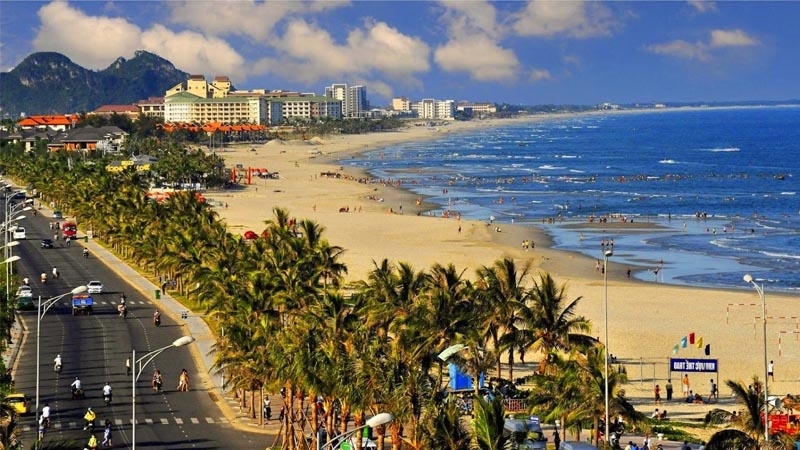
The Ministry of Justice has released appraisal documents for a draft Government Decree regarding specific mechanisms and policies for sea reclamation urban projects in Da Nang City, central Vietnam.
The draft Decree consists of nine articles. Notably, Article 5, which governs land, resources, and environment, proposes several significant mechanisms.
Specifically, strategic investors of sea reclamation urban projects would not be required to reserve a portion of the residential land within the project for social housing, nor would they be required to provide social housing land with completed technical infrastructure at alternative locations outside the project’s scope. However, investors must pay a financial contribution equivalent to the value of the residential land (including technical infrastructure costs) that would have been used for social housing.
Additionally, strategic investors are permitted to transfer parts of the project once the technical infrastructure for those areas has been completed in accordance with the detailed planning. These investors are also granted lump-sum land leases from the State for the entire project duration and are permitted to sub-lease land use rights for portions where infrastructure is complete.
For sub-lessees, their rights and obligations are determined by their payment method. Specifically, if they pay the land rent in a one-off lump sum for the entire lease term, they hold the same rights and obligations as those who lease land directly from the State via lump-sum payment. If they pay annually, their rights and obligations follow the regulations for annual land rent under the Land Law.
Regarding foreign ownership, strategic investors are permitted to transfer housing to foreign organizations and individuals, to be capped at 50% of the total apartments in a single building. For individual houses (villas or terraced houses) in an area with a population scale of 10,000 people, foreign ownership—through purchase, lease-purchase, donation, or inheritance—is limited to a maximum of 250 units, except for projects located in sensitive national defense and security zones.
Furthermore, strategic investors may transfer up to 50% of non-residential construction projects within the sea reclamation area to foreign organizations and individuals. This includes tourist apartments (condotels), resort villas, office-tels, and construction floor areas.




 Google translate