


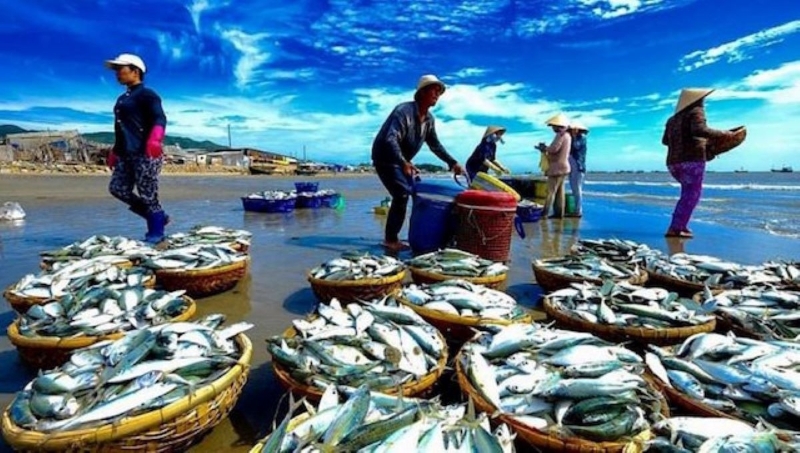
Total seafood export turnover in the first two months of 2026 reached $667 million, a 15% increase compared to the same period in 2025, reaching 97 markets worldwide, according to the Vietnam Association of Seafood Exporters and Producers (VASEP).
Within the seafood export group, squid and octopus are emerging as notable bright spots. In the first two months alone, the export turnover of these two commodities reached over $111 million, up 23% year-on-year. This result reflects an early recovery in demand across many markets, particularly within Asia.
Breaking down the product structure, squid led the growth, reaching over $64 million (an increase of nearly 30%), while octopus reached over $47 million (up more than 16%).
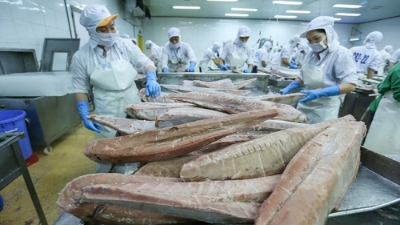
In contrast to the buoyant squid and octopus segment, tuna exports have shown signs of a slowdown. After a 13% growth in January 2026, tuna export turnover in February fell to just over $53 million, a nearly 15% decrease compared to February 2025. Overall, for the first two months of 2026, the export value remained largely flat compared to the same period last year.
The United States remains the largest market for Vietnamese tuna, with a turnover of over $42 million, accounting for 32.8% of total exports. However, exports to this market declined by 15%.
Meanwhile, several other markets are emerging as new pillars of support. Specifically, exports to Russia grew by 27%, Germany by 10%, Israel by 61%, Mexico by 36%, Egypt by 24%, and Chile surged by 111%. These figures indicate that the market diversification efforts of Vietnamese enterprises are proving effective, partially offsetting the decline in the US market.
According to VASEP, one of the greatest challenges facing the tuna industry currently is the tightening regulations in import markets, especially the US. Vietnam is currently among the group of nations that have not yet achieved "equivalence recognition" for certain fishing activities under the regulations of the US National Oceanic and Atmospheric Administration (NOAA). Consequently, since the beginning of 2026, certain products have been banned from import, while others require additional Certificates of Authenticity (COA), increasing costs and prolonging customs clearance times.
Furthermore, input and logistics costs remain a difficult puzzle. Raw tuna prices on the global market remain high, while sea freight rates have spiked due to instability in the Middle East. Notably, war risk insurance premiums have surged by over 1,000% at certain times, exerting significant pressure on export costs and squeezing corporate profit margins.






 Google translate