


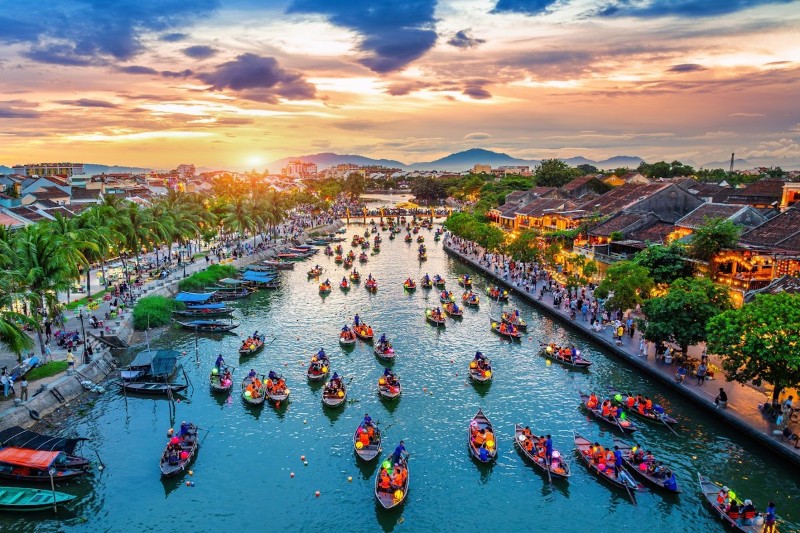
General Secretary of the Communist Party of Vietnam Central Committee and President To Lam recently signed Resolution 26-NQ/TW of the Politburo on the development of Vietnam’s tourism industry as a spearhead economic sector in the new era, with the industry expected to contribute 10-12 percent and 14-15 percent of GDP by 2030 and 2045, respectively .
According to the new resolution, Vietnam aims to become one of Southeast Asia's leading tourism destinations in terms of scale and growth, attracting 45-50 million international visitors and serving 160 million domestic tourists by 2030, and then to rank among the world's 30 most competitive tourism economies, attracting 70 million international visitors by 2045.
The resolution calls for the development of high-quality, smart, green and innovative tourism that is deeply rooted in national cultural identity and competitive both regionally and internationally.
The resolution highlighted tourism's role in generating stronger spillover effects across the economy, contributing to growth, innovation, cultural industries and national soft power while promoting sustainable development.
According to the resolution, tourism is expected to generate total revenue of $80-90 billion, with priority given to attracting visitors who spend more and stay longer.
The country plans to develop three major tourism growth poles in Hanoi, HCM City and Da Nang, together with 10 key tourism centers and 20 national tourism areas.
The resolution also sets a target of approximately 1.5 million tourist accommodation rooms and an industry workforce of around 2.3 million direct employees and 3.5 million indirect workers.
Vietnam will also establish a national smart tourism ecosystem, including a national tourism database and a national digital tourism platform, the resolution noted.
Under the resolution, a major policy shift is the move away from a tourism model that primarily focuses on increasing visitor numbers and exploiting resources towards one that focuses on quality, efficiency, higher added value and distinctive visitor experiences.
The resolution calls for a transition from conventional administrative management to management of an integrated tourism service ecosystem. Tourism development is also to be closely integrated with economic, cultural, environmental, national defense and security, and international integration strategies.
Policies will support emerging tourism-related models, including the sharing economy, digital-platform businesses, the night-time economy, riverfront and coastal economies, and integrated tourism, cultural, sports and entertainment complexes, according to the resolution.
It also calls for research into a value-added tax refund mechanism to encourage shopping tourism, as well as regulations governing cross-border online tourism platforms.
Under the resolution, public-private partnerships are to be expanded in the preservation, management and sustainable exploitation of destinations of special value, while strategic investors will be encouraged to participate in tourism infrastructure and major tourism projects.
Visa and entry policies are to be further reformed, including broader visa exemptions and more flexible arrangements for key markets, in order to attract higher-spending and longer-staying visitors, the resolution stated.
Financial resources for tourism development will also be strengthened through the tourism development support fund, investment funds, credit guarantees and preferential loans, including interest-rate support for green and sustainable tourism projects.
The resolution places strong emphasis on developing multimodal transport infrastructure connecting international gateways with major economic regions, tourism centers and national tourism areas.
Accordingly, priority will be given to aviation, railways, inland waterways, seaports and marinas, as well as convention and exhibition centers, cultural facilities and digital infrastructure.
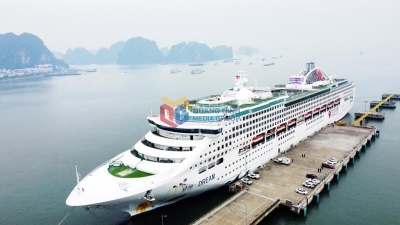
Vietnam will improve its capacity to receive large cruise ships and encourage the development of large-scale resorts and integrated tourism, cultural, sports, entertainment and shopping complexes.
The resolution identifies Hanoi, HCM City, Da Nang, heritage cities and Phu Quoc island as important tourism growth poles and centers.
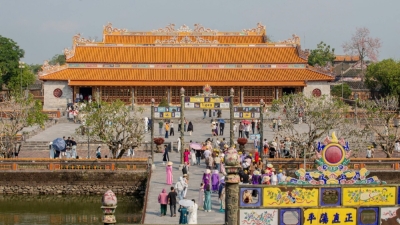
The country will diversify tourism products, prioritizing cultural tourism associated with cultural industries, heritage and the night-time economy; marine and island tourism; mountain and forest ecotourism; waterway and high-end rail tourism; medical and wellness tourism; sports tourism; meetings, incentives, conferences and exhibitions (MICE); shopping; cuisine; and community-based tourism, it noted.
The resolution encourages localities to develop distinctive tourism products while strengthening links among travel agencies, transport operators, accommodation providers and other service businesses.
Such linkages are expected to increase domestic value creation and enable Vietnamese tourism enterprises to participate more deeply in global tourism value chains.
Tourism promotion will be coordinated at the national level and closely linked with Vietnam's national image, culture, people and investment environment, the resolution added.


 Google translate