


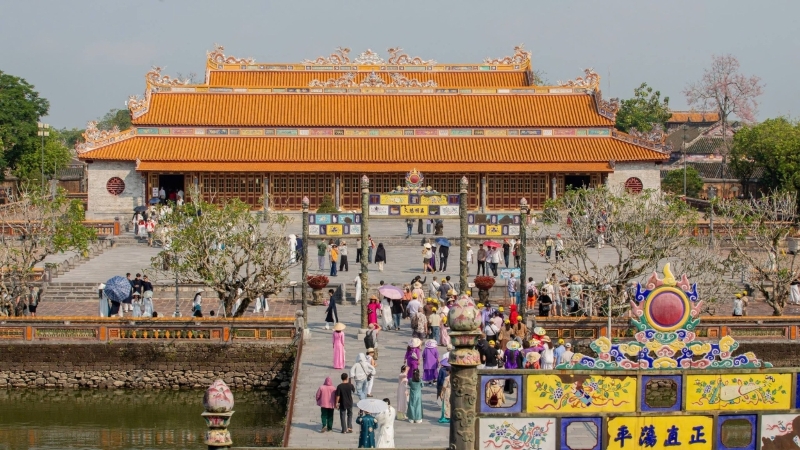
Under an updated national tourism development plan, Vietnam’s tourism sector is undergoing a strategic repositioning, aiming to contribute 14% to GDP by 2030.
According to the revised tourism system plan for 2021–2030, with a vision to 2045, issued by the Ministry of Culture, Sports and Tourism, the sector will develop on the basis of green growth, the circular economy and alignment with global sustainable development goals.
The industry is entering a pivotal phase, shifting from quantity-driven growth to a focus on quality and sustainability. In 2025, tourism contributed about 8.8% to GDP, laying the foundation for its 2030 target.
Under the plan, Vietnam aims to welcome 45–50 million international visitors by 2030, with an average annual growth rate of 16–19%, while serving around 160 million domestic tourists. The sector is expected to generate about 12 million jobs, including 4 million direct positions, and expand accommodation capacity to roughly 2.5 million rooms nationwide.
The plan also outlines the development of seven key tourism zones, with five priority areas to be developed by 2030, followed by expansion into northern midland and mountainous regions thereafter. Ten major tourism centres linked to competitive urban areas will be prioritised, focusing on diversified offerings such as night-time economy, high-end resorts and cultural experiences.
For 2026, the sector targets 22–23 million international arrivals and 130–135 million domestic travellers, with total tourism revenue projected at VND900–980 trillion ($34.2-37.2 billion).




 Google translate