



The Asian Development Bank (ADB) has raised Vietnam’s economic growth forecast for 2026 to 7.8 percent, up 0.6 percentage points from its July prediction, according to the September 2026 Asian Development Outlook report released on September 23.
The bank also upgraded its 2027 GDP growth forecast for the country to 7.6 percent, up from the 7 percent previously projected.
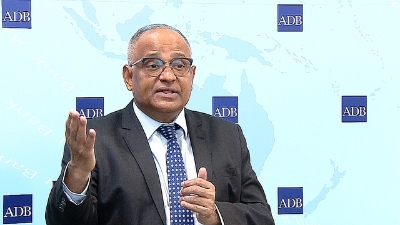
Mr. Shantanu Chakraborty, ADB Country Director for Vietnam, noted that the upward revision reflects stronger-than-expected economic momentum in the first half of the year, when Vietnam’s GDP grew by 8.2 percent, compared to 7.5 percent in the same period in 2025.
Growth drivers remained broad-based, supported by expanding manufacturing output, robust domestic consumption, and stable foreign direct investment inflows. Accelerated public investment execution and recovering domestic demand are expected to further bolster short-term economic prospects.
Despite the upgraded growth outlook, policymakers face a challenging balance. ADB revised its average inflation forecast for Vietnam to 4.3 percent in 2026 and 4 percent in 2027, well above prior projections.
Average inflation reached 4.4 percent in the first half of 2026, driven by higher costs in housing, utilities, food, and transport. Core inflation escalated from 3.2 percent to 4.1 percent, indicating that price pressures have broadened across the general economy. High energy prices, elevated import costs, and potential El Niño climate impacts pose twin risks to both inflation and growth dynamics.
Mr. Bui Minh Giap, ADB Principal Economist for Vietnam, emphasized that external uncertainties, weakening global demand, and tighter global financial conditions continue to exert pressure on exports, exchange rates, and domestic prices.
ADB experts highlighted structural risks stemming from the economy's heavy reliance on commercial bank credit to finance large-scale infrastructure and private investment projects. This reliance heightens liquidity, maturity mismatch, and credit concentration risks across the banking system.
At the enterprise level, operational pressures persist despite market entry gains. In the first seven months of 2026, roughly 187,200 businesses were newly established or resumed operations, but approximately 155,300 firms withdrew from the market, reflecting ongoing challenges in the commercial sector.
Access to finance remains a major bottleneck, particularly for small and medium-sized enterprises (SMEs). In August, 12 commercial banks unveiled preferential credit packages totaling around VND408 trillion ($15.7 billion) for SMEs and prioritized sectors.
However, lower interest rates alone may be insufficient for collateral-constrained businesses. ADB recommended expanding credit guarantee schemes and risk-sharing mechanisms to improve financial inclusion.
Mr. Giap noted that while public and private investments remain primary growth engines, rising inflation and a weakening current account are narrowing Vietnam’s macroeconomic policy space, shifting the policy focus toward ensuring long-term stability and quality growth.







 Google translate