


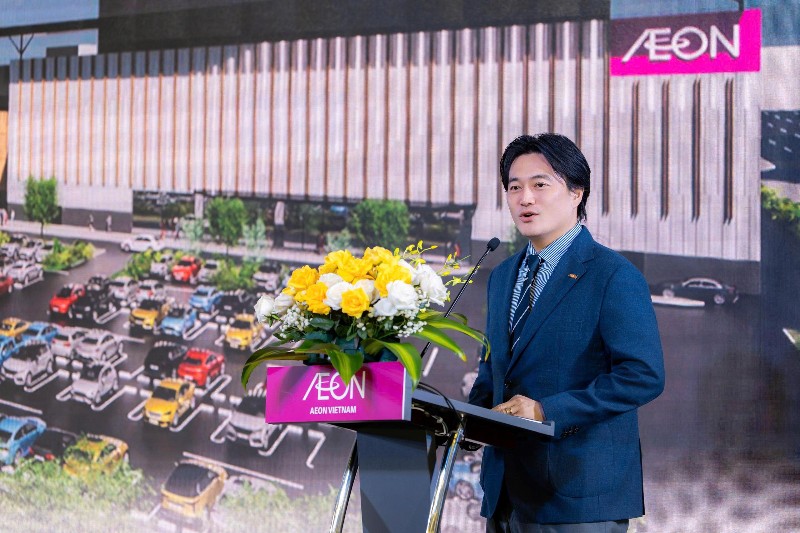
AEON Vietnam will officially inaugurate the AEON Hai Duong Shopping Center in Thach Khoi Ward, Hai Phong City, on October 3.
With a total investment of nearly VND1.2 trillion (about $46 million), AEON Hai Duong is built on a total land area of 35,700 sq m. It marks AEON Group's 10th shopping center in Vietnam and its first medium-sized shopping center in the Red River Delta region.
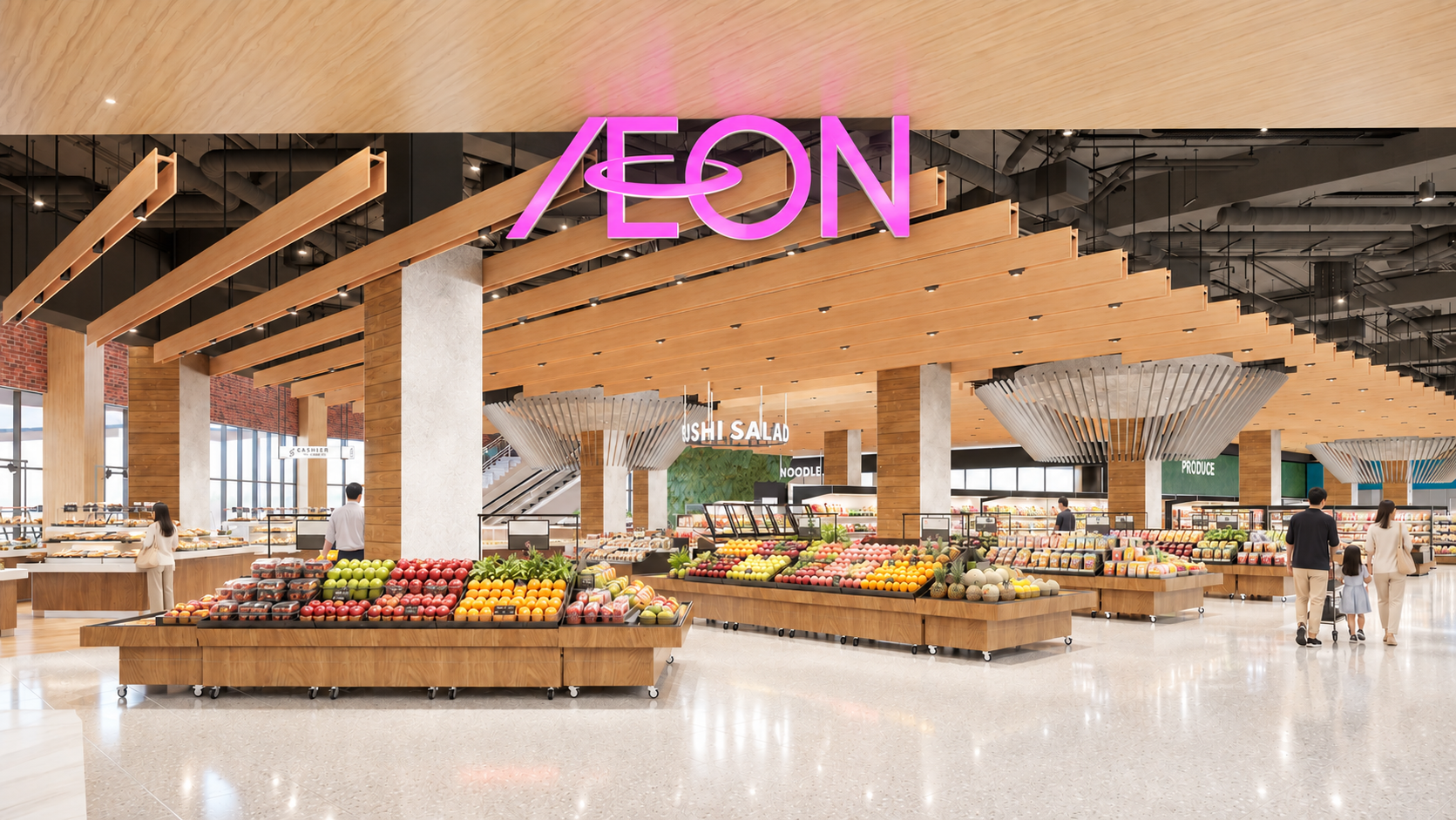
On this occasion, Mr. Tezuka Daisuke, General Director of AEON Vietnam, spoke with VnEconomy about the retail potential in the Northern region and AEON Group's future retail expansion strategy in Vietnam.
How do you assess Hai Phong's potential within AEON Group's retail expansion strategy in Vietnam?
The total investment for the AEON Hai Duong project is approximately VND1.18 trillion (about $46 million), allocated primarily to land acquisition, building construction, facilities, and equipment for product display and sales, as well as for providing services to local consumers.
We view the Hai Duong area (now part of Hai Phong) as a market with significant growth potential, situated at a key transportation junction connecting Hanoi and Hai Phong. It is a market expected to continue growing strongly, driven by ongoing industrialization and a population of approximately 2 million people.
Furthermore, we have observed a strong desire for a modern lifestyle among the residents of Hai Duong, evidenced by the fact that many frequently travel to Hanoi for weekend shopping. However, local shopping facilities and major commercial centers remain limited. Through our market research and conversations with local residents, we have found that the community is eagerly anticipating the opening of a shopping center here.
As investors, we are excited to bring a modern retail facility to the area that meets the local population's needs.
Regarding the investor's role and contribution to the locality, what initiatives is AEON Hai Duong implementing to help the province's OCOP entities improve product quality, meet modern retail standards, and expand their markets both domestically and internationally?
AEON Hai Duong is acting as a bridge to help former Hai Duong province's OCOP products elevate their standards, access modern retail channels, and expand market reach. Beyond simply providing sales outlets, AEON helps OCOP entities reach a broader customer base while enhancing their production, management, and commercialization capabilities.
Over 90 per cent of the merchandise at AEON Hai Duong is sourced domestically, creating opportunities to connect with local producers. Signature products such as lychees, mung bean cakes, vegetables, and meat products have already been introduced into our system. We continue to seek new suppliers and collaborate with local authorities to promote OCOP products and connect them with consumers.
However, holding OCOP certification does not guarantee automatic entry into our retail system. Producers must still demonstrate their supply capacity and maintain standards over the long term. To enter modern retail chains, products require more than just OCOP certification or a compelling local story; they must also meet standards regarding quality, traceability, packaging, production volume, cost, and the ability to ensure a stable supply. This serves as a driving force for producers to transition from small-scale operations to professional business models capable of competing in a broader market.
AEON Hai Duong serves not only as a retail outlet but also as a market bridge and a testing ground for commercialization capabilities. Through this system, local products gain opportunities to refine their quality and branding while expanding into both domestic and international markets.
Major centers such as Hanoi, Hai Phong, and Quang Ninh are expected to form an interconnected urban-tourism corridor, driving regional economic growth. Hanoi is home to AEON’s first shopping mall in the country, AEON Mall Long Bien. Could you please share your insights on the potential of this region and AEON’s future expansion plans there?
AEON Mall Long Bien has established itself as one of the largest shopping malls for AEON Vietnam and within the wider AEON network in Southeast Asia.
We recognize significant growth potential in the Hanoi market. Throughout our investment journey in Vietnam, we have observed the Hanoi municipal government’s strong commitment and strategic efforts regarding urban development, the expansion of commercial zones, and infrastructure upgrades—initiatives that not only serve local residents but also contribute to Vietnam's overall economic growth. Furthermore, the middle-income demographic is expanding, and Hanoi is striving to become a modern metropolis—not just within Vietnam, but across Asia.
With the ongoing development and completion of infrastructure—including road networks and railway systems, particularly urban rail, Hanoi is poised for robust growth in the near future. The city is also expanding its urban footprint and developing numerous new urban areas. As infrastructure matures and urban areas flourish, residents' living standards rise and population density increases; this drives lifestyle changes and creates abundant opportunities for modern retail.
Given Hanoi’s status as a major metropolis characterized by suburban areas, high population density, and rapid development, we are planning to roll out a diverse range of retail models across the city. These formats range from large-scale and medium-scale shopping malls, general merchandise stores, and supermarkets to the small- and medium-sized MaxValu supermarket chain.
These formats are developed to align with available land in specific areas and new urban developments, catering to residents in densely populated urban zones where land is limited. Notably, the MaxValu supermarket chain is undergoing rapid expansion in central Hanoi.
So, will AEON’s future expansion strategy continue to focus on large-scale shopping malls in satellite cities and Tier-2 urban areas, or will it flexibly incorporate other streamlined retail formats?
Vietnam is one of the fastest-changing and most notably growing markets in the region. We identify Vietnam as a key market for accelerating investment and development in the near future, with the aim of achieving robust growth by 2030.
To execute this strategy, we will diversify our retail formats, employing various models tailored to the specific characteristics and needs of each locality.
In the fourth quarter, we will launch two major shopping malls including AEON Mall Thanh Hoa and AEON Mall Ha Long, bringing the total number of new mall openings this year to five. This marks the highest annual number of openings in our 12 years of operation in Vietnam. These large-scale malls are being developed in areas with ample land, designed to meet local demand, ensure investment efficiency, and attract large numbers of customers.
Our large-scale shopping malls are designed to serve residential and commercial areas with populations ranging from 500,000 to 700,000 people. Meanwhile, mid-sized shopping centers such as AEON Hai Duong, which we recently introduced—serve areas with populations of approximately 200,000 to 300,000.
In addition, we are developing general merchandise stores and supermarkets in smaller residential areas, as well as small-scale supermarkets in city centers. These models operate effectively in areas with smaller populations but high population density, particularly where land availability and the potential for developing store premises are more constrained compared to other regions.
Could you please share more detailed information on the strategy of regarding as a key market as previously mentioned?
According to reports on our investment performance in Vietnam, AEON’s average annual growth rate was approximately 5 per cent during the first five years. In the subsequent five-year period, this rate rose to about 13 per cent per year. By 2024, the reported growth rate reached 20 per cent, with a projected increase to 26 per cent in 2025.
AEON selected Vietnam as a key market for development based on an assessment of both macroeconomic and microeconomic data. Vietnam is recognized as one of the fastest-growing markets in Southeast Asia and globally. The country's rapid pace of change and ability to quickly adapt to new trends create significant opportunities for modern retail, one of AEON’s core business sectors.
AEON began exploring the Vietnamese market in 2008 through financial services. We continued our market research and, in 2014, commenced construction of our first shopping mall in Ho Chi Minh City.
Throughout our operations, we have had the opportunity to meet and exchange views with numerous retailers and industry peers in Vietnam; we found that everyone is impressed by the market's development and potential. For the past decade, I have remained confident in Vietnam's growth trajectory.
Based on our research, analysis, and economic data, AEON believes that Vietnam is a developing market with substantial growth potential, particularly within the modern retail sector.
Regarding the scale of AEON’s investment in Vietnam through 2030, specific figures have not yet been announced, so I am unable to share them at this time. However, according to published figures, AEON’s total investment in the Vietnamese market to date stands at approximately $1.5 billion. Following a period of rapid expansion marked by 26 per cent growth in 2025, our strategic direction through 2030 entails tripling our current scale over the next five years.
Alongside revenue and profit targets, AEON plans to establish a network of 300 stores in Vietnam by 2030.
This entails a corresponding allocation of investment capital to drive business expansion. As Vietnam is a key market, the majority of investment funds earmarked for Southeast Asia will be directed there; consequently, the scale of AEON’s investment in Vietnam by 2030 is expected to be significantly larger than in previous periods.
 Google translate