


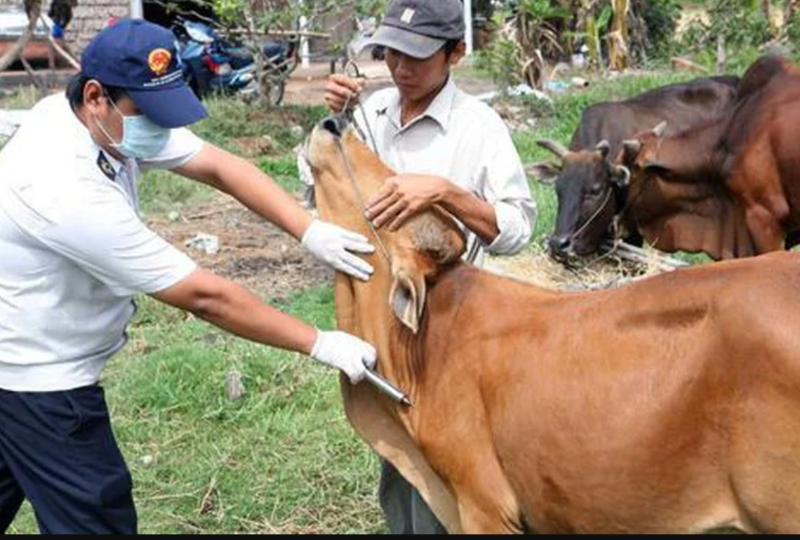
The Ministry of Agriculture and Environment has submitted a proposal to the Prime Minister, requesting an emergency import of vaccines for the Foot-and-Mouth Disease (FMD) serotype SAT1. The ministry seeks to import vaccines already licensed for use by foreign authorities to proactively prevent the virus from entering Vietnam.
In a report on May 6, the ministry emphasizes that FMD is a dangerous, highly contagious transboundary disease caused by a virus in the Aphthovirus genus of the Picornaviridae family. The disease spreads rapidly among cloven-hoofed livestock, including cattle, buffalo, pigs, goats, and sheep, posing a severe threat to livestock production, farmers' livelihoods, and national food security. There are currently seven known serotypes of the FMD virus: A, O, C, Asia1, SAT1, SAT2, and SAT3.
According to the ministry, the SAT1 serotype is showing rapid geographical shifts, demonstrating high adaptability and a strong ability to spread, which increases the risk of it entering Vietnam.
"Vietnam shares a long land border, while the transport and trade of livestock across these borders—particularly through unofficial trails and crossings—remain complex. This has been identified as the primary route for many dangerous infectious animal diseases entering and spreading within the country recently," the ministry stated.
Currently, FMD vaccines licensed for use in Vietnam only provide protection against serotypes O, A, and Asia1. There is no existing vaccine in the domestic market capable of protecting livestock against the SAT1 serotype.
Meanwhile, Vietnam’s susceptible livestock population is massive, consisting of approximately 31.4 million pigs, 6.14 million cattle, 1.95 million buffalo, and over three million goats and sheep. The ministry expressed deep concern that if the SAT1 virus were to enter the country, the livestock industry—particularly cattle and buffalo farming—would suffer devastating impacts.
Because the SAT1 serotype has never circulated in Vietnam, the entire susceptible livestock population currently lacks immunity. The ministry warned that when a new virus strain enters an unprotected population, the infection rate can reach 100%, creating a high risk of a large-scale outbreak.
The ministry also stressed that while measures such as transportation control, disinfection, and culling infected animals are necessary, they cannot replace the role of proactive vaccination.
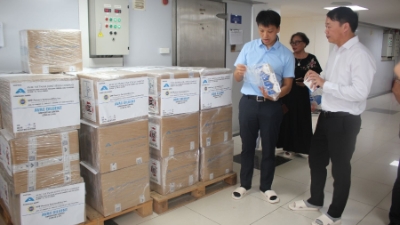
Under the Law on Veterinary Medicine and its guiding regulations, veterinary vaccines that do not yet have a circulation certificate in Vietnam may still be imported and used for emergency animal disease prevention and control, provided they pass quality inspections.





 Google translate