


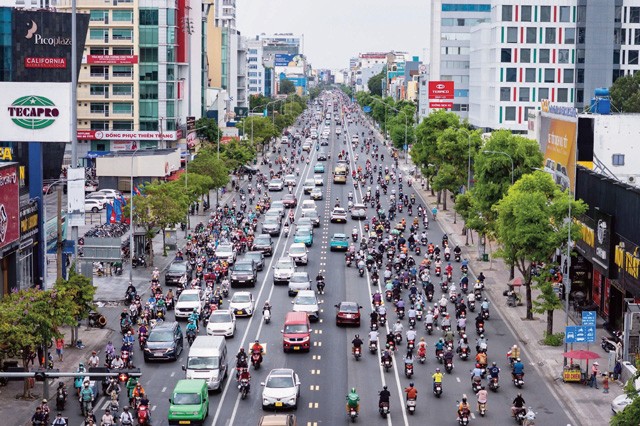
Vietnam has adopted numerous strategies and policies on human resources development, from attracting and effectively utilizing talent and developing its intellectual workforce to building human resources for emerging sectors such as AI and semiconductors. The challenge now is how to connect these pieces into a unified system directly aligned with the Vietnamese economy’s human resource needs through 2045.
From numbers to skills
The challenge is becoming increasingly urgent as demands for higher workforce quality and productivity continue to grow. Vietnam had 53.7 million people aged 15 and above in the workforce in the first half of 2026, but only 29.7 per cent possess formal qualifications or certificates.
Notably, informal employment accounted for 61.7 per cent of the total, indicating that a large share of the workforce remains outside the formal employment sector, with more limited access to training, upskilling, and employment protection mechanisms.
The human resources gap, therefore, is not simply a matter of numbers, but also of quality, skills, and the ability to meet the demands of a new growth model. This requires a shift from an approach focused primarily on training by field of study toward forecasting and developing human resources based on the skills demanded by the economy.
Looking at Vietnam’s current human resources policy landscape, it is clear that the country has already developed many of the key building blocks for addressing its long-term workforce needs. On July 31, 2023, the Prime Minister issued Decision No. 899/QD-TTg approving the National Strategy on Attracting and Utilizing Talent Through 2030, with a Vision to 2050. The Strategy aims to establish strong and breakthrough policies and solutions to attract and effectively utilize talent from both Vietnam and abroad, particularly in science and technology, education and training, healthcare, culture, information and communications, and digital transformation.
Vietnam has also adopted separate strategies and policies for intellectuals, science and technology workers, high-tech talent, AI, and other strategic sectors. These include Decision No. 2711/QD-TTg, issued on December 12, 2025, approving the National Strategy for Developing the Intellectual Workforce Through 2030, with a Vision to 2045. And since late 2024, work has also been underway on a Human Resource Development Strategy through 2030, with a Vision to 2050.
The larger question, however, is how to connect these strategies into a unified system aimed at building a human capital strategy for the future economy. If Vietnam is to become a developed, high-income country by 2045, it must answer a series of fundamental questions: What sectors will drive its economy in 2045? What occupations and skills will those sectors require? How many workers will Vietnam need? How many will be needed in the country’s major growth centers? Where should they be trained? How will businesses use and retrain workers? How can Vietnam retain domestic talent while attracting international talent?
Human resources planning
Vietnam must identify the industries and sectors it wants to develop strongly over the next 15 to 30 years. From there, it must determine the occupations, skills, workforce numbers, and competency levels required in each sector.
With semiconductors having been identified as a strategic technology sector, Vietnam will need semiconductor engineers as well as chip design engineers, process engineers, packaging and testing engineers, equipment and materials specialists, supply chain professionals, project managers, and research teams.
Likewise, developing an international financial center will require more than banking and securities professionals; it will also need specialists in asset management, risk management, derivatives, fintech, international financial law, fund management, international taxation, and other supporting services.
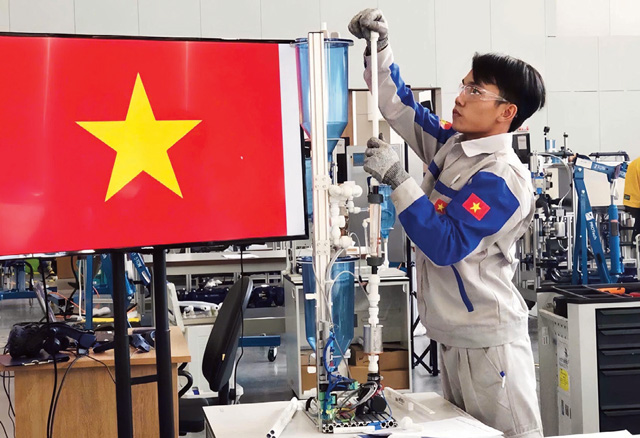
The human resources strategy toward 2045 should therefore establish a national human resources demand map for each five-year period - 2030, 2035, 2040, and 2045 - linked to economic development scenarios and priority industries. This would provide a basis for proactively adjusting the scale and structure of training based on projected demand, rather than simply responding to changes that have already occurred in the labor market.
Another important shift is to move the focus of training from “degrees” to “skills.” In a digital and AI-driven economy, workers may need to retrain multiple times throughout their working lives. Vietnam should therefore gradually develop a National Skills Framework that defines skill standards for key occupational groups and connects those standards with higher education, vocational education, corporate training, and professional certification systems. This should be accompanied by mechanisms for lifelong learning, reskilling, and upskilling.
This is also where businesses need to be placed at the center of the training system. Companies should not simply be destinations for students after graduation. They should participate from the outset in identifying skills needs, designing curricula, providing practical training, and assessing outcomes. A system in which businesses define the skills needed, training institutions provide the programs, workers accumulate skills, and businesses employ and continue to train them would be better aligned with the labor market of the future.
Talent market
A human resources strategy with a 2045 vision cannot be confined by geographical borders. Vietnam is entering an increasingly intense competition for talent with regional hubs such as Singapore, South Korea, Japan, Thailand, and Malaysia. To gain an advantage in this competition, Vietnam needs two fundamental institutional shifts.
First, it should build a Global Talent Network. Rather than relying on the old notion that talent must return home, Vietnam should adopt a model of “flexible value connectivity.” An overseas Vietnamese expert or international scholar working in Silicon Valley, Tokyo, or Singapore could still contribute to Vietnam through joint research projects, remote teaching, technology consulting, or investment matchmaking.
Second, Vietnam should establish institutions and policies to attract international experts. This could include special work visa mechanisms such as a Tech/Talent Visa, personal income tax incentives, housing policies, and a superior working environment, making Vietnam an attractive destination for global technology engineers, scientists, and management professionals.
Another gap lies in financing mechanisms for human resources development. Training high-quality workers is a long-term investment, but most policies are still viewed primarily through the lens of education spending.
Based on international experience, Vietnam should gradually develop financial instruments for human capital, including education loans, individual learning accounts, reskilling support, government-business co-financing, tax incentives for training expenses, and training funds for strategic industries. In particular, Vietnam could consider a model in which the government prioritizes support for skills that have the greatest impact on national productivity and competitiveness.
Finally, to manage a dynamic national human resources strategy, Vietnam should establish a National Human Capital Dashboard integrating data from ministries, sectors, local governments, training institutions, and the labor market. This would allow the government and educational institutions to immediately identify which industries face worker shortages and which skills are at risk of being displaced by AI, enabling them to adjust workforce policies, training quotas, and investment flows before worker shortages or surpluses become a crisis.
Vietnam already has a vision and development goals for 2045. It also has strategies for intellectuals, talent, and human resources across various industries and sectors. The next step should be to develop an overarching strategy or design a Vietnam Human Capital Map toward 2045. If Vietnam wants to become a developed economy by 2045, it must know today what kind of people that economy will need.
(*) Mr. Nam Son is an Independent Expert.





 Google translate