


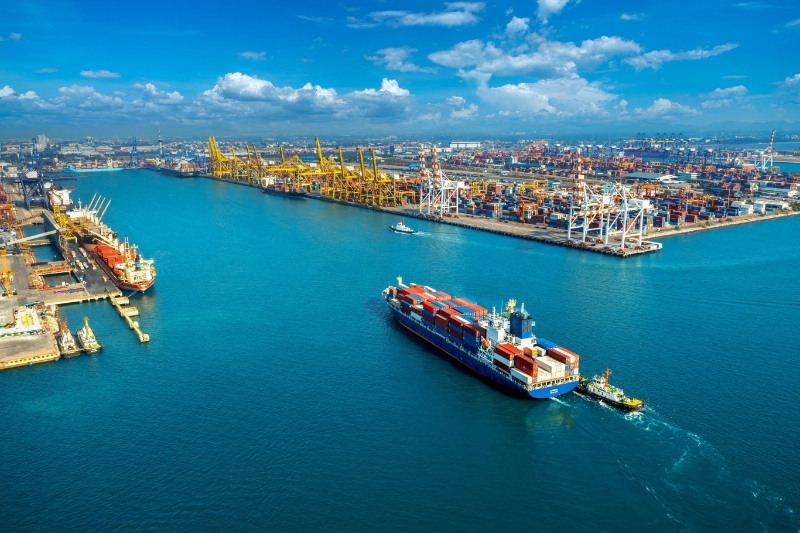
Despite significant noise from tariffs and geopolitical tensions, Vietnam, alongside Malaysia and Singapore, has managed to maintain its share of global exports, Mr. Aditya Gahlaut, Regional Head of Global Trade Solutions for Asia at HSBC, noted in the bank's “ASEAN Perspectives - 2026: A test of endurance, strength and grit” report. But trade has indeed been shifting within Asia and between Asia and other markets.
Three major shift
According to Mr. Gahlaut, while tariffs create short-term disruptions, they do not alter the fundamental structure of global trade. Even before tariffs emerged, global trade had already entered a period of structural transition marked by three major shifts: “where” trade happens, “what” is traded, and “how” trade is conducted.
Firstly, the shift concerns where trade takes place, linked to the reshaping of global supply chains. In the past, supply chains were largely constructed around cost considerations, with production located wherever costs were lowest. However, over the past two decades, particularly following the Covid-19 pandemic, companies have increasingly assessed supply chains based on three core pillars: efficiency, resilience, and sustainability.
Secondly, the shift relates to changes in the structure of merchandise trade, namely what is being traded. Mr. Gahlaut pointed out that when trade is discussed, it is often associated with tangible goods such as smartphones, furniture, or clothing. In reality, however, services now account for approximately 25 to 26 per cent of total global trade and are expanding at twice the pace of goods trade.
Notably, services are no longer confined to consulting or information technology but are increasingly embedded in traditional products. He cited examples such as smartwatches or health monitoring devices, where the core value no longer resides in the physical product itself but in the accompanying services, software, and data. Consumers today pay for experiences and services rather than solely for products.
This shift, he emphasized, is not driven by tariffs but by changes in consumer behavior. He likened it to the transition from cassette tapes and CDs to music streaming platforms, where consumers purchase services instead of physical goods.
Thirdly, the shift involves changes in how trade is conducted. Whereas trade previously took place primarily through physical stores, digital platforms have now become central to commercial transactions. Consumers no longer need to enter physical retail spaces but can conduct purchases directly through personal devices.
These three trends were already underway before the introduction of tariffs. Tariffs have merely accelerated and sharpened the restructuring process.
A story of structural growth
Within this broader context, ASEAN, particularly Vietnam, has emerged as a bright spot in terms of resilience. After tariffs were imposed, many regions experienced sharp declines in exports, while ASEAN as a whole managed to maintain growth momentum. ASEAN’s share of global exports increased from around 7.4 per cent in 2023 to nearly 9.4 per cent by 2025, beginning before tariffs were introduced.
Notably, in markets such as Vietnam, Thailand, and Taiwan (China), export growth has shown little significant slowdown. Mr. Gahlaut’s expressed his optimism about Vietnam’s outlook, noting that “Vietnam is not a short-term opportunistic story; it is a story of structural growth.”

Its export growth in recent years, he continued, has been driven primarily by the FDI sector rather than domestic private enterprises. However, this reflects Vietnam’s long-term attractiveness rather than a simple tariff advantage.
FDI investment decisions, he noted, are not based on a single factor such as tariffs, but on a combination of long-term considerations, including production efficiency, domestic market size and purchasing power, workforce quality, the policy environment and government openness, as well as long-term investment in infrastructure and energy.
Consumption in Vietnam grew by around 8 per cent and is expected to remain at approximately 6.5 to 7 per cent in 2026. Tourism and services are also playing an increasingly important role. “Vietnam is not the lowest-cost country, but it is among the most cost-efficient, while also offering a very strong story in domestic consumption, tourism, and services,” Mr. Gahlaut said.
Vietnam’s exports to the US have risen from the equivalent of about 8 per cent of China’s level to around 40 per cent. In several labor-intensive sectors such as textiles and garments, Vietnam has even surpassed China in the US market. This is indeed a long-term structural story, not a short-term opportunity.
Against this backdrop, Mr. Gahlaut stressed that within the China+1 strategy, Vietnam is a core part of global corporations’ diversification strategies. “Once it is part of a diversification strategy, Vietnam’s role is fundamental, not a temporary substitute,” he emphasized.
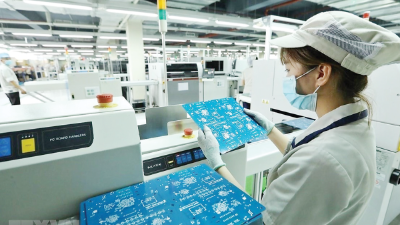
He pointed out that Vietnam has established itself as an efficient manufacturing hub in labor-intensive industries and is also benefiting significantly from the global electronics and AI boom. The next challenge, he said, is to move up the value chain in electronics, particularly in semiconductors.
About one-third of Vietnam’s exports still depend on the US. While tariff advantages help maintain its position, Vietnam needs to diversify exports towards other trade corridors such as intra-Asia and Europe.
According to an HSBC Global Trade Pulse survey, more than 40 per cent of Asian businesses want to increase trade with Southeast Asia, and 34 per cent want to expand trade with East and North Asia, while an increasing number are seeking to reduce dependence on the US market. Notably, intra-Asian trade, excluding China, has remained almost flat for nearly 20 years, making it a potential new growth pillar in the coming period.
Meanwhile, although Vietnam has had a free trade agreement with the EU for five years, export growth to the bloc has yet to match its potential. This is seen as significant upside for the next phase, particularly as the EU is a massive consumer market that places growing emphasis on sustainability.
Trade slowdown, not recession
Under pressure from exchange rates, logistics costs, and interest rates, export companies are returning to optimizing working capital cycles, an area previously underutilized.
HSBC has observed a strong increase in demand for solutions such as supply chain finance, inventory financing, and long-term contract financing. As supply chains become more complex, working capital cycles lengthen, but this also creates opportunities to unlock financial value trapped within the chain. “To move up the value chain, Vietnam needs to invest strongly in skills, technology, and a sufficiently flexible policy framework to support new business models,” he said.
While the global trade outlook for 2026 is projected to be less positive, Mr. Gahlaut emphasized the importance of viewing these figures in context. In 2025, global goods trade expanded at an average monthly rate of 4.8 per cent through September 2025, up from 2.5 per cent in 2024.
The WTO’s downward revision of global trade growth for 2026 does not signal a slowdown, but rather a normalization after a period of rapid growth driven by front loading, as many countries accelerated exports to the US to avoid tariffs. “Once excess inventories in the US are cleared, and with the right focus on diversifying corridors, global trade will regain growth momentum from the second half of 2026,” he concluded.



 Google translate